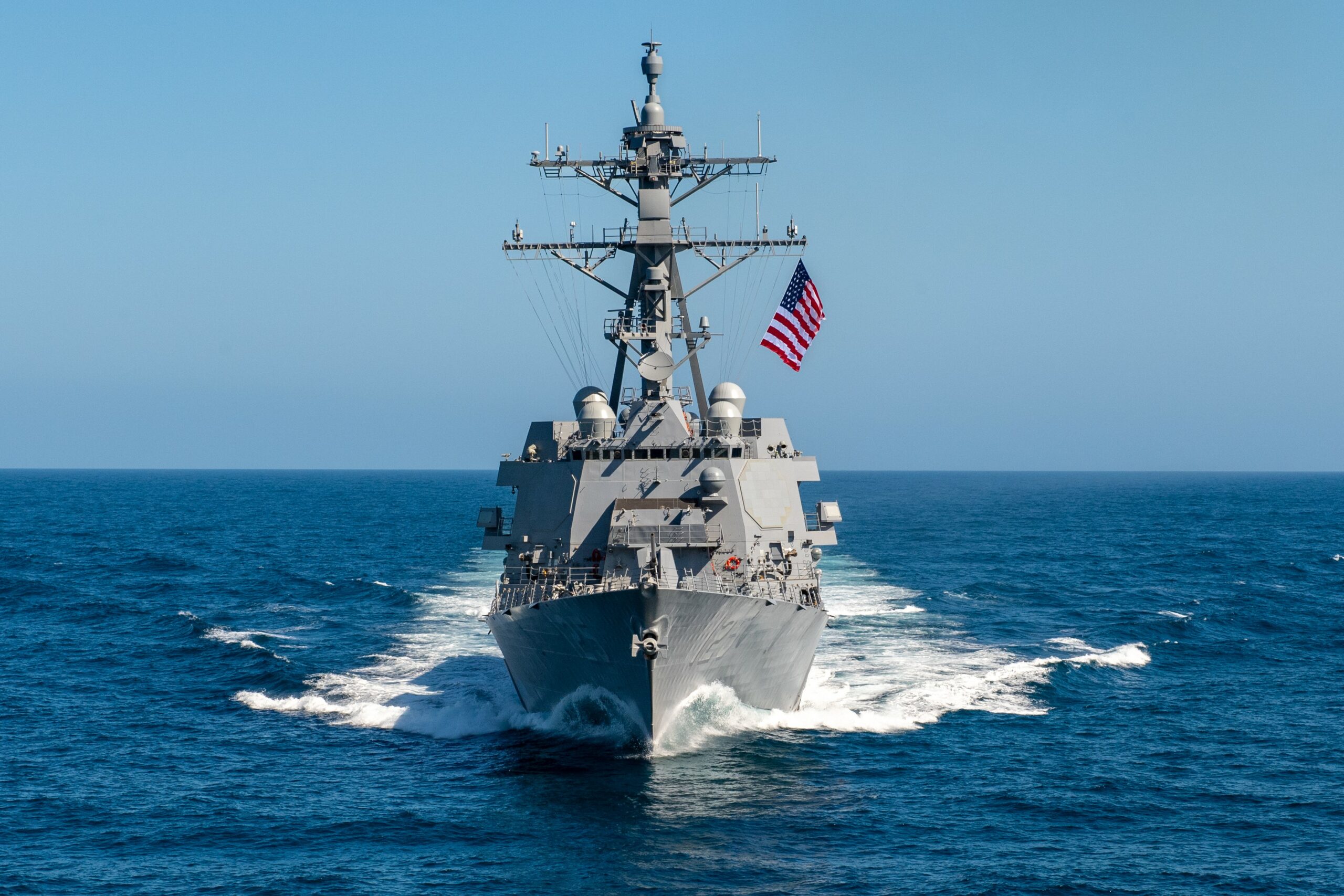
In an era defined by speed, sensors, and saturation threats, the Arleigh Burke-class destroyer remains the US Navy’s most reliable multi-mission workhorse, serving as an escort, missile shield, strike platform, and deterrence tool all in one hull.
This guide will break down what the Arleigh-Burke class is, what it does, and why the destroyer forms the backbone of the US Navy’s surface fleet.
Born to Fight, Built to Survive
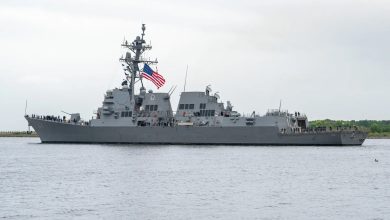
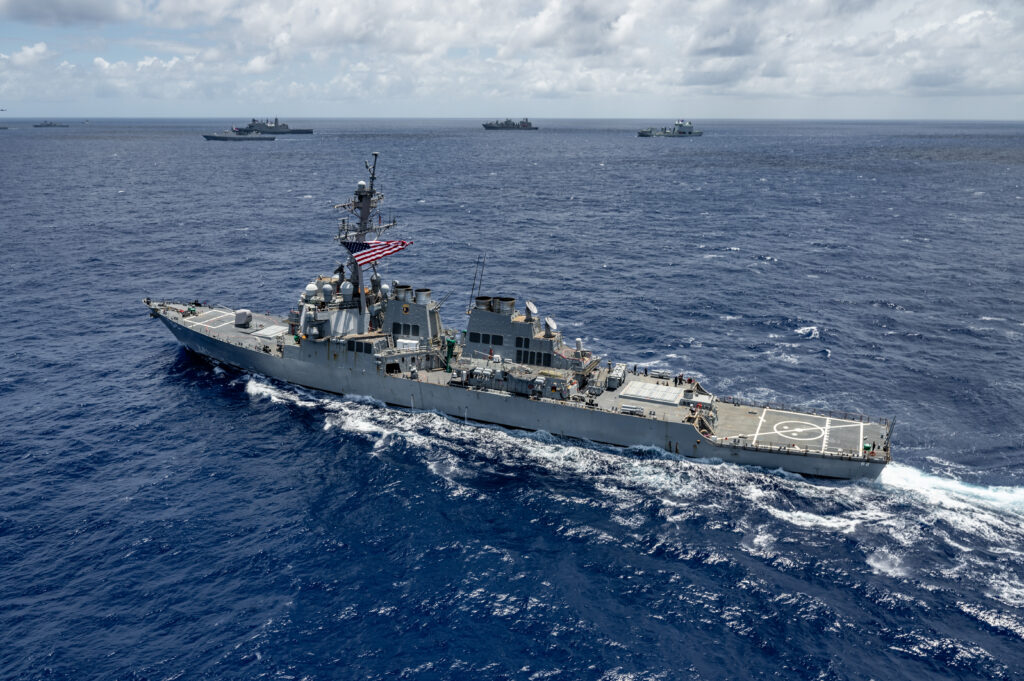
The Arleigh Burke-class destroyer is a class of multi-mission guided-missile destroyers operated by the US Navy, first commissioned in 1991 and continually upgraded through successive flights.
Named after Admiral Arleigh Burke, these ships are designed around the Aegis Weapon System, featuring advanced radars, missile launchers, and sensor suites that allow them to detect, track, and engage multiple threats simultaneously.
With a displacement of roughly 9,000 tons, speeds exceeding 30 knots (35 miles/56 kilometers per hour), and a range of over 4,400 nautical miles (5,063 miles/8,150 kilometers), the Arleigh Burke-class is highly versatile, capable of operating in open oceans, littoral zones, and contested regions worldwide.
| Category | Specification |
| Class Name | Arleigh Burke-class destroyer |
| Type | Multi-mission guided-missile destroyer |
| Role or Purpose | Multi-domain operations: anti-air, anti-surface, anti-submarine warfare; missile defense; escort and power projection |
| Country of Origin | United States |
| Commissioned | 1991 (first ship: USS Arleigh Burke DDG‑51) |
| Displacement | ~9,000 tons (full load) |
| Length | ~155 meters (509 feet) |
| Beam | ~20 meters (66 feet) |
| Draft | ~9.3 meters (30.5 feet) |
| Propulsion | 4 × General Electric LM2500 gas turbines, 100,000 shaft horse power; 2 shafts |
| Speed | 30 knots (35 miles/56 kilometers per hour) |
| Range | ~4,400 nautical miles (5,063 miles/8,150 kilometers) |
| Sensors or Combat Systems | Aegis Weapon System, SPY-1D(V) radar, SONAR, and EW suites |
| Armament | 1 × 5-inch (12.7 centimeters)/62 caliber gun; 2 × CIWS; 2 × triple torpedo tubes; Vertical Launch System with Tomahawk, ESSM, Standard Missiles |
| Aircraft | 1 × MH-60R Seahawk helicopter |
| Flight Variants | Flight I, II, IIA, IIA, Flight III (upgraded radars, weapons, power systems) |
The Digital Brain: Aegis at Sea
At the core of every Arleigh Burke is the Aegis Weapon System, a networked battle-management system that fuses radar, weapons, and command decisions into a single fighting organism.
Its radar — initially SPY-1 and now evolving into SPY-6 on newer ships — can track hundreds of targets simultaneously across air, surface, and missile domains.
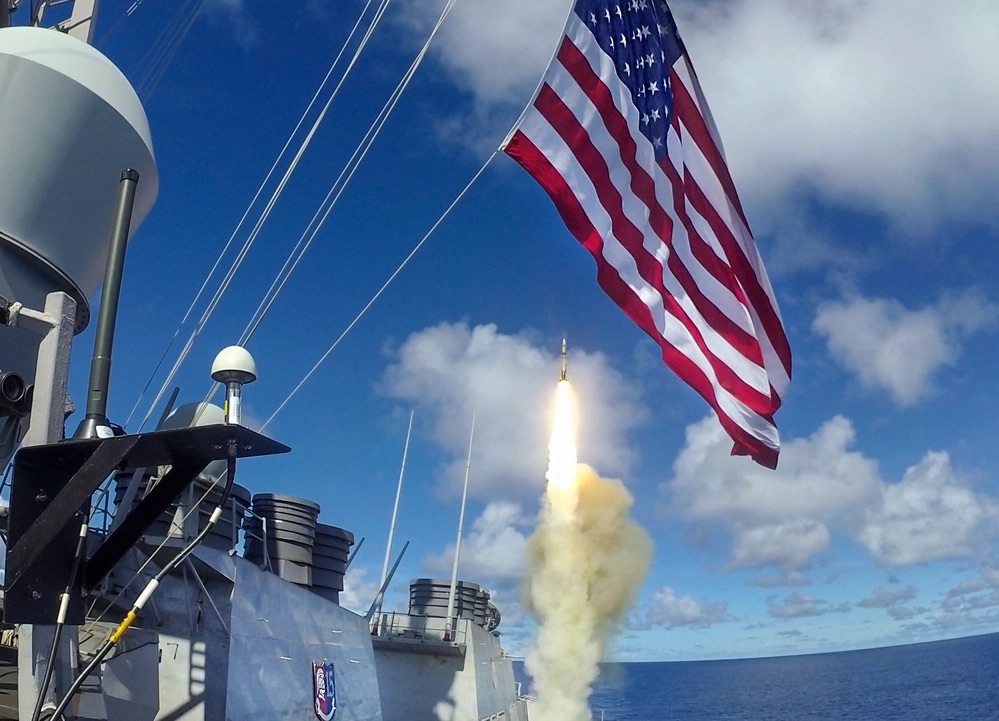
Firepower is also where Arleigh Burke-class destroyers dominate. The ships conduct routine patrols to detect and intercept ballistic missiles with Standard Missile interceptors. Each ship carries between 90 and 96 vertical launch system cells, giving commanders enormous flexibility.
Most notably, the class deploys the Tomahawk cruise missile, allowing it to hit land targets hundreds of miles away with precision.
Evolving by Design: The Flight Path
One reason the Arleigh Burke-class refuses to age out is its upgrade-friendly design. The ships have been built in multiple “Flights,” each incorporating new technology without reinventing the hull.
Early variants focused on air defense, while later Flight IIA ships added helicopter hangars to enhance anti-submarine warfare capabilities.
The newest Flight III destroyers mark the most dramatic leap forward. Centered on the SPY-6 radar, they deliver vastly improved detection range, sensitivity, and resistance to electronic attack.
While highly capable, the Arleigh-Burke class is not without limitations. Here are the common disadvantages that the destroyer faces:
- High cost and complexity: Advanced sensors, weapons, and combat systems make Burkes expensive to build, operate, and upgrade, straining long-term fleet budgets.
- Limited growth margin: Older Flight I and II ships have constrained space, power, and cooling, limiting their ability to accommodate new systems, such as lasers or advanced radars.
- Crew workload and maintenance burden: Dense systems integration increases maintenance demands and places sustained pressure on crews during long deployments.
- Not stealth-optimized by modern standards: While reduced radar cross-section was considered, the hull and superstructure are more detectable than newer stealth-focused designs.
- Vulnerability to saturation attacks: Burkes can be challenged by massed missile, drone, or hypersonic attacks that strain interceptor inventories.
- Role overlap in modern fleets: As multi-mission ships, they sometimes perform tasks that could be handled more cheaply by smaller vessels, raising efficiency questions.
- Aging hulls: Early variants are reaching mid-to-late service life, requiring costly life-extension programs or replacement decisions.
Why the Burke Still Wins
The Arleigh Burke is used globally as a flexible, frontline warship that supports US and allied operations across every major maritime region.
It plays a steady role in maintaining maritime security as its regular presence helps deter interference with commercial shipping and reinforces adherence to international maritime norms, particularly in contested or strategically sensitive waters.
They are also designed to operate closely with allied navies, regularly taking part in NATO and multinational exercises that emphasize shared situational awareness and coordinated air and missile defense.
At the same time, their global basing and endurance allow them to respond quickly to emerging crises without waiting for larger naval formations.
This forward-deployed posture enables early action in tense situations, whether providing immediate defensive coverage, supporting initial strike operations, or helping stabilize conditions during the opening phase of a crisis.
Three decades on, the Arleigh Burke-class remains one of the most capable surface combatants afloat — not because it stood still, but because it never stopped evolving.