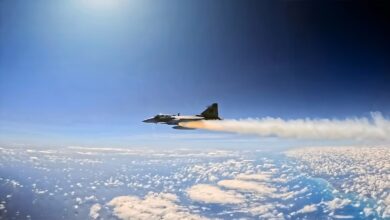
Air defense is no longer defined solely by range. Many of today’s biggest threats fly low, fast, and unpredictably, slipping beneath traditional radar coverage.
That’s where the Mistral missile comes in: a mobile, short-range air defense system built to intercept aircraft, drones, helicopters, and cruise missiles in the final layer of protection.
This guide breaks down how the Mistral works, how it evolved, and why it remains relevant on modern battlefields.
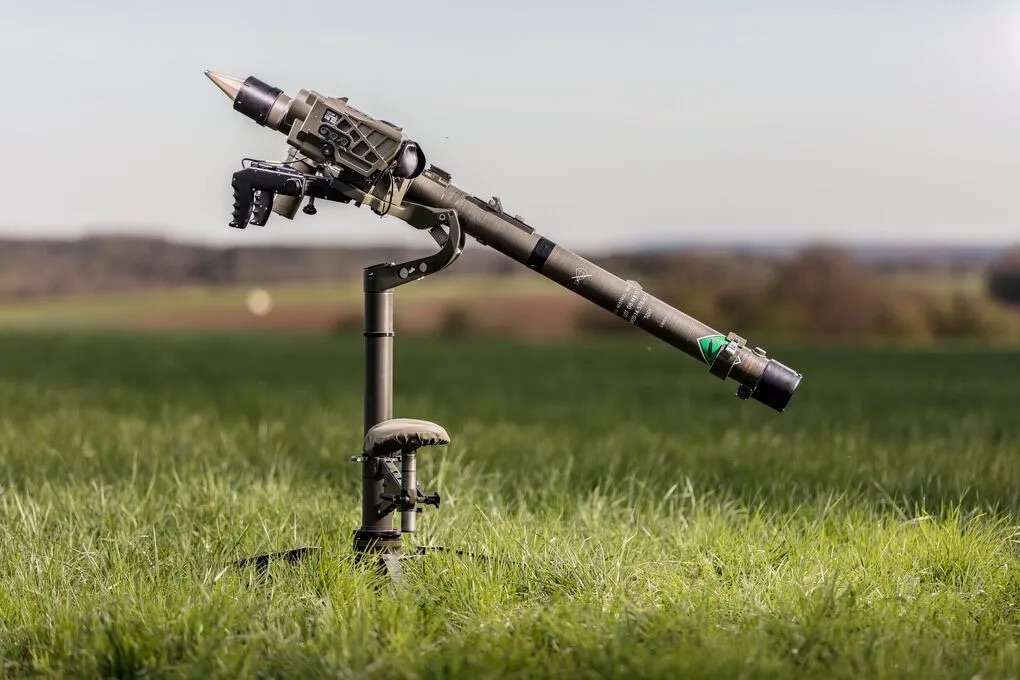
What Is the Mistral Missile?
MBDA’s Mistral (Missile Transportable Anti-aérien Léger) is a French very short-range air defense (VSHORAD) system built to intercept low-flying threats, including aircraft, helicopters, drones, and even cruise missiles.
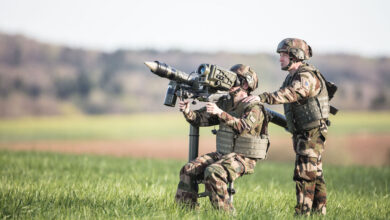
Unlike traditional shoulder-fired systems, it operates from stabilized platforms such as tripods, vehicles, naval mounts, and helicopters, delivering greater accuracy and control in fast-moving engagements.
At its core is a fire-and-forget, infrared-guided missile that allows operators to engage and move immediately.
Over time, the system has steadily evolved from the original Mistral 1 to today’s Mistral 3, which adds an imaging infrared seeker and enhanced resistance to countermeasures, sharpening its edge against modern, low-signature threats.
| Category: | Details: |
| Type | VSHORAD missile |
| Developer | Matra (now merged into MBDA) |
| Role | Force protection against air and surface threats |
| Weight | < 20 kilograms (44 pounds) |
| Length | 1.88 meters (6.2 feet) including launch motor |
| Diameter | 9.3 centimeters (3.6 inches) |
| Guidance | Imaging infrared seeker with advanced processing |
| Engagement Mode | Fire-and-forget |
| Fuze | Laser proximity and impact fuze |
| Countermeasure Resistance | Resistant to all known IR countermeasures |
| Target Capability | Aircraft, helicopters, drones, cruise missiles, small boats |
| Operational Platforms | Land, naval, and airborne (multi-platform integration) |
| Environmental Range | -40 to 71 degrees Celsius (-40 to 160 degrees Fahrenheit) |
| Reported Operational Success | >96 percent |
| Users | 30+ countries across Europe, the Americas, Africa, and Asia |
Origins and Development
The Mistral program began in 1974 under France’s SATCP initiative, aimed at fielding a highly mobile, short-range air defense system capable of countering low-altitude threats.
Development was led by Matra, laying the foundation for what would become one of the most widely adopted VSHORAD systems in service today.
Key Milestones
Development began in 1974, with Matra selected as prime contractor in 1980.
The first operational version entered service in 1990, followed by the improved Mistral 2 (1998) and today’s Mistral 3 (2013), which introduced an imaging infrared seeker and enhanced countermeasure resistance.
Evolution of the Mistral Missile
Rather than a one-off design, Mistral was built to evolve, with each iteration refining its ability to track and defeat increasingly complex aerial targets.
- Mistral 1: The original version, introduced in 1990, provided baseline short-range interception capability.
- Mistral 2: An upgraded variant with improved seeker sensitivity and countermeasure resistance, entering service in the late 1990s.
- Mistral 3: The latest and most advanced version with an imaging infrared seeker, enhanced resistance to decoys, the ability to engage low-signature targets like drones, and an extended range of 7.5 to 8 kilometers (4.6 to 5 miles)
The Mistral Family
Aside from the Mistral missile itself, the family extends into a wider ecosystem of launchers and command systems designed to adapt the weapon across multiple operational environments.
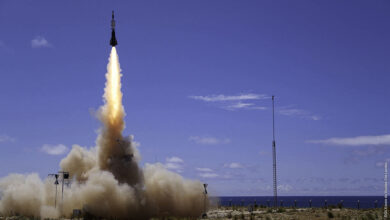
- Mistral MANPADS: Man-portable launcher enabling dismounted troops to deploy the Mistral 3 missile for rapid, short-range air defense
- Mistral ATLAS / ATLAS RC: Vehicle- or ground-mounted launcher systems, including remotely operated turret configurations for higher protection and reactivity
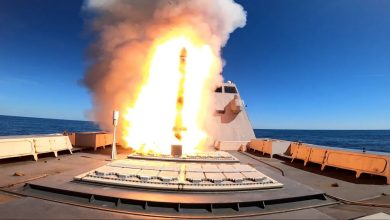
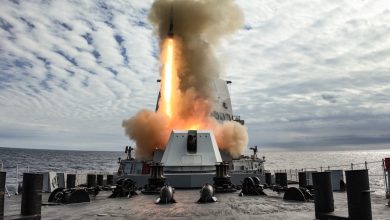
- Mistral SIMBAD-RC: Naval self-defense system providing close-in protection for ships against aircraft, missiles, and asymmetric surface threats
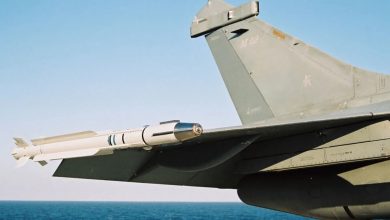
- Mistral ATAM: Air-to-air helicopter defense system integrating Mistral missiles for rotary-wing platforms
- C2 Integration (LICORNE system): Dedicated command-and-control architecture enabling networked air defense and multi-system coordination
How the Mistral Missile Works
The Mistral is built around infrared homing and rapid engagement, allowing operators to respond quickly to emerging threats.
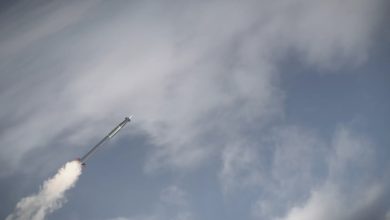
Once launched, the missile tracks the target’s heat signature while its onboard guidance system continuously adjusts the flight path during interception.
Its fire-and-forget design allows operators to relocate immediately after launch, improving survivability in fast-moving combat environments.
Key Features
- Imaging infrared seeker with advanced target tracking
- Passive infrared seeker locks onto heat signatures
- Fire-and-forget capability
- Two-stage rocket motor for rapid acceleration
- Laser proximity and impact fuzes for detonation
Strengths
- High speed of around Mach 2.5 (3,088 kilometers/1,918 miles per hour) to 2.7 (3,335 kilometers/2,072 miles per hour)
- Effective against drones and low-flying threats
- Strong resistance to countermeasures
- Multi-platform deployment (tripod, vehicle, naval, airborne)
Limitations
- Short engagement range compared to medium/long-range surface-to-air missiles
- Requires visual or sensor-based target acquisition
- Typically needs a crew and launcher setup (not purely shoulder-fired)

Global Use and Combat Experience
The Mistral has been adopted by over 30 countries, making it one of the most widely used Western short-range air defense systems. This includes Australia, Belgium, Romania, and the Philippines.
Operational Use
- Second Congo War: Early deployment in conflict conditions
- Ukraine conflict: Used to counter low-flying aircraft and drones
Deployment Formats
- Infantry units (tripod launchers)
- Armored vehicles (such as ATLAS, MPCS systems)
- Naval systems (Simbad, Sadral turrets)
- Helicopters (air-to-air Mistral ATAM variant)
Its adaptability has made it especially valuable in layered air defense networks, where it acts as the last line of protection.
Future Outlook
The Mistral’s relevance is growing, not fading.
As battlefields become saturated with drones, loitering munitions, and low-signature threats, demand for mobile, short-range air defense continues to rise.
Rather than replacing larger air defense systems, the Mistral fills the critical final layer of protection, giving forces a fast, flexible way to counter threats that slip through wider defensive networks.
Recent developments show:
- Growing European joint procurement programs
- Upgraded to target and destroy fast inshore attack crafts
- Integration into new naval close-in weapon systems
- Expansion into automated and remotely operated launch platforms
As militaries shift toward distributed, mobile air defense, the Mistral’s lightweight design and flexibility position it as a long-term solution rather than a legacy system.