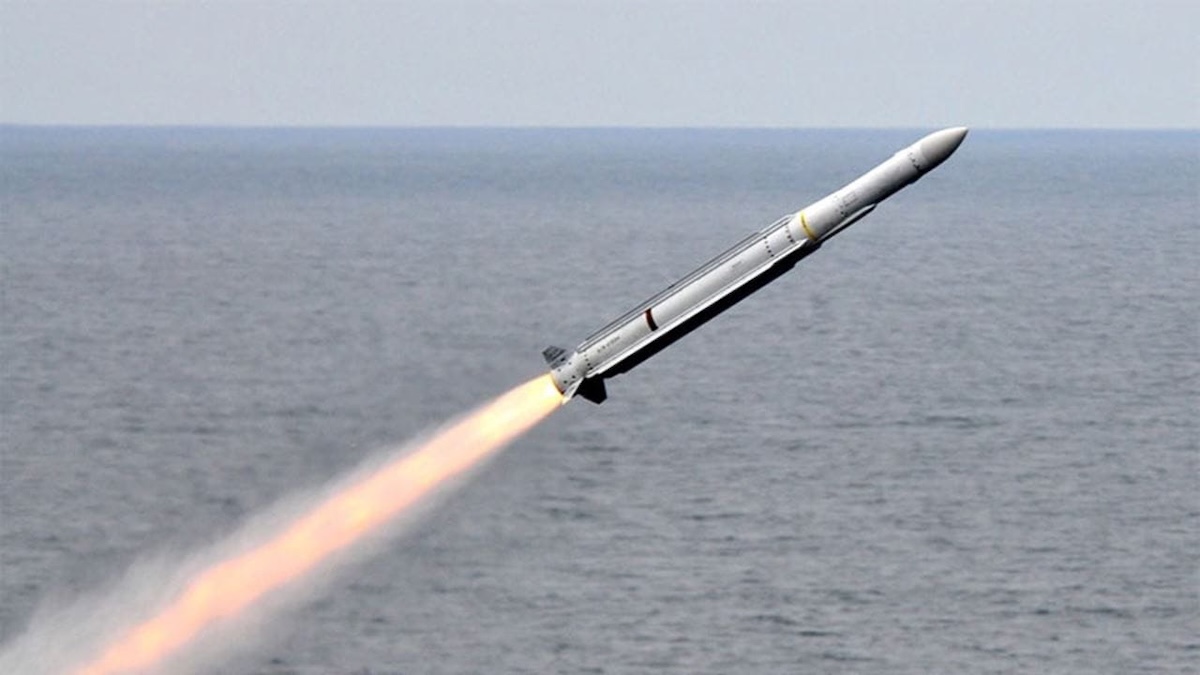
In today’s naval battlespace, threats can emerge in a matter of seconds. Fast, maneuverable missiles, small attack craft, and evolving aerial threats demand a response system that is equally swift and precise.
The Evolved SeaSparrow Missile (ESSM) was designed to meet that need. It’s a compact, agile, and networked missile capable of intercepting incoming threats before they reach the fleet.
This explainer breaks down what ESSM is, how it works, and its place in modern naval defense.
Understanding the ESSM and Its Mission
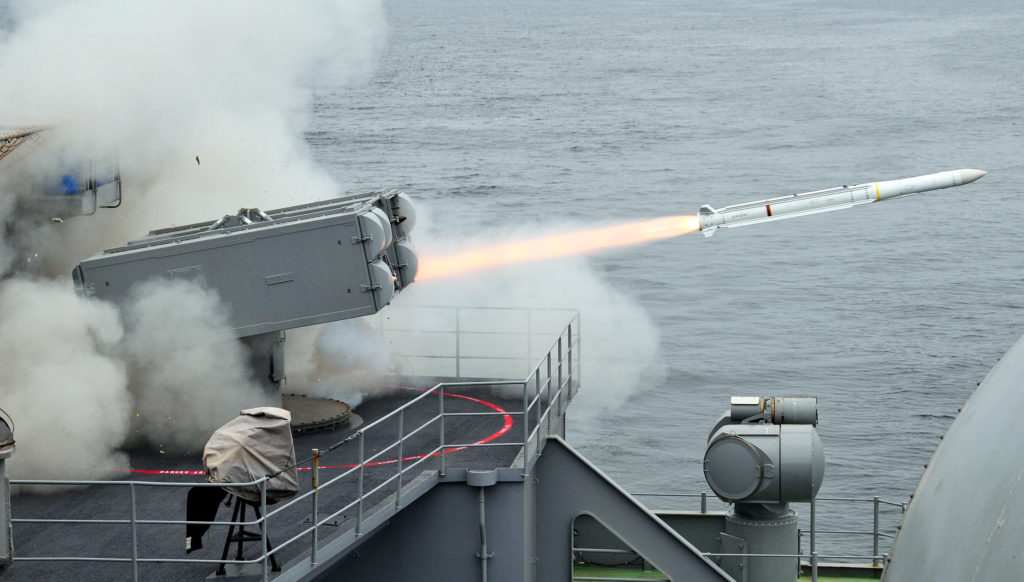
The Evolved SeaSparrow Missile is a medium-range, ship-launched surface-to-air missile developed to provide naval forces with a flexible point- and area-defense solution.
Building on the legacy of the RIM-7 SeaSparrow, Raytheon designed ESSM to address increasingly fast, low-flying, and maneuverable threats, including anti-ship cruise missiles and advanced aircraft.
The ESSM’s primary purpose is fleet defense. It protects high-value ships, such as aircraft carriers, amphibious assault ships, and cruisers, by intercepting incoming threats before they can strike.
Its networked design allows it to integrate with combat systems such as the Aegis Weapon System, linking radars, fire-control, and missile launchers to create a coordinated defensive bubble around a ship or task force.
ESSM at a Glance: Speed, Precision, and Limitations
A closer look shows that ESSM is notable for its speed, agility, and integration.
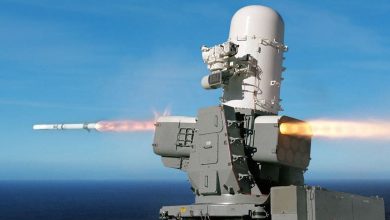
It uses a solid-fuel rocket motor and an aerodynamic design optimized for rapid response and high maneuverability.
Its guidance system combines semi-active radar homing with mid-course updates from the ship’s combat system, allowing for precise interception even against highly evasive targets.
Other key features include:
- Vertical Launch System (VLS) compatibility: ESSM can be fired from modular VLS cells, enabling rapid salvo launches without altering ship design.
- Block upgrades: Over time, Block I and Block II variants improved guidance, range, and compatibility with modern fire-control systems.
- Multi-target engagement: Linked with Aegis or similar systems, multiple missiles can be fired simultaneously to counter saturation attacks.
| Category | Description |
| Name | Evolved SeaSparrow Missile (ESSM) |
| Type | Surface-to-air missile |
| Developer | Raytheon Missiles and Defense (US), NATO cooperative program |
| Purpose or Role | Shipborne point- and area-defense against aircraft, cruise missiles, and some anti-ship missiles |
| Length | 3.66 meters (12 feet) |
| Diameter | 25.4 centimeters (10 inches) |
| Weight | ~280 kilograms (617 pounds) |
| Propulsion and Guidance | Solid-fuel rocket motor; semi-active radar homing (compatible with Aegis Weapon System and shipboard radars) |
| Launch Platform | Mk 41 VLS on Aegis-equipped ships |
| Speed | Mach 4 (4,939 kilometers/3,069 miles per hour) |
| Range | ~50 to 70 kilometers (31 to 44 miles) |
| Operational Status | In service with the US Navy and multiple allied navies |
However, ESSM has limitations. Its range is moderate compared to that of long-range interceptors, making it primarily a point- or local-area-defense missile, not a strategic-strike weapon.
Its effectiveness also depends heavily on the host ship’s radar and combat system; without proper targeting data, its interception potential is reduced.
Finally, while agile, ESSM is not designed to defeat hypersonic or ballistic missiles, which require specialized interceptors.
How ESSM Shapes Naval Defense Locally and Globally
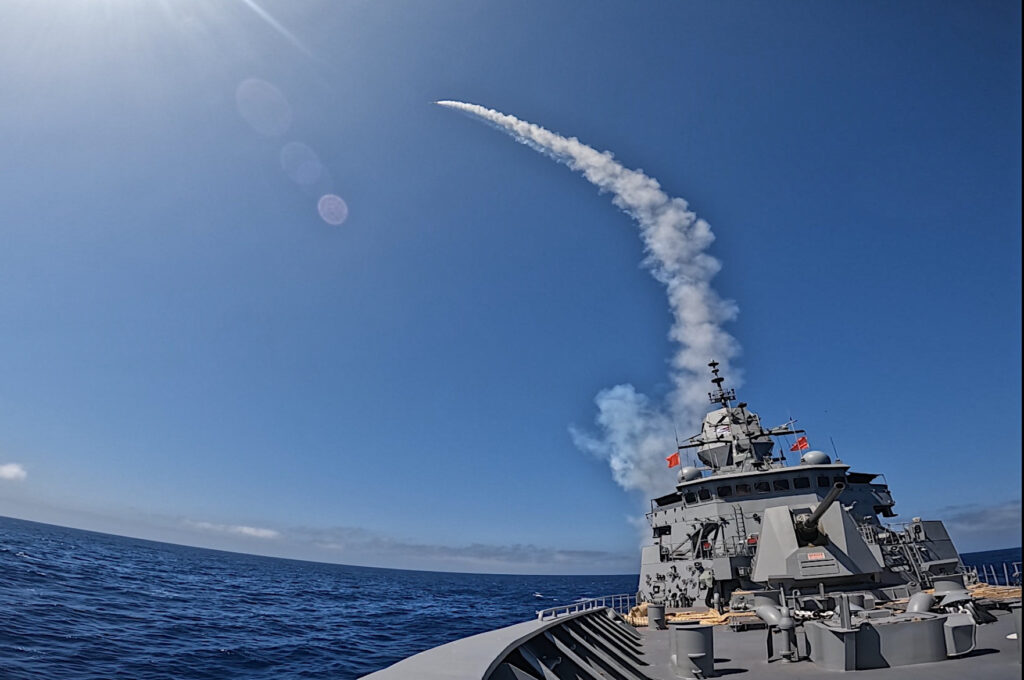
The ESSM is deployed wherever fast, precise ship defense is needed.
Locally, it forms the backbone of air defense for carrier strike groups, amphibious forces, and logistics vessels against incoming missiles and hostile aircraft.
Its rapid-response capability enables ships to engage threats at close and medium ranges, effectively prolonging fleet survivability in high-threat zones.
Globally, ESSM is used extensively by the US, NATO allies, and other partner nations, ensuring interoperability across multinational task forces.
The Australian Navy has upgraded its Hobart-class guided missile destroyer HMAS Sydney with the missile, and Denmark also made moves to boost its Iver Huitfeldt-class frigates when it acquired additional ESSM Block 2 units.
In an era where missile attacks and swarm tactics are increasingly common, ESSM remains a fast, reliable, and networked shield that allows naval forces to operate with confidence in contested environments.