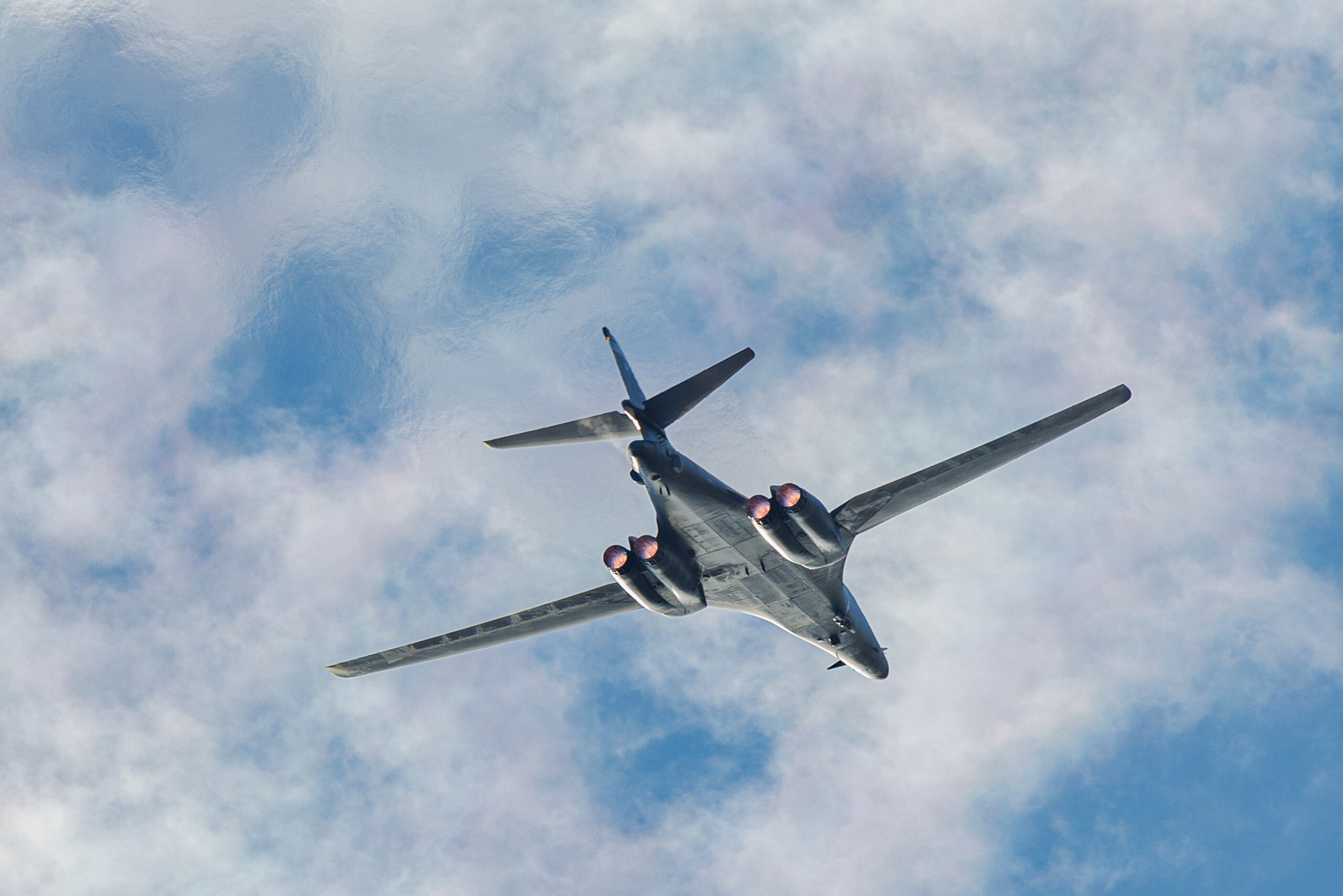
When the roar of afterburning engines once signaled a Cold War race for speed and survivability, the B-1B Lancer emerged as a symbol of long-range strike dominance.
Originally built as a high-speed nuclear penetrator for Soviet-era defenses, the transition to a conventional bomber has unlocked its full potential, as the Lancer holds almost 50 world records for speed, payload, and range.
This explainer breaks down how the B-1B evolved for modern warfare, its operational role, and what comes next.
Getting to Know the Bone
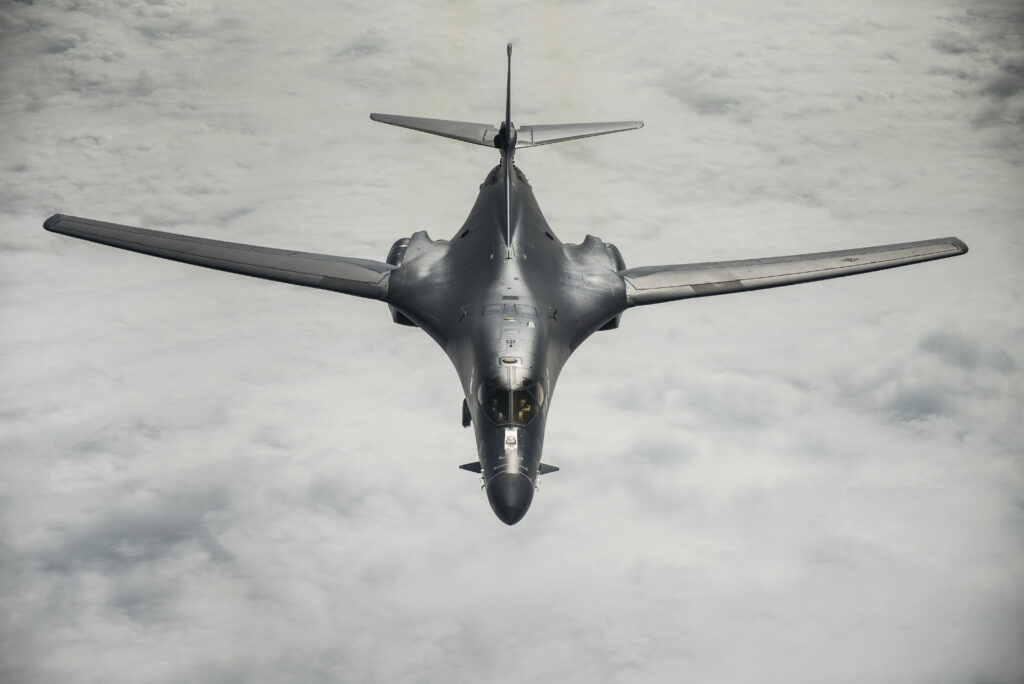
Fast, flexible, and built for global reach, the B-1B Lancer (also known as “the Bone”) is a long-range, multi-mission, supersonic bomber that can deliver high-volume, precision strike effects even with heavy conventional payloads.
Rockwell International first developed the Bone with nuclear capabilities to replace the B-52 Stratofortress, but changing strategic needs and arms control treaties ensured that the B-1B remained a relevant, flexible tool for modern warfare.
Now, Boeing is at the forefront of modernization and sustainment programs that keep the aircraft mission capable and operationally relevant.
| Category | Details |
| Type | Long-range, multi-role, heavy bomber |
| Power Plant | Four General Electric F101-GE-102 turbofan engines with afterburner |
| Thrust | ~30,000 pounds (13,608 kilograms) with afterburner, per engine |
| Wingspan | 137 feet (41.8 meters) extended forward, 79 feet (24.1 meters) swept aft |
| Wing Design | Variable-sweep wings for speed and endurance optimization |
| Length | 146 feet (44.5 meters) |
| Height | 34 feet (10.4 meters) |
| Weight | Approximately 190,000 pounds (86,183 kilograms) |
| Maximum Takeoff Weight | 477,000 pounds (216,364 kilograms) |
| Fuel Capacity | 265,274 pounds (120,326 kilograms) |
| Payload | 75,000 pounds internal (34,019 kilograms) of mixed ordnance and mission equipment |
| Speed | ~900 miles (1,450 kilometers) per hour (Mach 1.2 at sea level) |
| Range | Intercontinental with aerial refueling |
| Ceiling | >30,000 feet (9,144 meters) |
| Crew | Four (aircraft commander, co-pilot, and two weapon systems officers) |
Inside the B-1B Lancer
Today, the B-1B excels across multiple mission sets, leveraging its range, speed, and payload flexibility to deliver decisive firepower wherever it’s needed. It has been deployed for military drills in Sweden, Japan, and South Korea.
Combat Role and Mission Set
Reengineered for modern warfare, the strategic bomber operates as a high‑capacity strike platform.
Here are the Bone’s main capabilities:
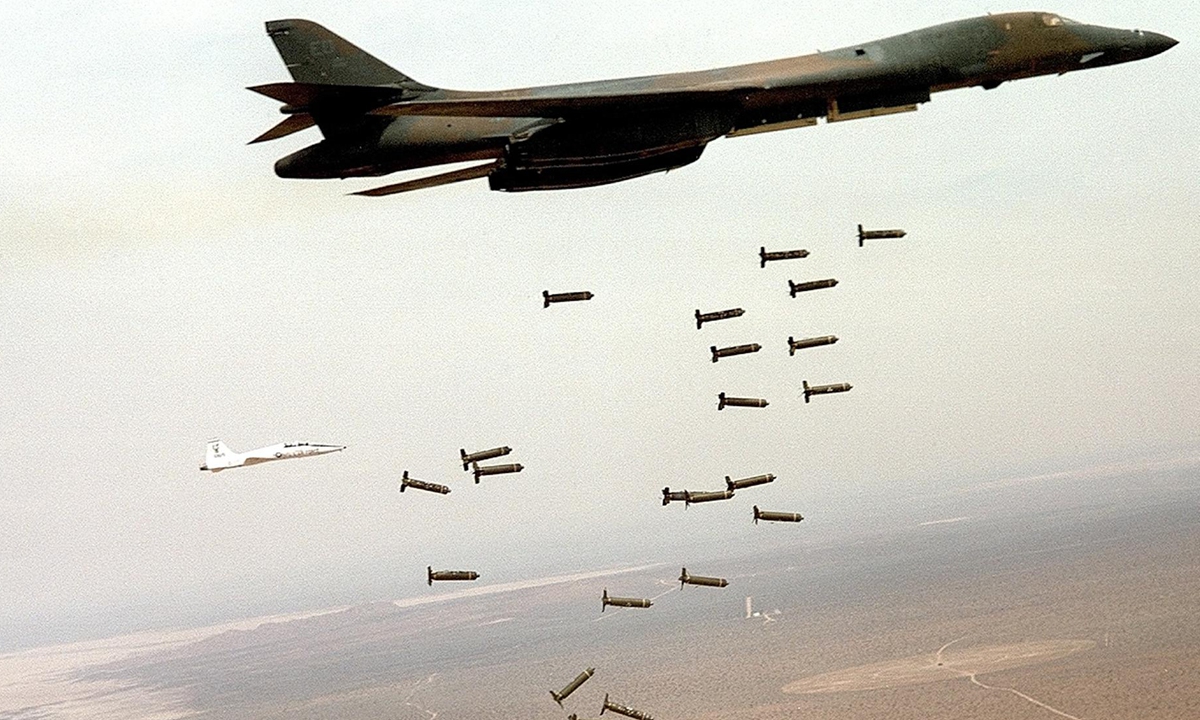
- Long-range conventional strike: The B-1B can hit distant targets worldwide, delivering heavy conventional payloads.
- High-volume precision weapons delivery: It can carry and accurately release a large number of precision-guided munitions.
- Maritime strike, including anti-ship missions: The aircraft can engage naval targets, providing long-range strike options against ships and other maritime threats.
- Close air support in permissive or semi-contested environments: The B-1B can support ground forces by delivering timely, heavy firepower in areas with limited or moderate air defense threats.
Avionics
The B-1B’s avionics suite enables precision navigation, terrain-following flight, and survivability in contested environments.
Modern upgrades have introduced digital cockpits, improved communications, and enhanced networking, allowing the aircraft to integrate with joint and coalition command-and-control systems.
Defensive systems support threat detection and electronic countermeasures, helping the bomber operate in complex airspace while maintaining mission effectiveness.
Weapons and Mission Systems
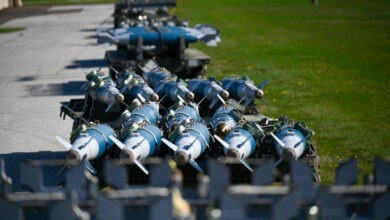
The Bone carries a wide mix of precision-guided munitions and long-range standoff weapons in its internal bays, including JDAMs, JASSMs, LRASM anti-ship missiles, and other precision-guided munitions.
Weapons loads can be reconfigured quickly on the ground, allowing the aircraft to switch between conventional strike, maritime missions, and close air support.
This flexibility allows the B-1B to shift between strategic deterrence, regional strike missions, and dynamic operational tasking without platform redesign.
Limitations
Despite its capabilities, the B-1B faces growing limitations in high-threat environments.
It lacks the survivability needed to penetrate modern integrated air defense systems without significant support, and its complex structure has led to maintenance and readiness challenges as the fleet ages.
Sustainment costs and airframe fatigue have driven the US Air Force to begin reducing the fleet as newer platforms enter service.
Why It Matters
The B-1B Lancer represents a transitional era in airpower — bridging Cold War strategic bombing and modern precision strike warfare.
While it will eventually be replaced by the B-21 Raider, the B-1B continues to provide unmatched conventional payload and speed. It remains a reminder that mass, range, and responsiveness still matter, even as stealth and networking redefine the future of air combat.