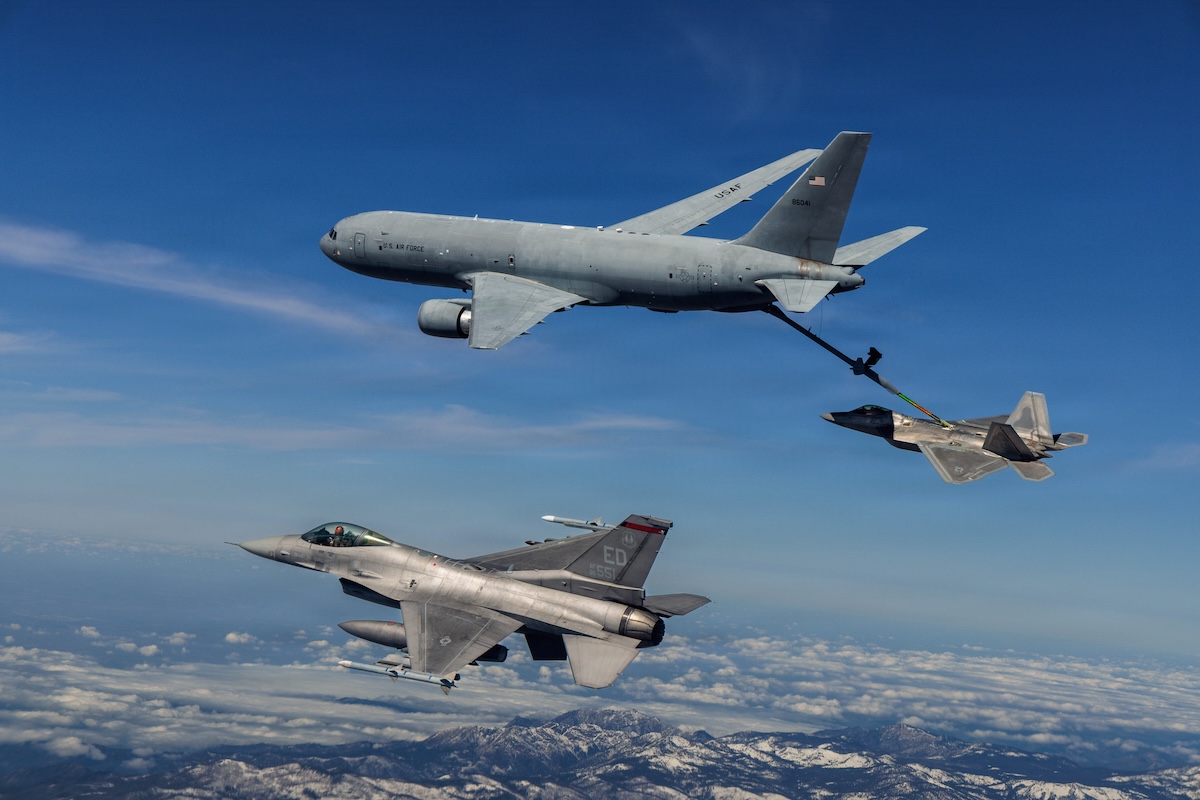
The US Air Force (USAF) and Boeing have agreed on a plan to improve the KC-46 Pegasus tanker’s mission readiness following years of reliability and availability challenges.
The plan is built around three core initiatives: using early-built aircraft for spare parts and testing, speeding up a major camera/vision upgrade, and implementing a temporary targeted performance-based logistics effort.
This method aims to improve KC-46 availability by about six percent in the near term and increase its availability by more than 20 percent by 2030.
“The KC-46 is a cornerstone of US power projection, and we are proactively partnering with Boeing to ensure it is always ready to deliver,” said Secretary of the Air Force Troy Meink.
Three-Point Plan
The first part of the plan involves repurposing five early-build KC-46 aircraft that were not due to join active squadrons until early 2031.
In the meantime, these planes will be used as dedicated test assets, keeping the operational KC-46s fully focused on refueling missions without pulling them out for testing.
The USAF will also strip high-value components — like engines and landing gear — from three of these non-flying aircraft, and transfer them into the active fleet to fix shortages immediately.
Next comes accelerating the rollout of the Remote Vision System (RVS) 2.0 upgrade by Boeing, as the KC-46’s boom operator uses the RVS to guide aerial refueling.
It is set to begin fielding in early 2028.
To speed up the installation, the retrofit work will be done during scheduled depot maintenance, cutting the overall time from 13 years to seven and greatly reducing aircraft downtime.
Finally, the USAF will pursue a temporary performance-based logistics arrangement that holds Boeing accountable for improving aircraft system performance and availability.