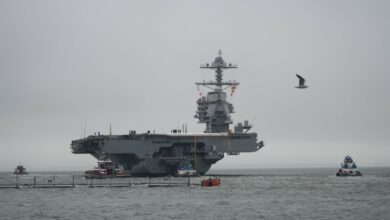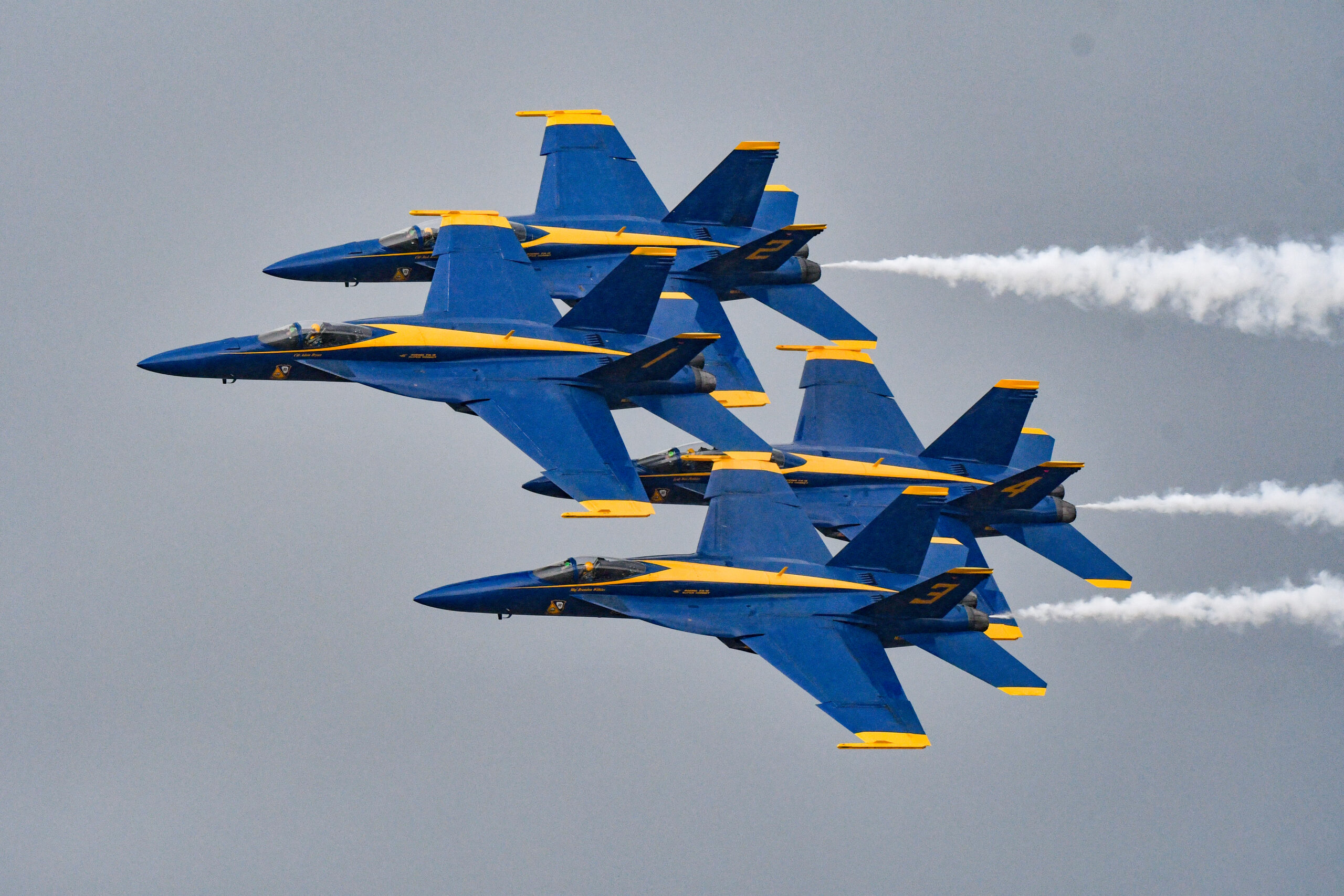
On the crowded deck of an aircraft carrier, where seconds matter and space is scarce, the F/A-18E/F Super Hornet launches into missions that can stretch thousands of miles from the ship that sent it.
Built to replace aging fighters and expand the reach of naval aviation, the aircraft combines speed, versatility, and heavy firepower in a single platform.
Here’s a closer look at how the Super Hornet became one of the most important aircraft in modern carrier operations.
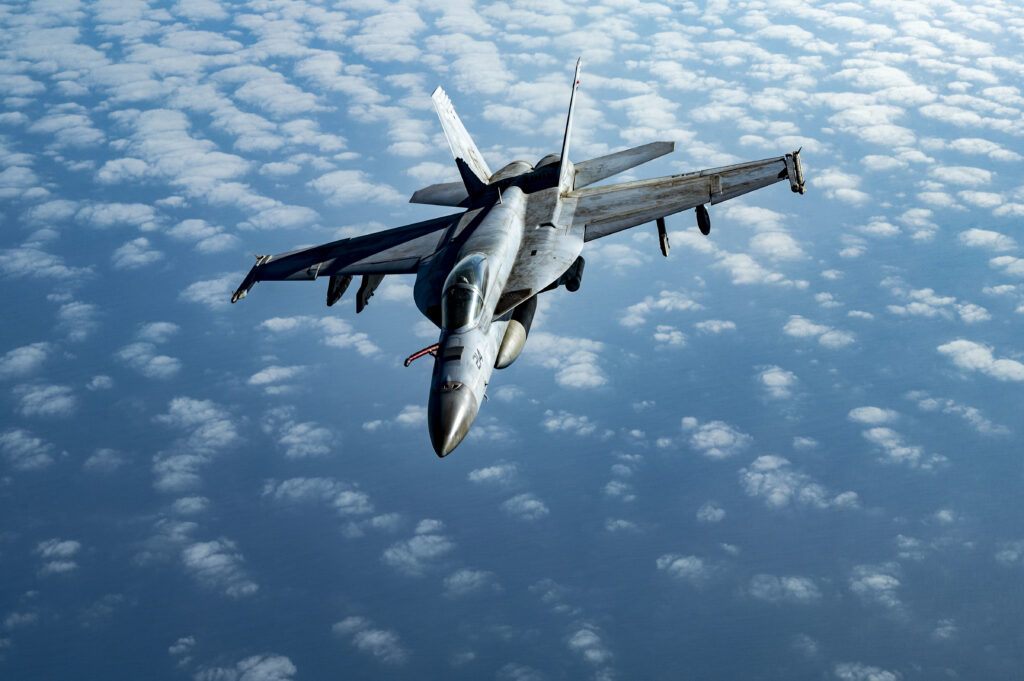
What the Super Hornet Is
In the late 1980s and early 1990s, the US Navy needed a more capable carrier-based fighter to replace the aging F-14 Tomcat and supplement earlier Hornets with greater range, payload, survivability, and multi-mission capability.
The result was the F/A-18E/F Super Hornet family: a larger airframe, more powerful engines, increased internal fuel, greater payload capacity, and upgraded avionics designed for modern carrier operations.
Engineered by Boeing for carrier operations, it handles dogfights, precision attacks, electronic countermeasures, and aerial refueling with equal skill.
Today, the twin-engine, carrier-based multirole fighter is used by the US Navy and allied forces for air superiority, strike missions, and fleet defense.
Variants: E and F Models
The Super Hornet isn’t the original Hornet — it’s a significantly redesigned and enlarged evolution of the earlier F/A-18C/D series.
Over the years, this platform has grown into multiple versions, each tailored for specific missions and operational needs.
- F/A‑18E Super Hornet: Single‑seat version focused on strike and air superiority.
- F/A‑18F Super Hornet: Two‑seat model with an additional weapons systems officer for complex missions.
- Block II/Block III upgrades: Modernized avionics, sensors such as AESA radar, improved networking, and expanded capabilities help keep the design relevant in evolving threat environments.
An important derivative is the EA‑18G Growler, a specialized electronic warfare jet based on the Super Hornet platform that suppresses enemy air defenses.
How It Works: Key Features
1. Multi‑Role Design
The Super Hornet is built to do many jobs, from air superiority to precision ground attack, aerial refueling, and suppression of enemy air defenses. This flexibility lets commanders tailor loadouts and tactics to mission needs.
2. Advanced Power and Performance
Powered by two General Electric F414‑GE‑400 engines, each delivering about 22,000 pounds (9,979 kilograms) of thrust, the Super Hornet pairs speed with strength and endurance, allowing it to launch from carriers and project power far from shore.
3. Sensors and Avionics
With modern avionics, digital displays, and advanced radar systems such as the AN/APG‑79 AESA, the Super Hornet has superior situational awareness and targeting capabilities compared to earlier fighters.
4. Weapons Capacity
It carries an internal 20mm cannon and can mount a wide range of air‑to‑air and air‑to‑surface weapons — missiles, precision bombs, and standoff munitions on 11 hardpoints — allowing it to engage threats in all domains.
| Category: | Details: |
| Type | Carrier-capable multirole fighter |
| Manufacturer | Boeing |
| Country of Origin | United States |
| Crew | 1 (E variant) / 2 (F variant) |
| Length | 18.3 meters (60 feet) |
| Wingspan | 13.6 meters (44.8 feet) |
| Height | 4.9 meters (16 feet) |
| Maximum Takeoff Weight | ~29,900 kilograms (66,000 pounds) |
| Powerplant | 2 × General Electric F414-GE-400 turbofan engines |
| Thrust | ~22,000 lbf each (with afterburner) |
| Top Speed | Mach 1.6 (1,235 kilometers/767 miles per hour) |
| Combat Radius | ~390 nautical miles (720 kilometers/450 miles) |
| Ferry Range | ~1,800 nautical miles (3,300 kilometers/2,071 miles) |
| Service Ceiling | ~50,000 feet (15,000 meters) |
| Armament | 20mm M61A2 cannon; air-to-air and air-to-ground missiles; guided bombs |
| Hardpoints | 11 external stations |
| Avionics | AESA radar (AN/APG-79), advanced electronic warfare suite |
| Key Features | Carrier operations, multirole flexibility, reduced radar signature, advanced sensors |
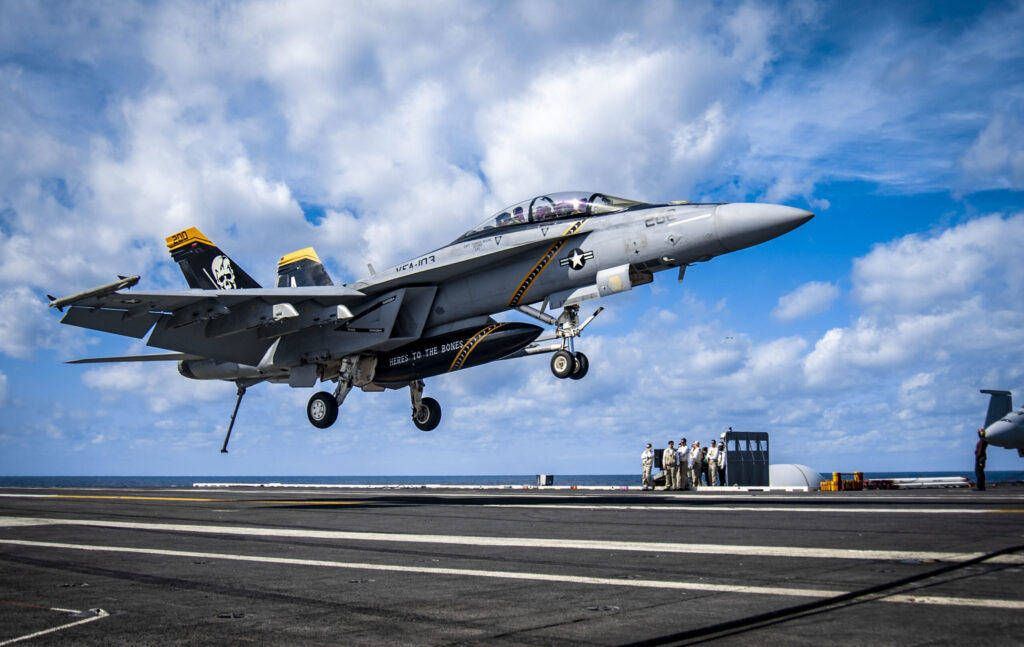
Global Use and Combat History
The Super Hornet was first deployed operationally in 2002 aboard the USS Abraham Lincoln, seeing action in Iraq and other theaters soon after.
Since then, it has participated in major operations, including strike missions in the Middle East and ongoing deployments with US carrier strike groups around the world.
While the US Navy remains its primary operator, allied nations such as Australia and Kuwait have also acquired Super Hornets, broadening their global footprint and interoperability.
Strengths and Limitations
Strengths:
- Exceptionally versatile multi‑role performance
- Carrier‑optimized design with strong payload and range
- Modern sensors and networking keep it relevant against diverse threats
Limitations:
- Not a stealth aircraft (though low‑observable enhancements help)
- As a fourth‑generation platform, it needs to increasingly work alongside newer fifth-generation fighters, such as the F‑35
Future Outlook
The Super Hornet lineup continues to be upgraded with Block III enhancements — advanced avionics, electronic warfare modernization, flight control improvements, and upgraded warning systems that extend service life well into the coming decade.
This keeps the aircraft valuable even as modern threats evolve and newer platforms enter service worldwide.