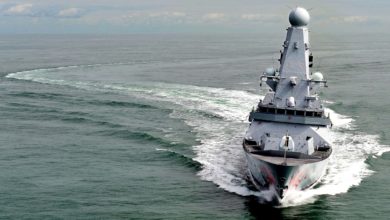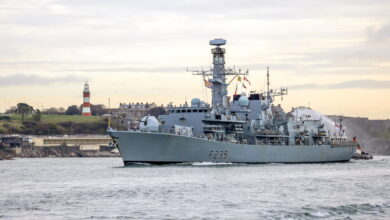
The Royal Navy has taken delivery of its second unmanned minehunting vessel as it shifts away from traditional clearance ships toward remote systems.
Named RNMB Adventure, the new platform joins its sister vessel Ariadne under the UK-French Maritime Mine Counter Measures (MMCM) program.
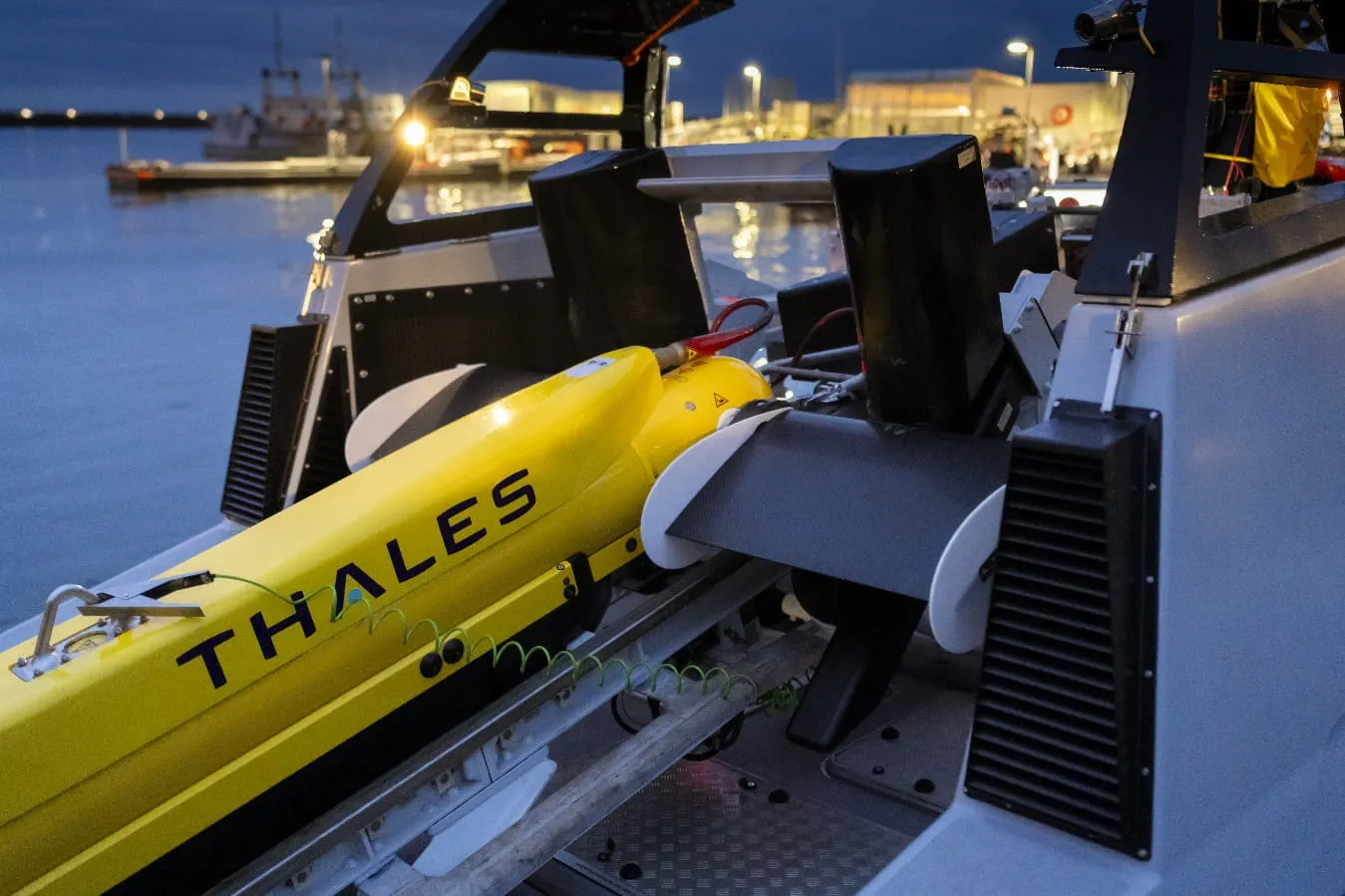
Built to operate without a crew onboard, Adventure serves as a “primary system,” deploying and coordinating smaller autonomous tools to detect and neutralize naval mines.
It can carry payloads such as the SeaCat, an unmanned surface vessel that maps the seabed and identifies threats before disposal.
Operators control missions from a portable command center, keeping personnel safely away from hazardous environments.
Developed through a multinational effort led by the Organisation for Joint Armament Cooperation, the MMCM system can operate in sea conditions up to State 4, with waves reaching 2.5 meters (8.2 feet).
It also integrates survey, detection, and neutralization tools into a single deployable package.
UK Steps Up Autonomous Mine Warfare
The delivery is part of a broader UK push to modernize mine warfare with autonomous systems.
In March 2025, the Royal Navy accepted its first autonomous minehunting vessel, Ariadne, which uses artificial intelligence for automatic target recognition alongside advanced sonar, remotely operated vehicles, and a lightweight operations center.
HMS Stirling Castle, a mine‑hunting support ship designed to host, launch, and recover autonomous systems, entered service in November 2025.
By December, Thales won a contract to roll out next‑generation remote AI‑assisted command centers to support autonomous minehunting missions, helping operators track and neutralize mines more efficiently.
Just recently, in April, the Royal Navy announced plans to equip RFA Lyme Bay with uncrewed systems for mine detection and clearance.