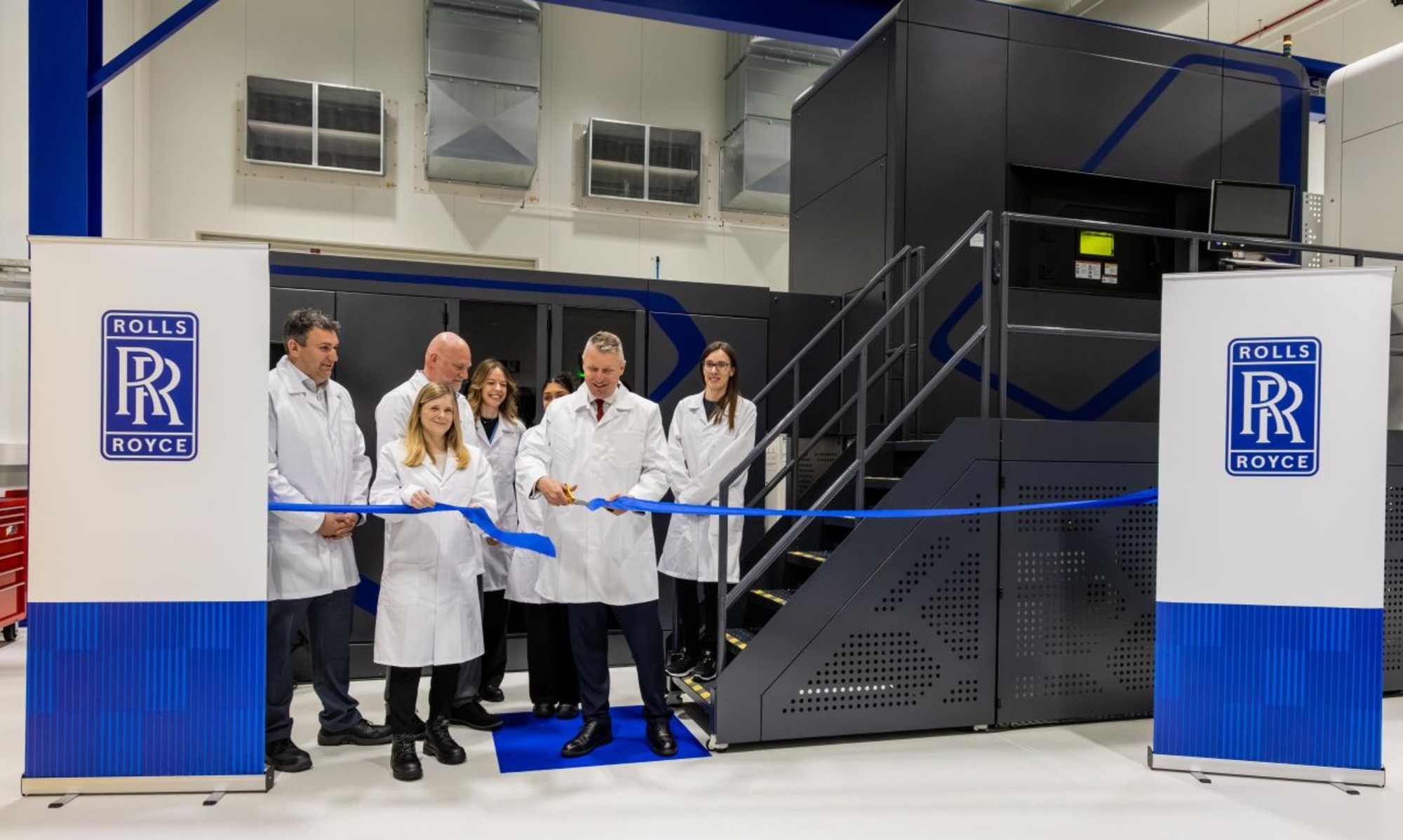
Rolls-Royce has inaugurated a new additive manufacturing line in Bristol to produce key components for next-generation military aircraft engines, supported by UK Ministry of Defence funding.
British Defence Minister Luke Pollard led the ceremony alongside Filton and Bradley Stoke Parliament Member Claire Hazelgrove at the company’s Defence Assembly and Operations site.
The facility uses laser-based metal 3D printing to build intricate engine parts from super-alloy powders.
The process cuts lead times, lowers costs, and boosts efficiency compared with traditional manufacturing, while reducing material waste and energy use and improving performance through optimized, lightweight designs.
The hub operates in a controlled 350-square-meter (3,767-square-foot) environment incorporating temperature and air pressure control to maintain consistent production quality.
Rolls-Royce said that engineering teams are now receiving specialized skills training to run the center.
“This new facility in Bristol is a clear sign of UK industry investing in the skills and technology we need to stay ahead,” Pollard said at the event.
“By using the latest manufacturing techniques … Rolls-Royce is helping to keep British engineers at the forefront of innovation — all the while creating and sustaining skilled jobs right here in Bristol.”
‘Fundamental’ for Modern Air Combat Fleets
Rolls-Royce noted its latest capability will support broader initiatives such as the trilateral Global Combat Air Program (GCAP) between the UK, Japan, and Italy, which develops a sixth-generation system to replace the member countries’ aging fighter jets.
“Across Rolls-Royce we are committed to the continued development and enhancement of our technologies to meet the demands of today, while providing scalable infrastructure required for the future,” said Andy Higginson, SVP of manufacturing, assembly, and test at Rolls-Royce.
“GCAP will be fundamental to the UK’s future aerospace sector and capabilities like additive manufacturing will be crucial to enabling innovation at pace, driving cost savings and enhancing the skills and capabilities of our people.”