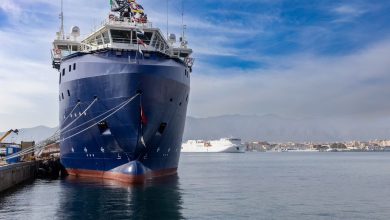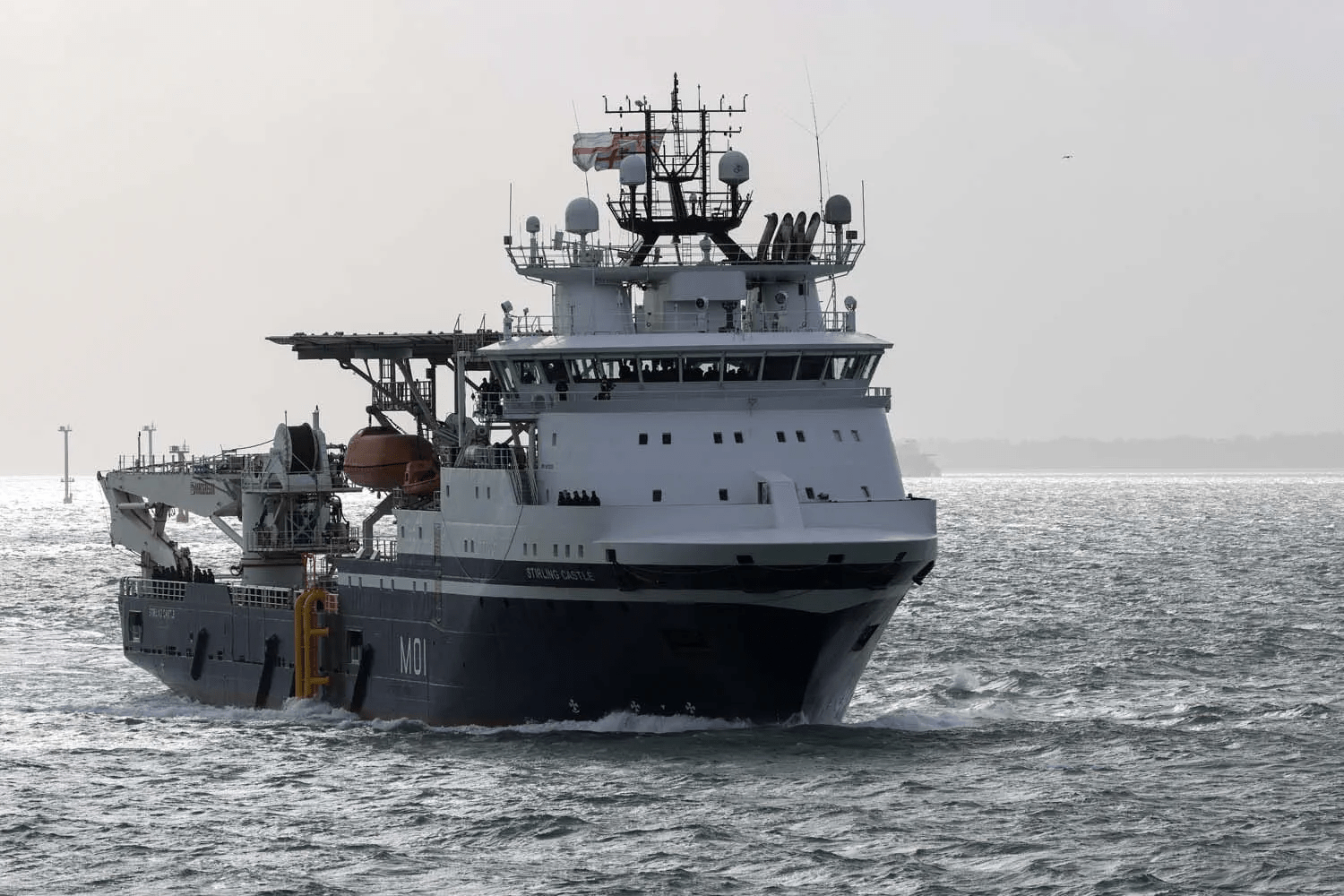
The UK Royal Navy’s new minehunting support ship HMS Stirling Castle has arrived at its home port in Portsmouth, England, following months of trials and crew training.
The 43-meter (141-feet) blue-and-white vessel sailed into His Majesty’s Naval Base Portsmouth for the first time under the White Ensign, marking its transition from refit to operational service.
Families and friends of the 55-strong crew gathered on the dock to welcome the ship, which will play a key role in the navy’s move toward modern, remotely operated minehunting missions.
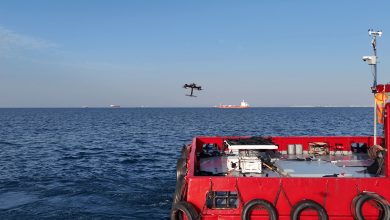
The Stirling Castle is equipped to house, ready, launch, and recover autonomous vessels and underwater systems for mine-countermeasure operations.
Commander Phil Harper, the ship’s commanding officer, described the arrival as a major achievement after months of hard work.
“Ahead of us lie many more months of building our knowledge, developing tactics and techniques and delivering 21st-Century mine hunting from our deck,” he said.
Production and Sea Trials
Originally part of the Royal Fleet Auxiliary, HMS Stirling Castle underwent an extensive conversion and refit before joining the Royal Navy’s fleet of mine countermeasure vessels.
It was built as part of a new generation of ships designed to deploy and recover remotely operated and unmanned systems rather than relying solely on traditional hull-mounted sonar.
Over the past six months, the ship completed a demanding series of sea trials to test propulsion, navigation, and new mission systems, as well as to integrate the crew with the vessel’s upgraded operational framework.
The trials also served to validate the navy’s growing use of modular, offboard mine warfare equipment, which allows for safer and more flexible operations in hazardous waters.
The Stirling Castle will now take a leading role in testing and refining minehunting tactics developed under the Royal Navy’s Mine Hunting Capability Programme, which is gradually replacing older Sandown and Hunt-class vessels.