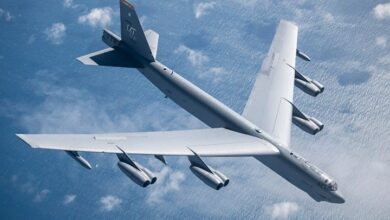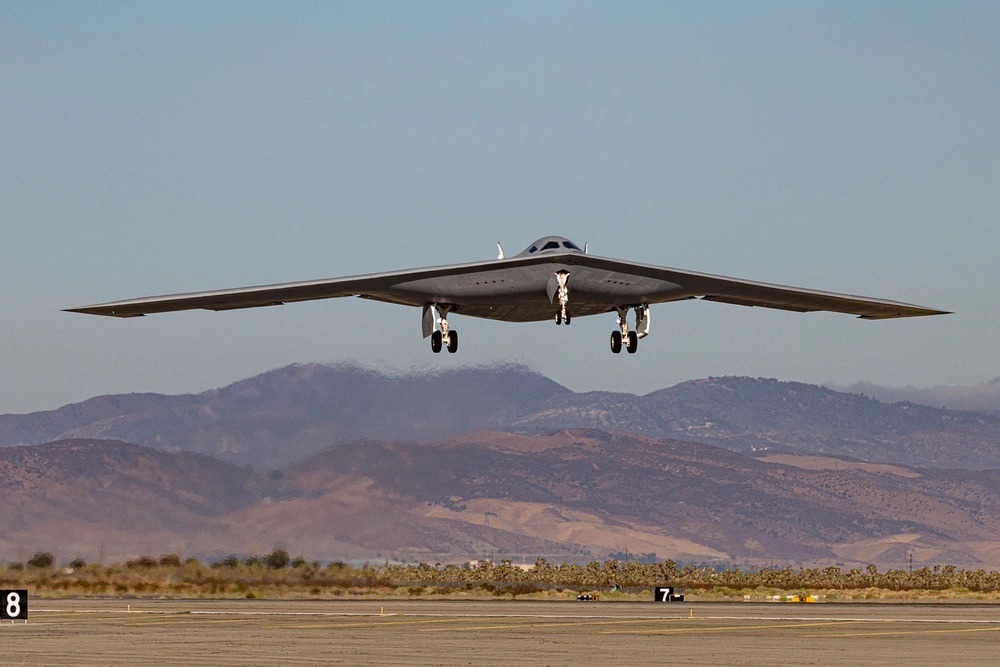
In the silent skies above tomorrow’s battlefield, stealth isn’t optional — it’s survival.
Enter the B-21 Raider, the US Air Force’s next-generation long-range stealth bomber designed to penetrate heavily defended airspace and deliver precision strikes anywhere on the globe.
Compact, low-observable, and built for persistence, the Raider embodies decades of lessons learned from the B-2 Spirit and is modernized for 21st-century conflicts.
Discover how this cutting-edge aircraft works, why it matters, and what makes it a centerpiece of America’s future strategic deterrence.
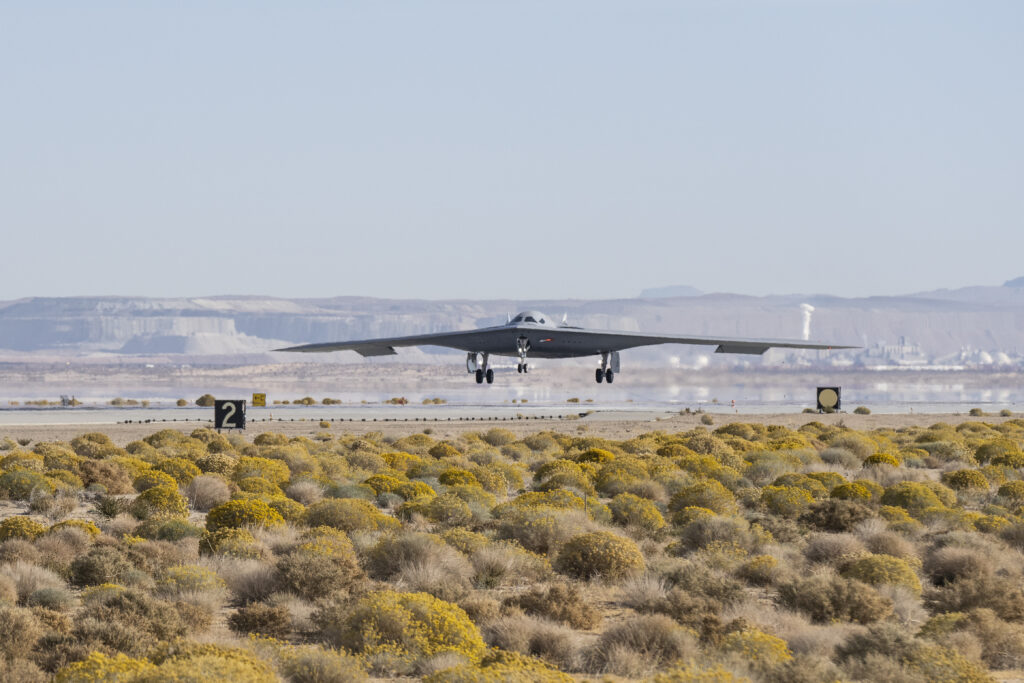
What Is the B-21 Raider?
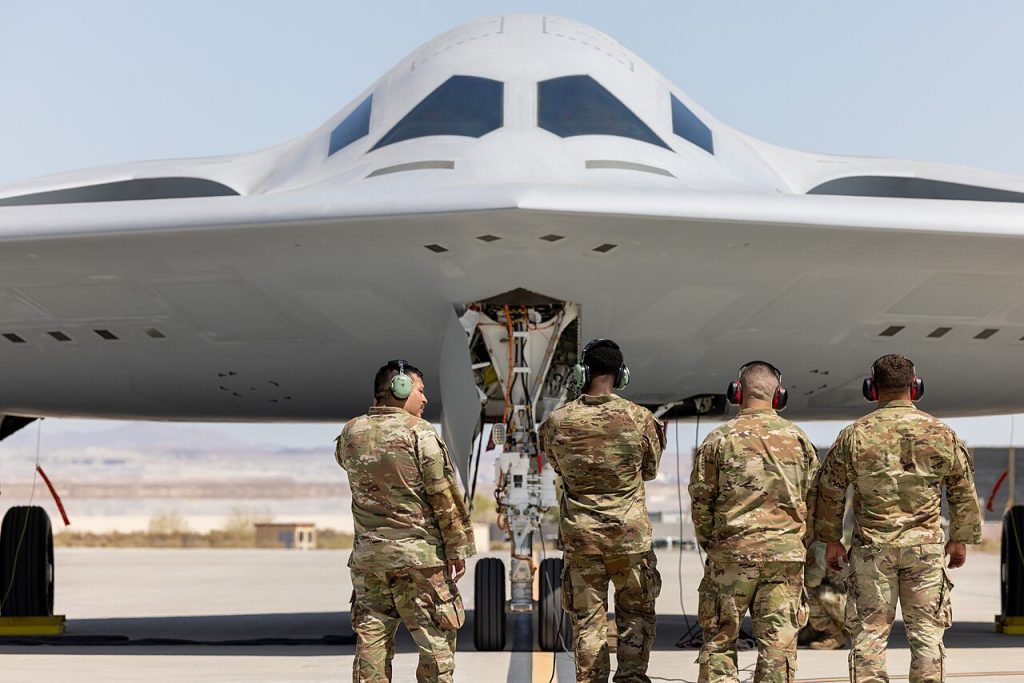
The B-21 Raider is a long-range, stealth-capable strategic bomber designed for both conventional and nuclear missions.
Built on the expertise of the US Air Force’s Long-Range Strike Bomber (LRS-B) program, it is engineered to operate in contested airspace, evade advanced radar networks, and deliver precision ordnance.
Unlike previous bombers, the B-21 blends low observability, modular payloads, and networked command-and-control, enabling it to remain relevant against evolving threats.
| Category: | Details: |
| Role | Long-range stealth bomber |
| Manufacturer | Northrop Grumman |
| Crew | 2 (pilot, co-pilot) |
| Length | Classified (~30 meters/98 feet estimated) |
| Wingspan | Classified (~61 meters/200 feet estimated) |
| Maximum Takeoff Weight | Classified (~170,000 kilograms/374,786 pounds estimated) |
| Speed | Subsonic (high-efficiency cruise) |
| Range | Intercontinental, >8,000 nautical miles (9,206 miles/14,816 kilometers) estimated |
| Payload | Conventional and nuclear munitions, internal bays |
| Avionics | Advanced stealth systems, sensor fusion, networked ISR |
| Operators | US Air Force |
| Unit Procurement Cost | $550 million (base year 2010 dollars) / $639 million (base year 2019 dollars) / $692 million (base year 2022 dollars) |
How It Came to Be
By the early 21st century, the US Air Force faced a strategic dilemma: its long‑range bomber fleet was aging, expensive to operate, and increasingly ill‑suited to future high‑end conflicts.
The B‑52 Stratofortress lacked stealth. The B‑1 Lancer had speed and payload, but didn’t have the nuclear capability to go beyond conventional missions. The B‑2 Spirit had stealth, but came with extremely high acquisition and sustainment costs.
Advances in integrated air defenses, including modern radar networks and long‑range surface‑to‑air missiles, began to challenge the survivability of non‑stealthy platforms. Legacy bombers simply could not penetrate future contested airspace without unacceptable risk.
To innovate, the US Air Force launched the LRS‑B program to build a next‑generation stealth bomber from the ground up. Northrop Grumman was selected as the prime contractor to lead development.
The resulting B‑21 Raider was designed to close the capability gaps left by its predecessors: low observable design to survive integrated air defenses; modular payload and mission systems to adapt across warfighting domains; advanced networking and sensor fusion to operate with other assets seamlessly; and a more affordable lifecycle cost to allow larger fleet sizes.
How It Works
Key Features
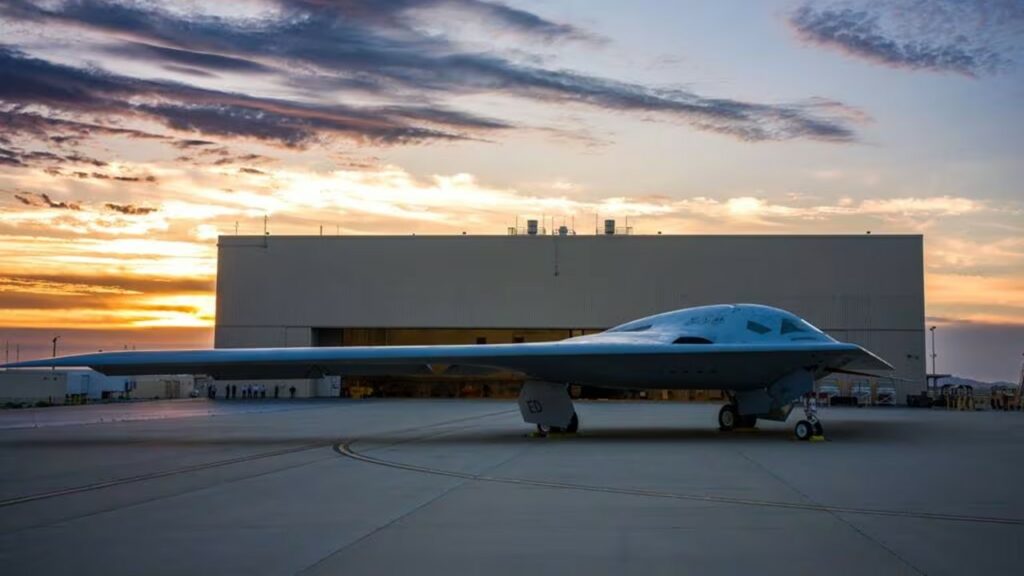
- Stealth design: Low-observable airframe minimizes radar cross-section and infrared signature.
- Long-range strike: Capable of intercontinental missions without refueling in many scenarios.
- Networked ISR: Sensor and data fusion support real-time battlefield awareness and mission adaptation.
- Internal weapons bays: Protects payloads while maintaining a stealth profile.
Strengths
- Survivable deterrence: Designed to operate in heavily defended airspace.
- Mission flexibility: Can carry conventional or nuclear ordnance, enabling global strike options.
- Technological edge: Incorporates next-generation avionics, communications, and low-observable materials.
Limitations
- Limited production rate: Long development cycle and manufacturing complexity constrain fleet size initially.
- Operational secrecy: Classified capabilities limit transparency and allied integration in the near term.
Global Use and Operational Deployment
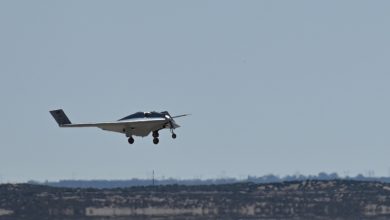
The B-21 Raider has completed its maiden flight and has been cleared for initial production, with the US Air Force slated to begin operational deployment in the mid-2020s.
It will operate from both strategic bases and potentially forward-deployed airfields, providing global reach for both conventional and nuclear deterrence missions.
Future Outlook
The B-21 Raider is set to redefine strategic bombing for decades to come.
Future developments may include integration with unmanned loyal wingman aircraft, AI-assisted mission planning, hypersonic payload delivery, and enhanced multi-domain networking.
As global threats evolve, the Raider hopes to stand as a cornerstone of American deterrence and strike capability well into the 21st century.