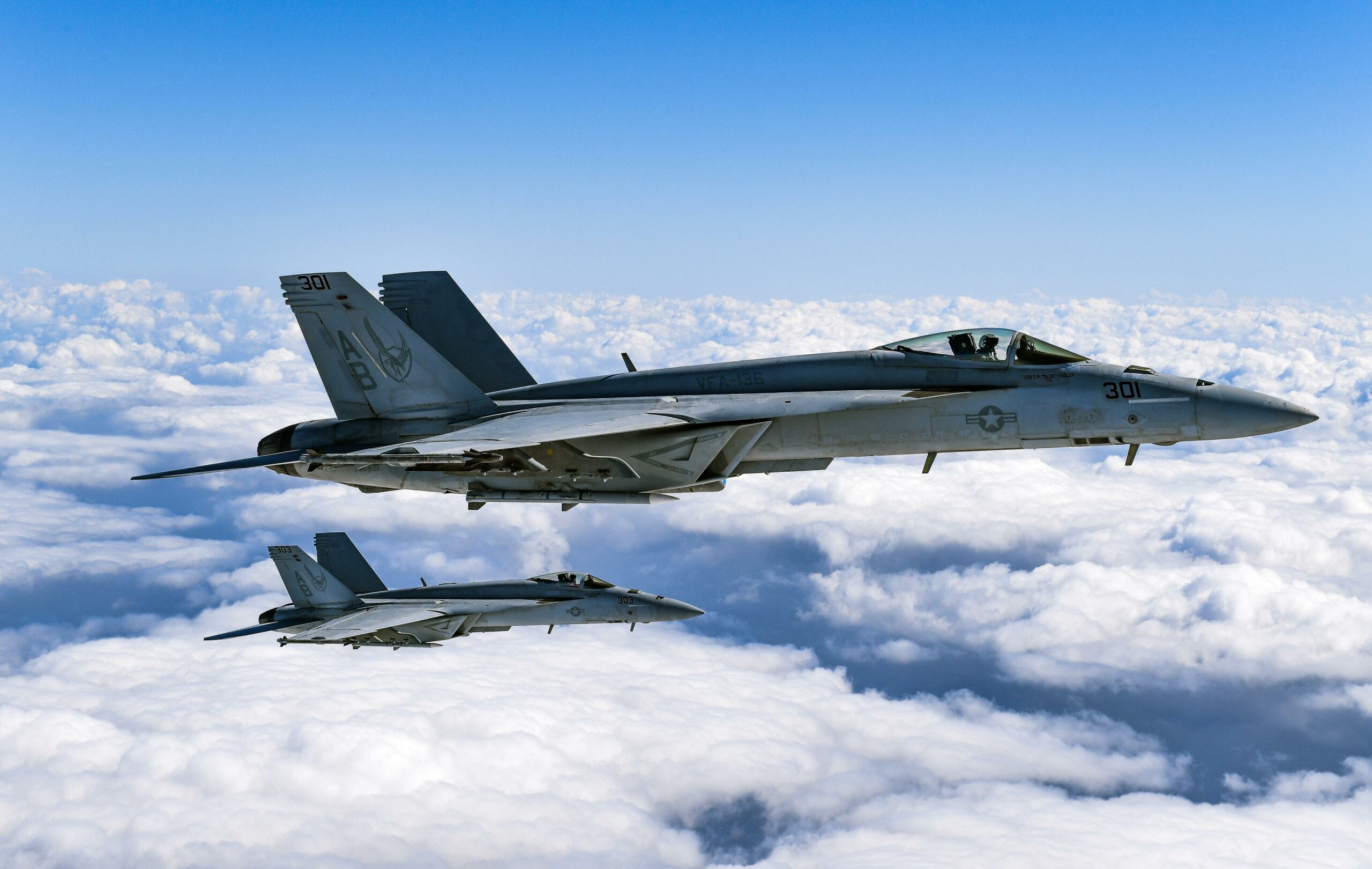
Raytheon has completed a critical software and systems review of its Advanced Electronic Warfare (ADVEW) prototype for the US Navy’s F/A-18E/F Super Hornet.
The ADVEW is intended to replace the Super Hornet’s AN/ALQ-214 integrated defensive electronic countermeasure and AN/ALR-67(V)3 radar warning receiver, providing enhanced defensive capabilities and greater survivability in contested environments.
The review confirmed progress in the prototype’s software development and its integration with flight-representative hardware and other critical self-protection subsystems, while also verifying compliance with government reference architecture.
In addition to the review, Raytheon completed a Test Plan Working Group to coordinate and streamline evaluations of the system’s in-flight performance, ensuring it can be efficiently assessed for readiness.
In the coming months, Raytheon will conduct additional demonstrations and deliver shipsets for government-led integration testing, moving the ADVEW program closer to operational evaluation and potential fielding.
“Our ADVEW prototype continues to showcase significant progress in both hardware and software that will improve the aircraft’s ability to detect and counter electronic threats,” Dan Theisen, president of Advanced Products & Solutions at Raytheon, said.
“We are on track with our fast-paced schedule and will continue developing the system to meet all necessary requirements on the US Navy’s accelerated fielding timeline.”
Competition for Final Contract
Raytheon and L3Harris Technologies each received an $80-million contract in 2023 to develop competing prototypes for the program.
L3Harris has since announced the completion of critical hardware checks and capability demonstrations for its version of the system.
Raytheon’s ADVEW system will feature significant upgrades, a streamlined number of components, and an open-architecture design to support future enhancements.
It will maintain compatibility with legacy Super Hornet systems, including existing radio-frequency sensors and effectors.
Meanwhile, Boeing plans to cease production of the Super Hornet by 2027, following the delivery of the final US Navy aircraft.
The decision aims to redirect resources to develop the successor to the fourth-generation aircraft — the sixth-generation F/A-XX.