In the sweltering summer of 2022, along the banks of the Dnipro River in southern Ukraine, a new chapter in the history of warfare was being written.
The protagonist was not a general or a tank division, but a 1,366-meter (4,481-feet) stretch of concrete and steel: the Antonivka Road Bridge.
For the Russian forces occupying the city of Kherson, the bridge was a lifeline — the primary artery for supplies, ammunition, and reinforcements to their troops isolated on the western bank.
For the Ukrainian military, it was a critical vulnerability, a single point of failure whose neutralization could change the course of the war in the south.
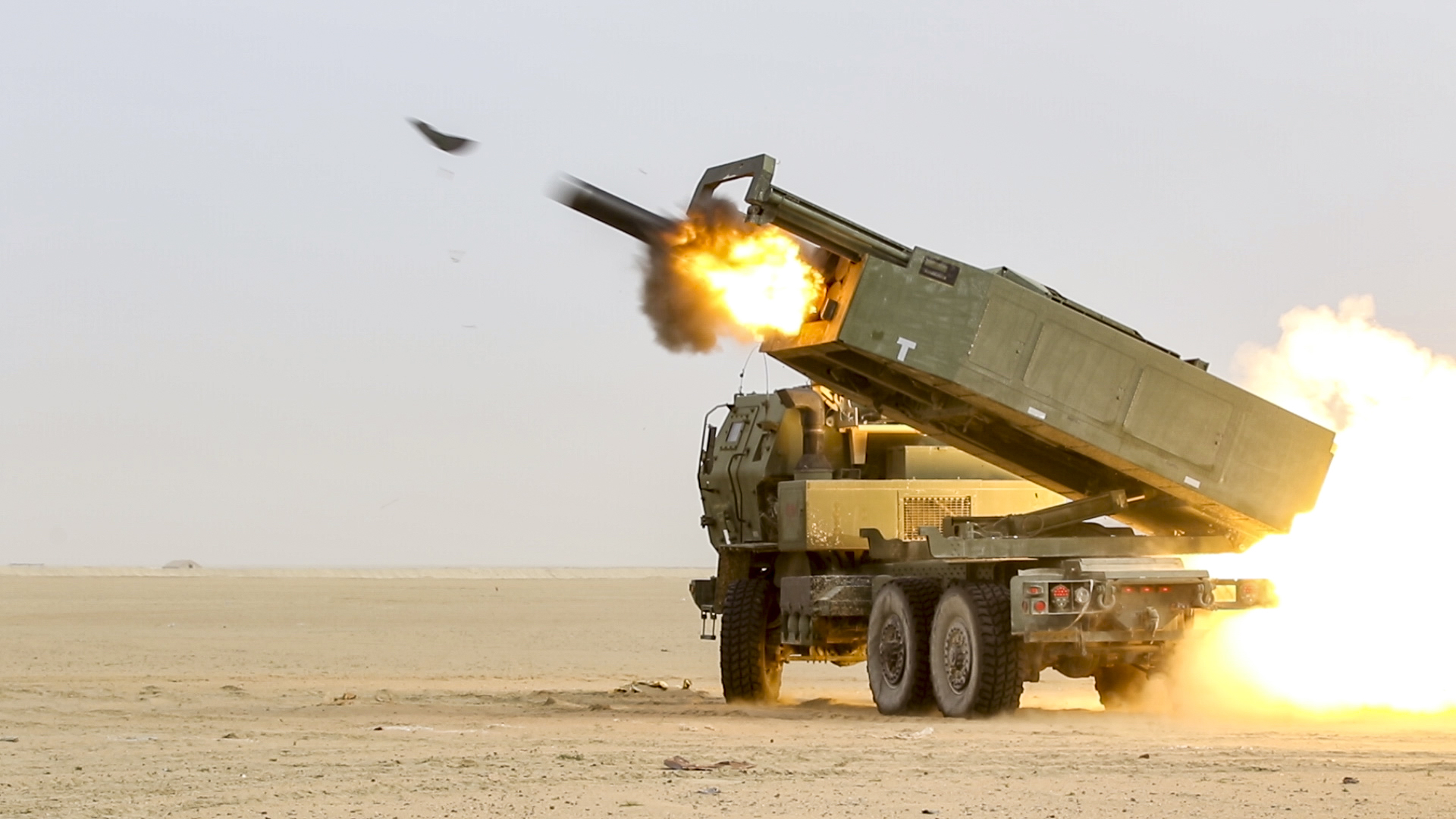
What followed was not a massive bombing raid, but a methodical, months-long dissection of this strategic linchpin, executed with surgical precision by a weapon that would soon become legendary: the M142 High Mobility Artillery Rocket System, or HIMARS.
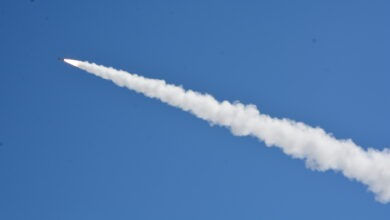
The campaign began subtly. On July 19 and 20, the first rockets struck the bridge. The attacks, reportedly carried out using the newly arrived US-supplied HIMARS, did not seek to obliterate the structure. Instead, they punched a series of neat, circular holes into the roadway surface.
The damage was just enough to render the bridge impassable for the heavy military trucks and armored vehicles that formed the backbone of the Russian logistical chain, forcing its temporary closure to cargo traffic.
This was not the indiscriminate destruction of past wars; it was a masterclass in applying the military concept of a “mission kill.”
The goal was not to level the bridge but to deny its function, achieving a strategic objective with an astonishing economy of force.
The strikes became a relentless drumbeat. On the night of July 26, a more intense volley of HIMARS rockets slammed into the bridge, inflicting heavy damage and forcing its closure to all traffic, including passenger vehicles.
Russian state media claimed its air defense systems had intercepted the projectiles, but visual evidence from the following days told a different story, showing a roadway pockmarked with at least 16 distinct impact sites, a clear signature of the precision-guided GMLRS rockets fired by HIMARS.
This forced the Russian military into a desperate and ultimately unwinnable logistical battle. They attempted frantic repairs, established a temporary ferry service, and began constructing a pontoon bridge alongside the crippled structure. Each countermeasure became a new target.
Throughout August and into September, Ukrainian HIMARS continued to hammer the bridge, the ferries, and the pontoon crossing, systematically strangling the flow of supplies to the thousands of Russian troops in Kherson.
This “bridge-busting campaign” created an unsolvable problem for the Russian command.
By early September, Russian authorities admitted the bridge would be impassable for weeks. The logistical strangulation was complete.
In November 2022, faced with untenable supply lines and a looming Ukrainian counteroffensive, Russian forces retreated from Kherson city.
In a final, telling admission of defeat, they destroyed the remaining spans of the Antonivka bridge themselves as they fled — a tacit acknowledgment that the lifeline had been permanently severed by the sniper-like precision of HIMARS.
The battle for the Antonivsky Bridge was over, and it had announced the arrival of a new king on the modern battlefield.
From Heavy Metal to High Mobility: The Genesis of HIMARS
The M142 HIMARS, the weapon that so decisively shaped the battle for Kherson, was not born in a vacuum. Its creation represents a profound doctrinal pivot in American military thinking, a deliberate evolution away from the brute-force paradigms of the Cold War toward a new era of agile, expeditionary warfare.
The story of HIMARS is the story of a military adapting to a changing world, where strategic mobility became more valuable than sheer firepower.
The Cold War Predecessor: The M270 MLRS
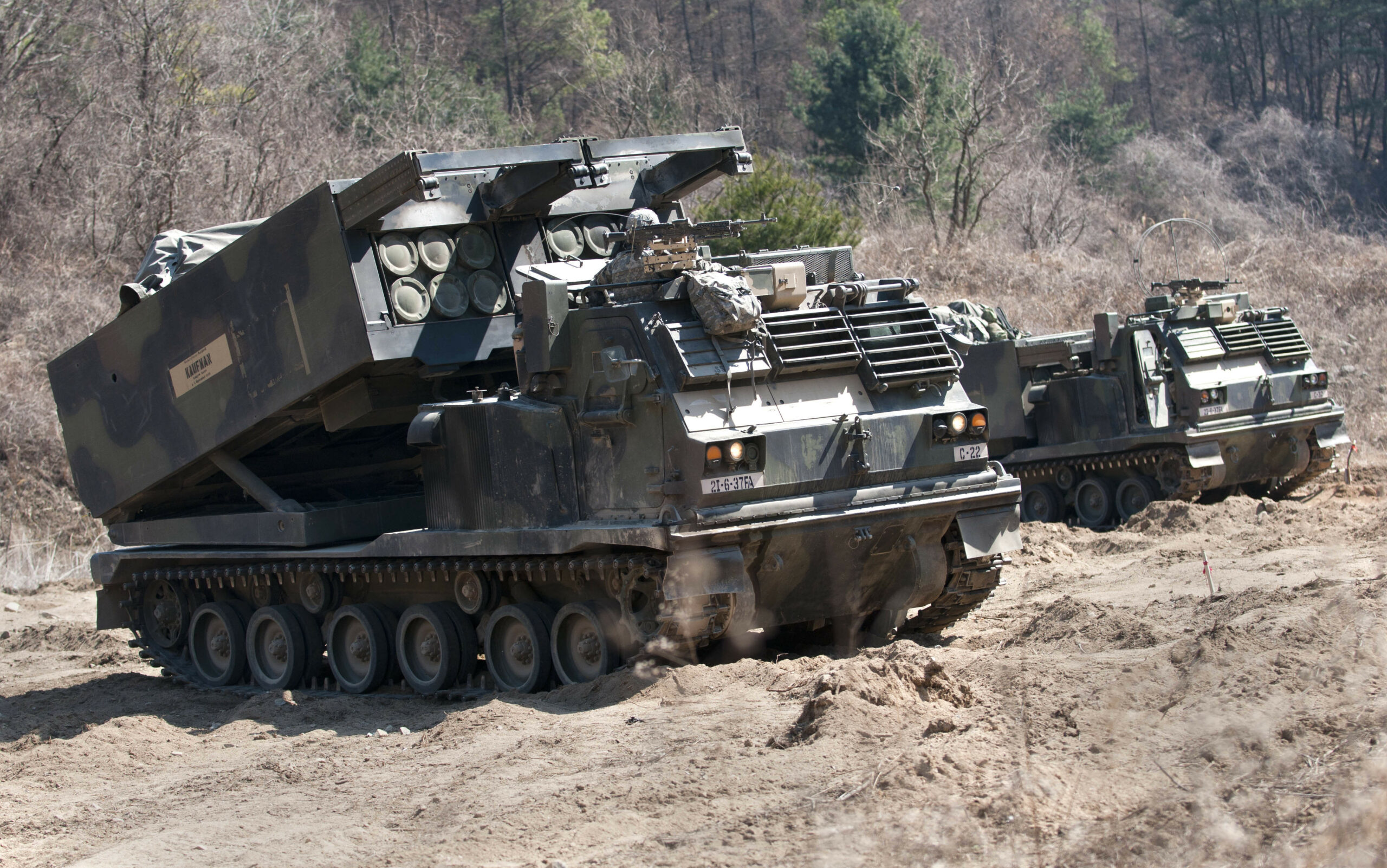
The spiritual and technological ancestor of HIMARS is the M270 Multiple Launch Rocket System (MLRS). Introduced in the early 1980s, the M270 was a titan of the Cold War battlefield.
Built on a tracked chassis derived from the Bradley Fighting Vehicle, the nearly 25-ton M270 was designed for a singular, cataclysmic purpose: to deliver overwhelming, massed firepower against the vast armored formations of the Soviet Union expected to pour through the Fulda Gap in Germany.
It carried two six-rocket pods, allowing it to saturate a target area with a dozen rockets in under a minute, earning it the nickname “the grid square removal system.”
It was a powerful and feared weapon, the epitome of heavy metal warfare designed for a static, predictable conflict in Europe.
A New Strategic Imperative
The end of the Cold War and the US experience in the 1991 Gulf War exposed the limitations of the M270’s design philosophy.
The US military found itself operating in a new strategic environment defined by a wider range of contingencies, from regional conflicts to “low-intensity operations” that required rapid deployment to unpredictable locations around the globe.
In this new reality, the M270’s weight and logistical footprint were significant liabilities. It was too heavy and cumbersome for rapid deployment, requiring large strategic airlifters like the C-5 Galaxy or C-17 Globemaster III to be moved between theaters.
A requirement for a lighter, more mobile rocket launcher had been identified as early as 1982 by the 9th Infantry Division, but it was the post-Cold War strategic shift that gave the concept momentum.
The US Army and Marine Corps both recognized the need for a system that could provide the firepower of MLRS but in a package that could keep pace with fast-moving expeditionary forces.
This led to the development of HIMARS, a system whose design was dictated by a new set of priorities.
The Core Design Goals
The development of HIMARS, which began as a private venture by Loral Vought Systems (later acquired by Lockheed Martin) in the late 1990s, was driven by three core, non-negotiable principles.
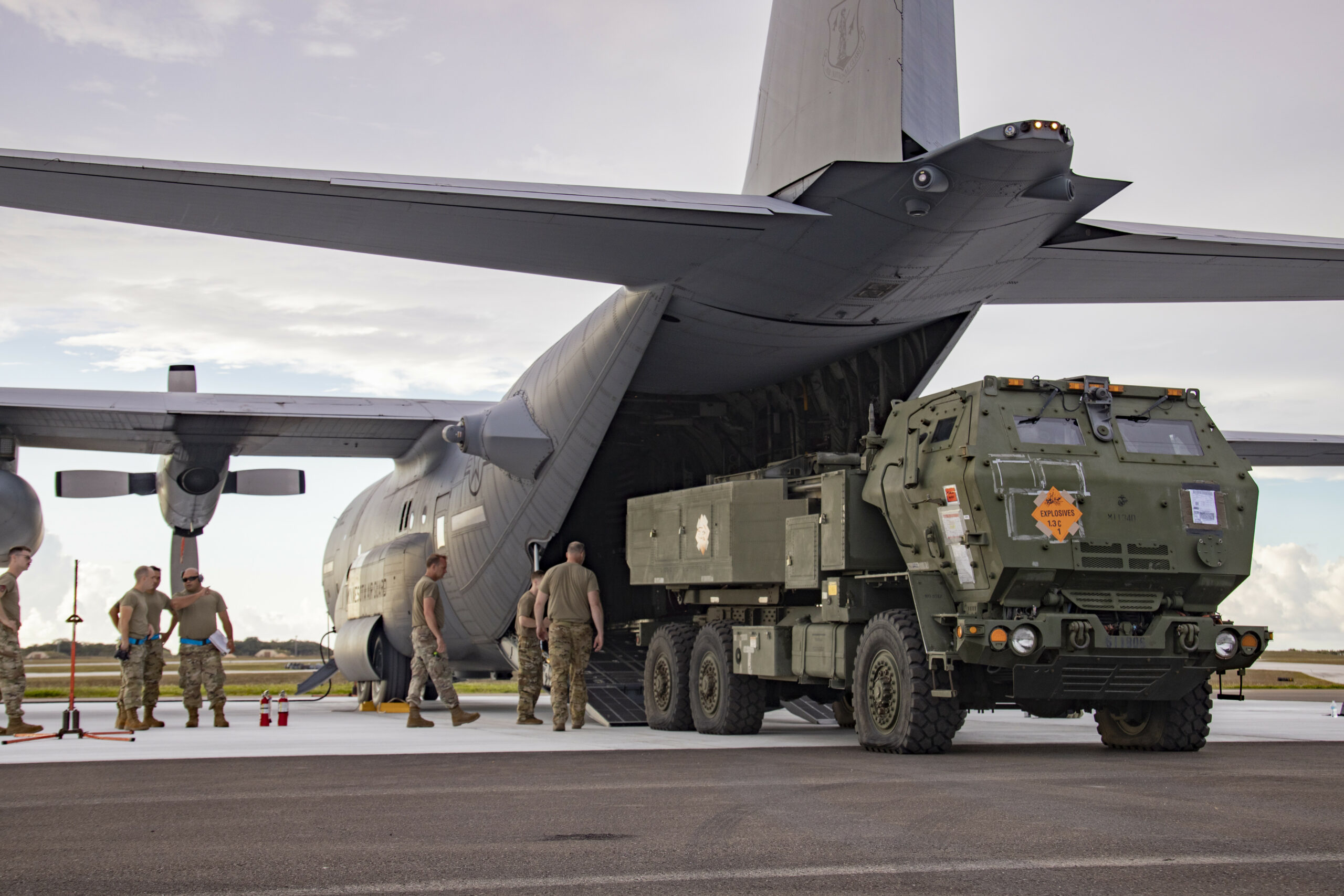
- C-130 Transportability: This was the paramount and most technically challenging requirement. The entire system had to be light enough (weighing in at under 16.5 tons) and compact enough to be driven onto a C-130 Hercules, the workhorse of tactical airlift. This single constraint dictated nearly every other design choice, from the wheeled chassis to the single-pod configuration. It meant the system could be deployed rapidly not just between continents, but within a theater of war, to remote or austere airfields previously inaccessible to heavy launchers.
- ‘Shoot-and-Scoot’ Survivability: The system had to be built for speed and survival on a battlefield populated with sophisticated enemy sensors and counter-battery radars. The design goal was a system that could drive to a firing position, launch its munitions, and relocate in a matter of minutes, long before retaliatory fire could arrive.
- MLRS Commonality: To minimize logistical burdens, reduce training costs, and ensure interoperability with NATO allies who already operated the M270, HIMARS was designed for maximum commonality. It uses the exact same family of munitions — the MLRS Family of Munitions — packaged in identical pods. Its fire control system, electronics, and communications units are interchangeable with the upgraded M270A1 launcher, and the crew training is the same. The fundamental trade-off was sacrificing the M270’s double payload for this immense gain in strategic and tactical mobility; HIMARS carries one pod (six rockets or one missile) to the M270’s two.
The result of this design philosophy was not merely an incremental improvement but a conceptual leap.
It was the physical manifestation of a doctrinal shift, prioritizing the ability to deliver the right weapon to the right place at the right time over the ability to deliver the most weapons in one place.
After successful combat trials with prototypes during Operation Iraqi Freedom, the M142 HIMARS officially entered service with the US Army in 2005, followed by the US Marine Corps in 2007, ready for a new century of unpredictable conflict.
Anatomy of a Game-Changer: The HIMARS Platform
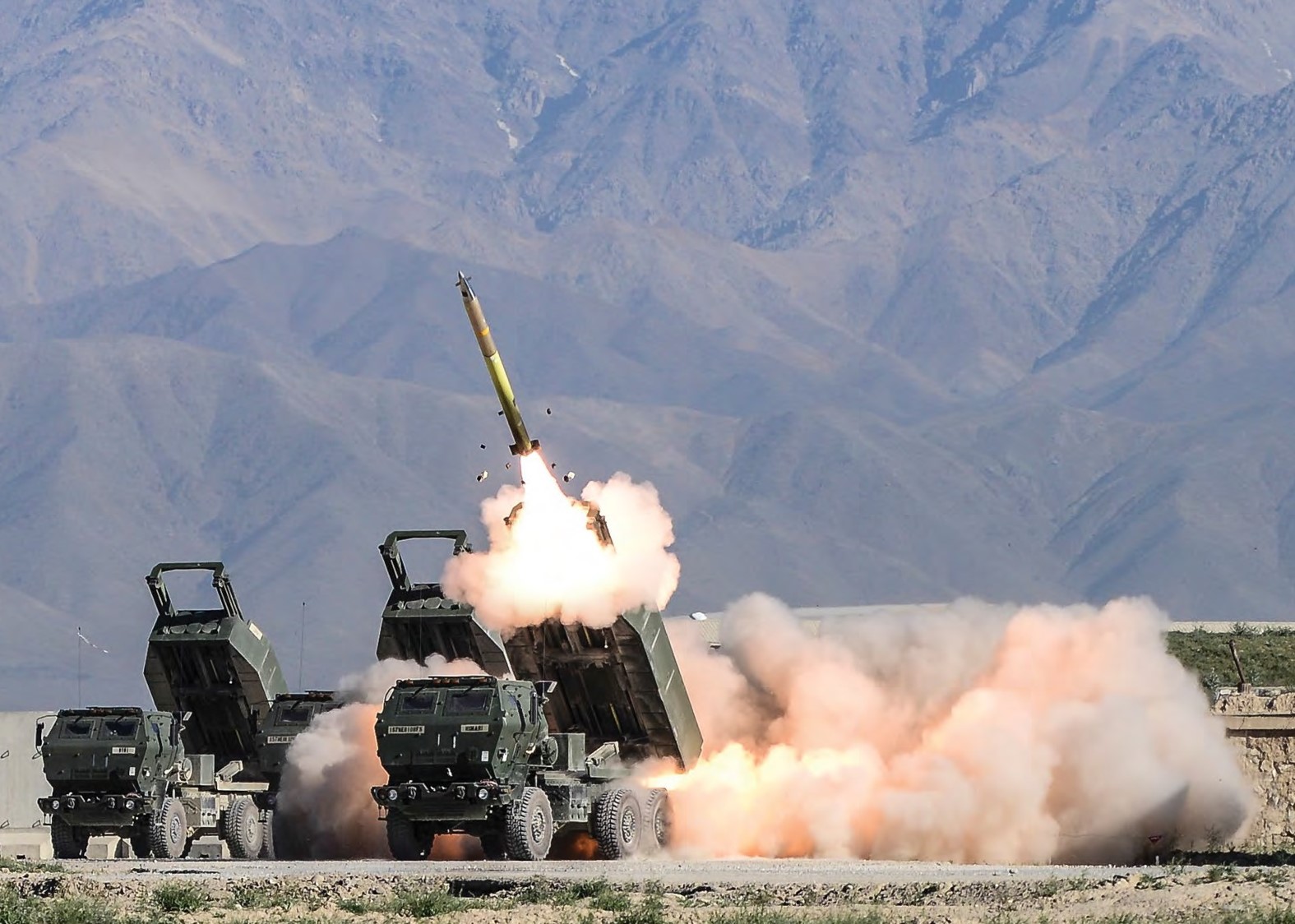
The M142 HIMARS achieves its revolutionary battlefield effects through a masterful integration of three core elements: a highly mobile chassis, a versatile and rapid-fire launcher module, and a sophisticated, automated fire control system.
It is the seamless synergy of these components that transforms a truck-mounted rocket pod into one of the world’s most formidable artillery systems.
The Chassis: A Foundation of Mobility
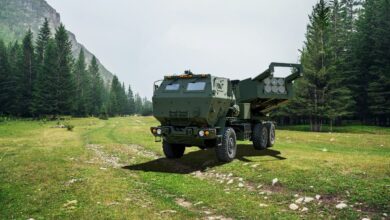
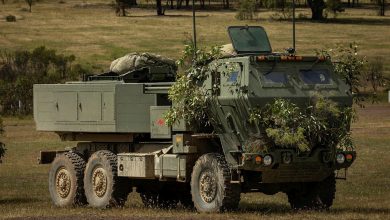
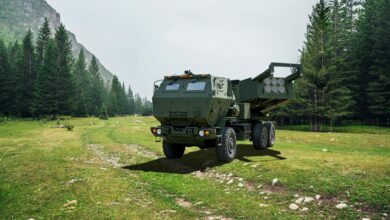
At its base, the HIMARS is built upon the proven chassis of the US Army’s Family of Medium Tactical Vehicles, a 5-ton, 6×6 all-wheel-drive truck manufactured by BAE Systems. This wheeled platform is the key to its tactical and strategic mobility.
- Power and Performance: The vehicle is typically powered by a Caterpillar C7 or 3116 ATAAC 6.6-liter (1.7 gallon) diesel engine, generating approximately 290 to 300 horsepower. This allows the 16,250 kilogram (35,800 pound) system to achieve a maximum road speed of 85 kilometer (53 miles) per hour and gives it an operational range of 480 kilometers (300 miles) on a single tank of fuel, enabling it to self-deploy over long distances without relying on heavy equipment transporters.
- Crew Protection: The three-person crew — comprising a driver, a gunner, and a launcher section chief — operates from within an armored cabin. This provides protection against small arms fire and artillery shell splinters, a critical feature for a system designed to operate in high-threat environments.
The Launcher-Loader Module: The Heart of the System
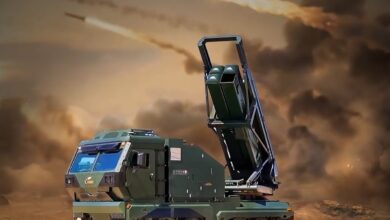
Mounted on the rear of the truck chassis is the Launcher-Loader Module (LLM), the electromechanical heart of the HIMARS.
- Firepower: The LLM carries a single, sealed launch pod containing its munitions. This pod can hold either six 227mm GMLRS rockets or one larger 610mm ATACMS tactical missile. The entire module sits on a turret base that can traverse and elevate to aim the munitions without the vehicle itself needing to be perfectly oriented toward the target.
- Rapid Reload: A key innovation of the HIMARS is its self-loading capability. The LLM incorporates a boom and hoist system (an integrated crane) that allows the three-person crew to load a fresh, multi-ton munitions pod from a resupply vehicle in a matter of minutes, without the need for additional support equipment. While official timings are classified, operational estimates suggest a well-trained crew can complete a reload in 5 to 10 minutes under tactical conditions. This rapid turnaround is essential for maintaining a high operational tempo and minimizing the time the launcher is stationary and vulnerable.
The Brains: Fire Control and Automation
What truly elevates HIMARS is its highly automated and self-contained Fire Control System.
- Autonomous Operation: The system integrates a GPS receiver and an inertial navigation unit, allowing it to determine its exact location and orientation on the battlefield autonomously. This eliminates the need for traditional, time-consuming survey procedures.
- Digital Fire Missions: In a typical mission, a command-and-control element transmits target coordinates to the HIMARS via a secure digital data link. The launcher’s onboard computer calculates the precise firing solution, and the crew simply confirms the command to arm and fire the pre-selected number of rounds. The entire process is conducted from within the safety of the armored cab. This high degree of automation is what enables the system’s incredible speed.
The ‘Shoot-and-Scoot’ Timeline
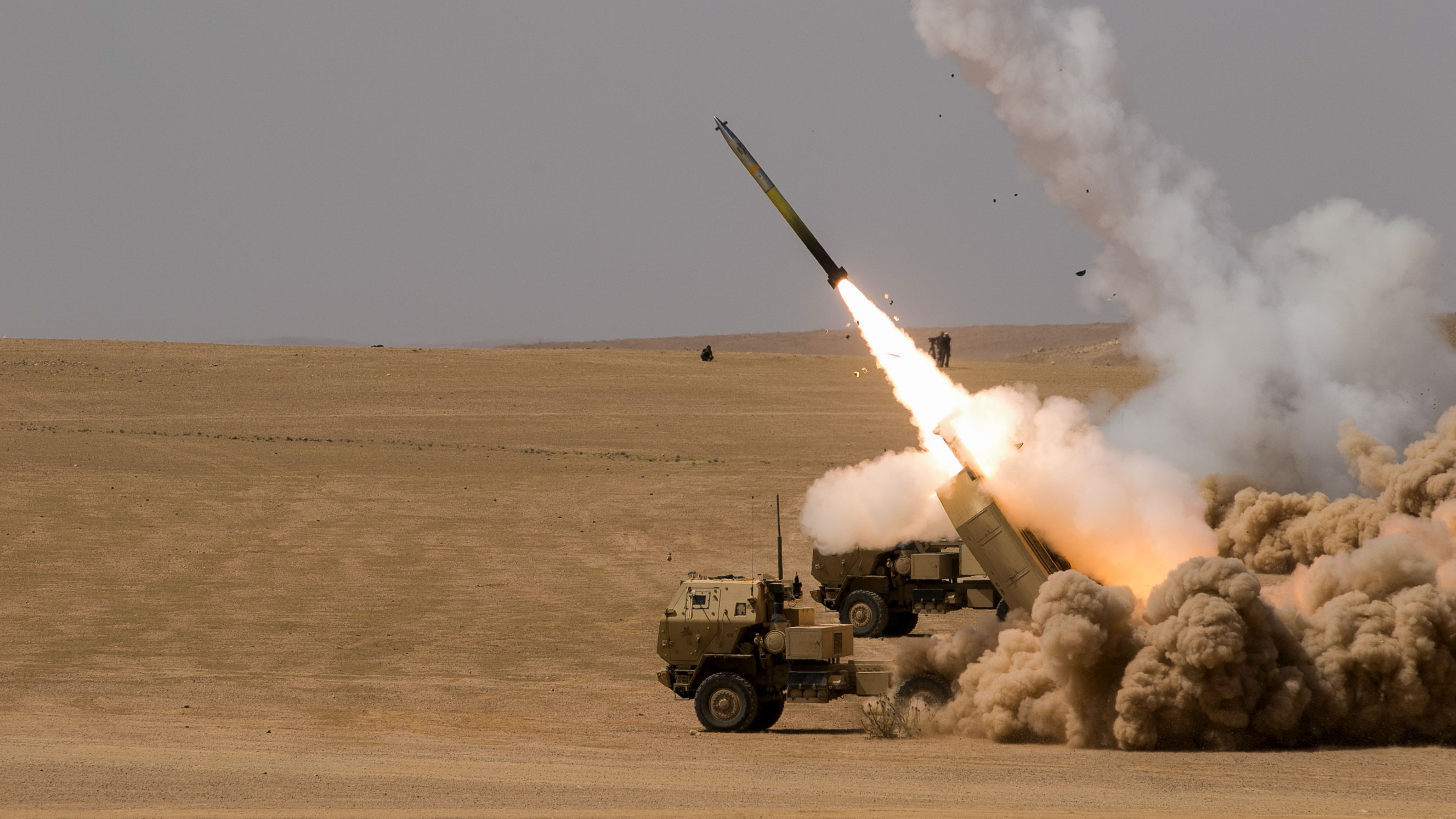
The integration of these subsystems creates a weapon built for speed. From a halt, the system can receive a fire mission, aim its launcher, and be ready to fire in as little as 16 seconds.
A full salvo of six GMLRS rockets can be ripple-fired in under a minute.
The entire tactical sequence — emplace, fire, and displace — can be completed in just a few minutes.
This speed is not a luxury; it is a core survival trait. In a conflict against a peer adversary, counter-battery radars can detect the launch of rockets and calculate their point of origin within seconds, with retaliatory fire potentially arriving in as little as 90 seconds.
The HIMARS’ “shoot-and-scoot” capability is a race against the clock that it is designed to win, ensuring it is long gone before the enemy’s response can arrive.
This virtuous cycle — where high mobility enables surprise, automation enables speed, and rapid displacement ensures survival — is the essence of the HIMARS’s design and the source of its outsized impact on the battlefield.
Attribute |
Specification |
| Chassis | US Army Family of Medium Tactical Vehicles 6×6 Truck |
| Crew | 3 (Driver, Gunner, Section Chief) |
| Weight | 16,250 kilogram (35,800 pound) |
| Dimensions (L x W x H) | 7 x 2.4 x 3.2 meter (23 x 7.8 x 10.4 feet) |
| Engine | Caterpillar C7 / 3116 ATAAC 6.6L Diesel (290-300 hp) |
| Max Road Speed | 85 kilometer (53 miles) per hour |
| Operational Range | 480 kilometer (300 miles) |
| Armament | 1 pod: 6x GMLRS rockets OR 1x ATACMS missile OR 2x PrSM missiles |
| Reload Time | Approximately 5-10 minutes (tactical) |
| Emplacement-to-Fire Time | As little as 16 seconds to aim and fire |
The Quiver: A Deep Dive Into the MLRS Family of Munitions
The M142 HIMARS launcher is a formidable platform, but its true lethality and flexibility stem from the diverse and ever-evolving arsenal of munitions it can fire.
The system’s use of standardized, modular pods allows it to be a “plug-and-play” weapons platform, capable of adapting its capabilities to the mission at hand simply by swapping out its payload.
This munitions portfolio, known collectively as the Multiple Launch Rocket System Family of Munitions, tells a story of technological advancement and shifting doctrinal priorities, from area suppression to surgical precision and, soon, to hypersonic strike.
GMLRS: The Precision Workhorse
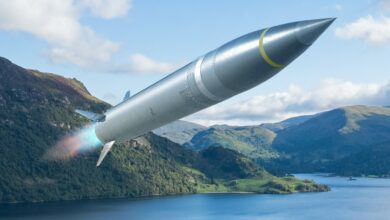
The Guided Multiple Launch Rocket System (GMLRS) is a family of 227mm rockets that transformed HIMARS from an area-denial weapon into a precision-strike platform.
By incorporating a GPS-aided inertial navigation system, GMLRS rockets can achieve accuracies of within a few meters, turning the launcher into an artillery sniper.
With a standard range envelope of 15 to over 92 kilometers (9 to 57 miles), these rockets are the mainstay of the HIMARS arsenal.
- M31 GMLRS-Unitary (GMLRS-U): This is the quintessential “sniper” round. It is equipped with a 200-pound (91 kilogram) high-explosive, blast-fragmentation unitary warhead. The M31 is designed for surgical strikes on point targets such as command bunkers, ammunition depots, bridges, and individual buildings. Its precision minimizes collateral damage, making it exceptionally effective in complex environments, including urban terrain. Later M31A1 and M31A2 variants incorporate a multi-mode fuze, allowing the crew to select point detonation (for hardened targets), delay (for penetrating structures before exploding), or airburst (for targets in the open).
- M30 GMLRS-Alternative Warhead (GMLRS-AW): Developed as a response to international policies on cluster munitions, the GMLRS-AW provides an area-effect capability without the risk of leaving unexploded ordnance on the battlefield. Instead of submunitions, the M30A1/A2 warhead is filled with approximately 182,000 pre-formed tungsten fragments that are dispersed over a wide area upon detonation. This makes it devastatingly effective against “soft” targets like troop concentrations, air defense sites, and unarmored vehicle convoys.
- Extended-Range (ER) GMLRS: The latest evolution in the GMLRS family, the ER GMLRS is designed to nearly double the system’s reach. By incorporating a larger rocket motor and new tail-driven flight controls, the ER GMLRS can strike targets out to 150 km. It will be produced with both Unitary and Alternative Warhead options, providing commanders with a deep-strike precision capability that was previously the exclusive domain of more expensive tactical missiles or aircraft.
ATACMS: The Strategic Sledgehammer
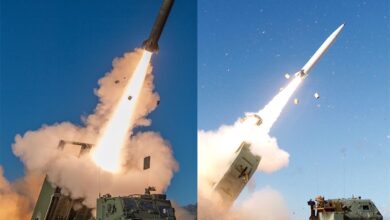
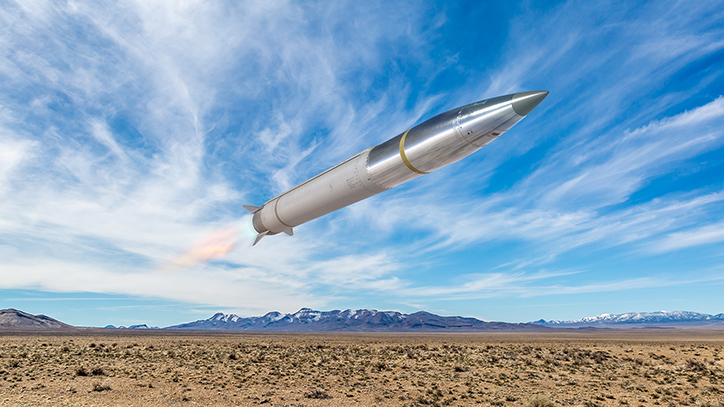
For high-value, high-priority targets at even greater distances, HIMARS can employ the Army Tactical Missile System (ATACMS).
This is a much larger, 610mm surface-to-surface ballistic missile that occupies an entire launch pod.
- From Cluster to Unitary: The earliest ATACMS variants, the M39 and M39A1, were Cold War-era weapons designed to saturate large areas, like enemy airfields or logistics hubs, with hundreds of small M74 Anti-Personnel/Anti-Materiel bomblets. However, driven by concerns over unexploded ordnance and a desire for greater precision, the US Army initiated a Service Life Extension Program to modernize its ATACMS stockpile. This program converts the older cluster-munition missiles into the M57E1 configuration. The bomblets are replaced with a powerful 500-pound WDU-18/B unitary warhead — the same one used by the US Navy’s Harpoon anti-ship missile — and a proximity fuze is added to allow for a devastating airburst effect. This transforms ATACMS from a blunt instrument into a precision sledgehammer capable of destroying hardened, high-value targets at ranges up to 300 kilometers (186 miles).
PrSM: The Future, Now
The designated successor to ATACMS is the Precision Strike Missile (PrSM), a next-generation weapon that represents a quantum leap in capability for the HIMARS platform.
- Range and Firepower: PrSM dramatically extends the strike range of HIMARS. Initially designed to a range of 499 kilometer (310 iles) to comply with the now-defunct Intermediate-Range Nuclear Forces Treaty, its true range capability is known to be significantly greater. Critically, the PrSM is more compact than ATACMS, allowing two missiles to be packaged into a single launch pod. This effectively doubles the missile firepower of a HIMARS launcher from one to two.
- Future Growth: PrSM is being developed in an incremental fashion. While the baseline version targets stationary land targets, future increments will incorporate advanced seekers to enable the engagement of moving targets, including ships at sea (Increment 2) and mobile air defense systems on land (Increment 4), making HIMARS a true multi-domain weapon.
On the Horizon: Hypersonic Capability
Looking even further ahead, the US Army is actively funding the integration of hypersonic weapons onto the HIMARS.
The Blackbeard Ground-Launched missile program aims to provide a tactical hypersonic capability for the platform.
Unlike strategic hypersonic weapons, Blackbeard is designed to provide a more affordable, responsive option for striking time-sensitive, mobile, or hardened targets at mid-ranges.
The ability to launch a hypersonic weapon from a relatively small, mobile truck would be a revolutionary development, further solidifying the HIMARS’ place at the cutting edge of land warfare for decades to come.
The evolution of the MLRS Family of Munitions portfolio demonstrates the genius of the HIMARS’ modular design.
The launcher itself has remained largely unchanged, yet its capabilities have been repeatedly revolutionized by simply developing new “plug-and-play” munitions.
This inherent adaptability is the key to its enduring relevance, allowing it to pivot from counter-insurgency operations to peer-level conflict without requiring a new platform.
Munition Family |
Variant |
Range (km) |
Guidance |
Warhead / Strategic Purpose |
| GMLRS | M31 / M31A1 / M31A2 (Unitary) | 15 – 92+ | GPS / INS | 91 kilogram (200 pound) Unitary High-Explosive. Precision strike on point targets (buildings, command posts). |
| M30A1 / M30A2 (Alternative Warhead) | 15 – 92+ | GPS / INS | ~182,000 Tungsten Fragments. Area effect against soft targets (troops, vehicles) without UXO. | |
| ER GMLRS (Unitary & AW) | up to 150 | GPS / INS | Same warheads as standard GMLRS. Extends precision strike capability to greater operational depths. | |
| ATACMS | M39 / M39A1 (Cluster – being phased out) | up to 300 | INS / GPS | 300-950 M74 APAM Bomblets. Area saturation of large targets like airfields. |
| M57E1 (Unitary) | up to 300 | GPS / INS | 227 kg (500 lb) WDU-18/B Unitary. Deep strike against high-value, hardened targets. | |
| PrSM | Increment 1 | >499 | GPS / INS | Unitary High-Explosive. ATACMS replacement with greater range and double the loadout per pod (2). |
| Increment 2+ | >499 | GPS / INS + Advanced Seeker | Unitary with seeker. Future capability to engage moving land and maritime targets. |
Doctrine in Action: How HIMARS Fights
The technical excellence of the M142 HIMARS and its munitions is only half the story. Its true battlefield dominance comes from the sophisticated operational concepts and doctrines that govern its use.
These doctrines leverage the system’s unique attributes — mobility, speed, and precision — to create tactical and strategic effects far exceeding its physical size.
The ‘Shoot-and-Scoot’ Imperative
The foundational tactic for HIMARS employment is “shoot-and-scoot.” This doctrine is a direct response to the lethality of the modern battlefield, where any artillery system that remains stationary for too long becomes a target.
The entire operational cycle of a HIMARS crew is optimized for speed to ensure survivability.
- Emplace: The launcher arrives at a pre-planned or opportunistic firing position. Thanks to its automated navigation and fire control, it can be ready to fire in minutes, sometimes seconds.
- Shoot: Upon receiving target data via digital link, the crew confirms and launches its munitions. A full salvo of six rockets can be away in less than a minute.
- Scoot: Immediately after the last rocket is fired, the crew displaces — or “scoots” — from the launch site at high speed. The goal is to be miles away before the enemy’s counter-battery fire, guided by radar that tracked the outgoing rockets, can arrive on their now-empty position. The crew then proceeds to a secure hide site or a pre-arranged rendezvous point to reload from a resupply vehicle before preparing for the next mission. This relentless, high-tempo cycle makes HIMARS an elusive and persistent threat.
HIMARS Rapid Infiltration: Projecting Power Strategically
While “shoot-and-scoot” is a tactical doctrine, HIMARS Rapid Infiltration (HIRAIN) is a strategic one that leverages the system’s C-130 transportability to project power across vast distances.
HIRAIN missions are a complex, multi-service ballet:
- A HIMARS launcher is loaded onto a C-130 or similar transport aircraft.
- The aircraft flies to a remote, often austere, landing strip deep within a contested area.
- The HIMARS rolls off the ramp, receives targeting data (sometimes while still in the air), and executes a fire mission within minutes of landing.
- After firing, the launcher can either “scoot” to a hide site on the ground or immediately re-board the aircraft and be extracted.
This capability has profound geopolitical implications.
In the Indo-Pacific, HIRAIN allows the US and its allies to turn small, dispersed islands into temporary, unsinkable missile bases, holding an adversary’s naval and land assets at risk from unpredictable locations and complicating their defensive planning.
In Europe, exercises like Thunderbolt Convergence have demonstrated NATO’s ability to use HIRAIN to rapidly deploy HIMARS across borders, creating a flexible and highly responsive joint fires capability that can be massed at critical points on short notice.
The Digital Kill Chain: The Network is the Weapon
HIMARS does not operate alone. Its legendary precision is enabled by its integration into a vast, sophisticated digital “kill chain” or “reconnaissance-strike complex.” The launcher itself is merely the “effector” — the tip of the spear. The true power lies in the network of sensors and command-and-control (C2) nodes that guide it.
The process follows the Find, Fix, Track, Target, Engage, Assess (F2T2EA) cycle.
Targets are found and fixed by a vast array of intelligence, surveillance, and reconnaissance (ISR) assets. This can include satellite imagery, signals intelligence, reconnaissance aircraft, and most critically, tactical assets like drones and special operations forces on the ground.
This targeting information is processed and relayed through a C2 network, which then passes a fire mission directly to the HIMARS launcher.
This seamless flow of data from sensor to shooter allows HIMARS to strike high-value targets deep behind enemy lines with incredible speed and accuracy.
The success of this doctrine was laid bare in Ukraine. Russia operates systems like the Tornado-S with comparable, or even superior, on-paper specifications. Yet, they proved unable to effectively hunt and destroy Ukraine’s mobile HIMARS fleet.
The reason was a profound “ISR gap”: Russia lacked the robust, real-time intelligence network required to find and target the elusive launchers before they could “scoot” to safety.
This demonstrates a fundamental truth of modern warfare: the most advanced weapon is ineffective without the information dominance to wield it.
The triumph of HIMARS in Ukraine was as much a victory for the superior Western approach to networked warfare as it was for the launcher itself. This ability to reach out and destroy critical nodes — command posts, ammunition depots, logistics hubs — at will also has a devastating psychological impact, creating a constant sense of vulnerability among enemy forces and degrading their morale and will to fight.
The Global Footprint: Proliferation, Production, and Price
The stunning battlefield performance of HIMARS, particularly its role in the Russo-Ukrainian War, has transformed it from a niche expeditionary weapon into one of the most in-demand military systems on the planet.
This surge in popularity has made HIMARS a key instrument of US foreign policy, but it has also placed immense strain on the American defense industrial base, revealing both the strengths and vulnerabilities of its production ecosystem.
The Exploding Demand: A Growing List of Operators
While the US Army and Marine Corps remain the primary users, the list of international partners operating or ordering HIMARS has grown exponentially.
Early adopters included nations focused on high-tech, mobile forces, such as Singapore, the United Arab Emirates, Jordan, and Romania.
The 2022 invasion of Ukraine, however, was the catalyst for a global demand shock. Nations across Europe and the Indo-Pacific, suddenly confronted with the reality of peer-level conflict, rushed to acquire the combat-proven system.
This has led to the formation of a de facto “HIMARS Belt” along NATO’s eastern flank, with Poland, Estonia, Latvia, Lithuania, and now Italy and Croatia all placing orders.
In the Pacific, key allies like Australia and Taiwan are also making significant investments in the system to bolster their deterrence against China.
This proliferation is creating a powerful network of interoperable, long-range precision fire assets among US allies, standardized on a single platform and munitions family, which has significant strategic implications for coalition warfare.
The Price of Precision: Deconstructing the Cost
Determining the exact “price” of a HIMARS is complex, as costs vary significantly based on the size of the order, the specific munitions package, and the level of support included.
- Launcher and Munitions: The cost of the launcher vehicle itself has risen over time, from around $3.5 million in 2014 to estimates of $19 to 20 million in FY2022. The munitions represent a major, recurring cost. A single standard GMLRS rocket can cost upwards of $170,000, while the newer Extended-Range GMLRS variant is estimated at $434,000 per rocket. An ATACMS missile costs well over $1 million.
- Foreign Military Sales (FMS) Packages: The true cost of acquiring a HIMARS capability is best understood by examining comprehensive FMS packages approved by the US State Department. These deals include far more than just the launchers and rockets. A typical package includes support vehicles (like Humvees and M1084 resupply trucks), communications equipment, spare parts, specialized tools, ruggedized laptops, personnel training, and long-term logistics support. As the table below illustrates, these complete packages represent multi-hundred-million or even billion-dollar strategic investments.
Country |
Approval Date |
Estimated Cost (USD) |
Number of Launchers |
Key Munitions/Equipment Included |
| Poland | Feb 2023 | $10 Billion | 18 | 45 ATACMS, >1,500 GMLRS pods (Unitary, AW, ER-AW), 468 launcher loader module kits |
| Australia | Aug 2023 | $975 Million | 22 | GMLRS Unitary & ER-GMLRS pods, resupply vehicles (RSV), support equipment |
| Netherlands | Feb 2023 | $670 Million | 20 | 29 GMLRS-AW pods, 17 Humvees, support & communications equipment |
| Lithuania | Nov 2022 | $495 Million | 8 | GMLRS (Unitary & AW) and ATACMS missiles |
| Croatia | Aug 2024 | $390 Million | 8 | GMLRS-AW & GMLRS-Unitary pods, support vehicles |
Ramping Up Production: The Industrial Base Challenge
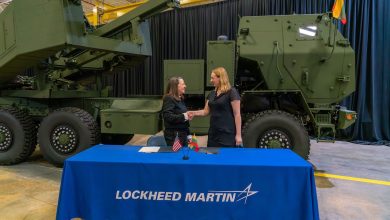
The surge in demand, coupled with the urgent need to replenish US military stockpiles depleted by aid to Ukraine, has placed enormous pressure on manufacturer Lockheed Martin and the wider defense industrial base.
In response, the company has taken significant steps to increase output. The production rate of HIMARS launchers was increased from 48 per year before the war to 60, with a publicly stated goal of reaching 96 launchers annually.
The US Army has facilitated this ramp-up by awarding hundreds of millions of dollars in contracts to expedite production and secure long-lead components.
Despite these efforts, production capacity remains a constraint. The lead times for new customers can be several years, a delay that is untenable for nations facing immediate threats. This industrial reality has forced some allies to hedge their bets.
Poland, for example, while pursuing a massive HIMARS acquisition, also signed a major deal to purchase hundreds of K239 Chunmoo multiple rocket launchers from South Korea to fill the gap and accelerate the modernization of its artillery forces.
This highlights a strategic paradox: the very success of a premier US weapon system has created a level of demand that its own industrial base struggles to meet in a timely fashion, a critical challenge for future deterrence and alliance management.
The Peer-to-Peer Matchup: HIMARS vs. The Competition
The effectiveness of any weapon system can only be truly judged relative to its adversaries.
On the modern battlefield, HIMARS faces two primary peer competitors: Russia’s 9A54 Tornado-S and China’s PHL-16.
A simple comparison of specifications can be misleading; a deeper analysis of their design philosophies, doctrinal employment, and proven battlefield performance reveals a more nuanced picture of their respective strengths and weaknesses.
HIMARS vs. Russia’s 9A54 Tornado-S
On paper, the Tornado-S, a comprehensive modernization of the formidable Soviet-era BM-30 Smerch, appears to be a superior system.
- The Russian Advantage: It carries twelve 300mm rocket tubes, double the GMLRS rocket payload of a HIMARS. Its guided rockets boast a longer range, reportedly 120 kilometers (74.5 miles) with a future goal of 200 kilometers (124 miles), compared to the 92+ kilometers (57 miles) of standard GMLRS. The system also features advanced capabilities, including GLONASS satellite guidance and the ability to assign an individual target to each of the twelve rockets in a single salvo.
- The Reality of Combat: The war in Ukraine has served as a brutal arbiter of capability, and in this real-world test, the Tornado-S has been found wanting. Despite its impressive specifications, it has consistently failed in what should be its most critical mission: locating and destroying Ukraine’s mobile HIMARS launchers. The decisive gap lies not with the launcher itself, but with the broader “kill chain.” Russia’s intelligence, surveillance, and reconnaissance network has proven too slow and imprecise to effectively find, fix, and target the nimble HIMARS before they can fire and relocate. Furthermore, the operational readiness and actual precision of the Tornado-S’ advanced munitions are subjects of intense debate, with evidence suggesting that production is limited and heavily reliant on Western and Chinese civilian-grade electronics, raising questions about their reliability and performance in a high-intensity conflict. In stark contrast, HIMARS boasts a combat-proven 99 percent operational readiness rate and a mature, reliable, and mass-produced family of munitions.
HIMARS vs. China’s PHL-16 (PCL-191)
China’s PHL-16 presents a far more formidable challenge. It is a newer and more technologically ambitious system designed for a different strategic purpose.
- The Chinese Advantage: The PHL-16 significantly outmatches HIMARS in both range and payload. It is a modular system with two launch pods that can be armed with various munitions, including eight 370mm rockets with a range of up to 280 kilometers (174 miles), or two 750mm “Fire Dragon 480” tactical ballistic missiles capable of striking targets 500 kilometers (310 miles) away. This extreme range is a core feature, designed to allow the People’s Liberation Army to strike targets across the entire island of Taiwan from the relative safety of mainland China.
- Divergent Philosophies: This focus on extreme range comes with a trade-off. At 45 tons, the PHL-16 is a much heavier and larger system than HIMARS, making it dependent on larger transport aircraft and less suited for the kind of rapid, expeditionary deployment that is HIMARS’ hallmark. While HIMARS was designed for global strategic mobility, the PHL-16 was designed for a specific regional anti-access/area denial mission.
- The Asymmetric Edge: While outranged, HIMARS retains critical advantages. Its light weight and C-130 transportability enable the HIRAIN doctrine, allowing it to be an unpredictable and survivable threat from dispersed, austere locations — a capability the PHL-16 lacks. Moreover, HIMARS is a globally deployed, combat-proven system with over two million operational hours and a robust, mature ecosystem for training, logistics, and maintenance. The true combat reliability and accuracy of the PHL-16’s most advanced munitions, by contrast, remain largely unverified.
System |
Country of Origin |
Chassis |
Max Range (Documented) |
Payload |
Key Advantage |
Key Limitation |
| M142 HIMARS | United States | Wheeled 6×6 (FMTV) | 300+ km (ATACMS/PrSM) | 1 Pod (6 GMLRS / 1 ATACMS / 2 PrSM) | Strategic Mobility (C-130), Network Integration, Combat-Proven Reliability | Lighter payload compared to tracked MLRS and competitors |
| 9A54 Tornado-S | Russia | Wheeled 8×8 | 120 km (200 km planned) | 12x 300mm Rockets | High-volume rocket payload | Ineffective ISR/targeting network, questionable reliability and precision in combat |
| PHL-16 | China | Wheeled 8×8 | 500 km (Tactical Missile) | 2 Pods (e.g., 8x 370mm Rockets / 2x 750mm Missiles) | Extreme range, modular payload flexibility | Heavy weight limits strategic mobility, unproven in combat, less flexible doctrine |
The Enduring Legacy and Future Evolution of HIMARS
The M142 HIMARS has cemented its place in the pantheon of transformative military technologies.
More than just an effective weapon, it has become a catalyst for doctrinal change and a symbol of a new paradigm in land warfare. Its legacy is defined not by the volume of fire it delivers, but by the precision, mobility, and networked lethality it embodies.
It has proven that in the 21st century, the ability to destroy the right target at the right time is far more decisive than the ability to destroy everything in a given area.
The system’s success has forced a global re-evaluation of the role of artillery. It has decisively shifted the focus from unguided, massed fires toward survivable, long-range precision strike.
By demonstrating the immense power of a well-integrated sensor-to-shooter network, HIMARS has underscored that in modern conflict, information dominance is the essential prerequisite for physical dominance.
For decades, the role of deep strike was increasingly ceded to airpower. HIMARS, however, has made ground-based fires profoundly relevant again, proving that a hidden, mobile launcher can hold an adversary’s operational depths at risk persistently, affordably, and in all weather conditions, complementing the capabilities of combat aircraft.
The future of HIMARS is one of continuous evolution, driven by the modularity that is the system’s core genius. Its lethality will continue to expand with its ever-growing quiver of munitions.
The fielding of the Precision Strike Missile will push its reach deep into the strategic realm, blurring the lines between tactical artillery and theater-level strike assets.
The planned integration of hypersonic weapons like Blackbeard GL promises a revolutionary capability, giving a tactical truck the power to deliver effects at speeds and with a survivability previously unimaginable.
Concurrently, the US Army’s development of the uncrewed Autonomous Multi-domain Launcher points toward a future where HIMARS derivatives operate with greater autonomy, expanding strike capacity and integrating seamlessly into a new generation of robotic warfare concepts.
Ultimately, HIMARS is the archetype of a 21st-century weapon system. Its enduring legacy will be measured not just in the bridges it has broken or the targets it has destroyed, but in the way it has fundamentally altered the calculus of modern warfare.
It has re-established ground-based fires as a critical instrument of operational and strategic shaping, ensuring its role as a cornerstone of joint, multi-domain operations for decades to come.
Its ongoing evolution will continue to be a barometer for the future of conflict itself.