Modern warfare increasingly depends on precision from a distance, where the ability to strike swiftly and definitively often defines battlefield advantage.
Artillery has shifted from simply covering more ground to focusing more on accuracy and precision.
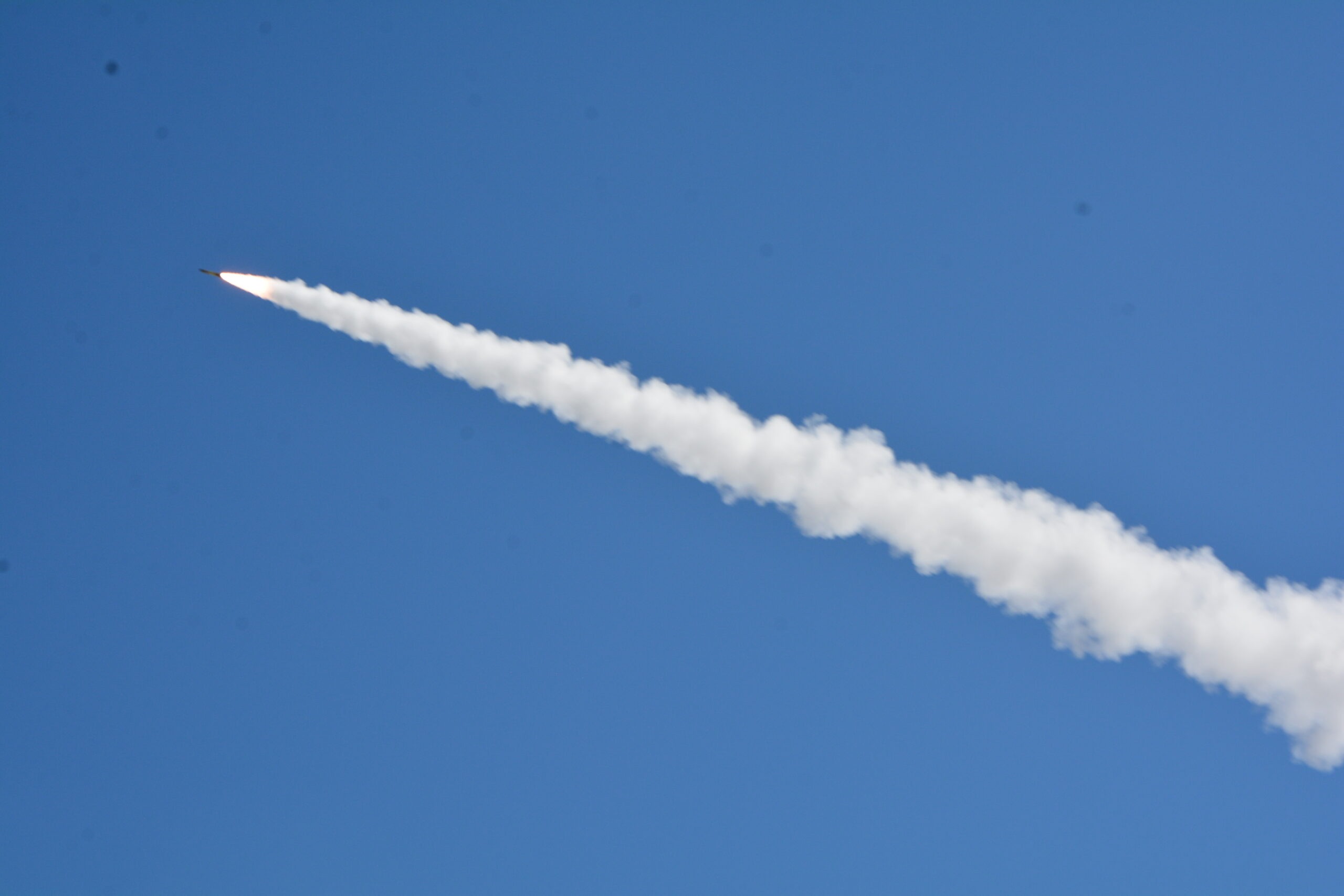
The Guided Multiple Launch Rocket System (GMLRS) from Lockheed Martin embodies that shift: a GPS-guided rocket designed to deliver fast, precise fire at ranges once unreachable for standard munitions.
Over the years, the compact, mobile fires package has become a reliable tool for modern armies seeking accurate, all-weather strike options in complex terrain.
What Is GMLRS?
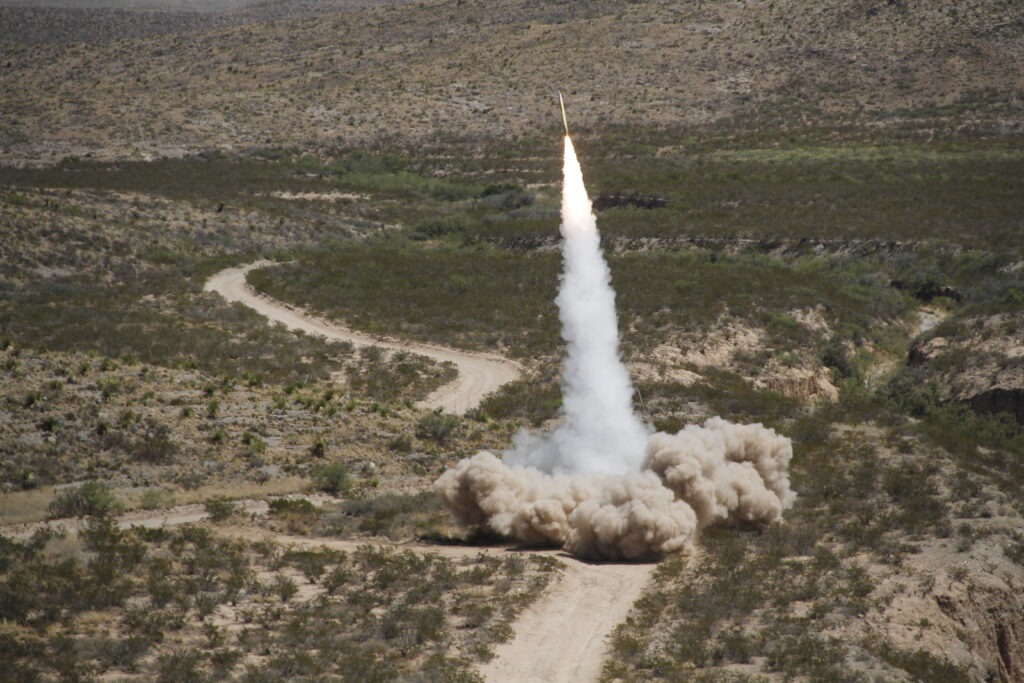
GMLRS is a family of guided rockets designed to be fired from specific artillery platforms, such as the M270A1 or M270A2 Multiple Launch Rocket System (MLRS) and the M142 High Mobility Artillery Rocket System (HIMARS).
Each round carries an onboard guidance suite that steers the rocket to programmed coordinates, changing the mission with fewer rounds, greater first-shot effectiveness, and much lower collateral risk.
Widely adopted by US and allied forces, GMLRS is now a staple in expeditionary, coalition, and high-intensity operations.
The GMLRS comes in three variants:
- GMLRS Unitary: equipped with a single high-explosive warhead for precision strikes.
- GMLRS Alternative Warhead (AW): designed for area effects without using cluster munitions.
- Extended-Range (ER) GMLRS: offers a significantly longer range with improved propulsion and aerodynamics.
GMLRS System Specifications
| Specification | Details |
| Rocket Types Per Pod | Six for GMLRS Unitary, GMLRS AW, or ER GMLRS |
| Strike Characteristics | Quick-strike, high lethality, precision engagement |
| Launch Platforms | Compatible with HIMARS and M270 launcher families |
| Weather/Operational Capability | 24/7, all-weather operations |
| Commonality | All GMLRS variants are fired from the same launch platforms and use INS/GPS for precision guidance; Unitary and AW variants, however, share over 90 percent parts commonality |
| Munition Options | Multiple warhead types for mission-specific tailoring |
| Guidance Enhancements | Improved accuracy and lethality via advanced sensors |
| Rocket Length | 3.96 meters (13 feet) |
| Diameter | 22.7 centimeters (8.9 inches) for the Unitary and AW; 25.4 centimeters (10 inches) for the ER GMLRS |
| Payload | ~90 kilograms (200 pounds) |
| Range | ~70 kilometers (43 miles) for the GMLRS Unitary and AW; ~150 kilometers (93 miles) for the ER GMLRS |
| Warhead Types | Unitary high-explosive; Alternative Warhead |
| Launcher Loadout | M270: 12 rockets (two pods); HIMARS: 6 rockets (one pod) |
How GMLRS Works
A typical GMLRS round combines three main parts: a rocket motor, a warhead, and a guidance/control package.
Before firing, the launcher’s fire-control system is programmed with target coordinates and engagement parameters. Once launched, the rocket uses an inertial navigation system (INS) aided by GPS to follow a guided trajectory.
Small control surfaces (or thrust vectoring in some designs) make in-flight corrections to steer the rocket toward the aim point.
Because GMLRS relies on GPS/INS guidance, it routinely achieves precision measured in meters — a major advance over unguided rockets. The launcher can fire a rapid salvo (usually in multiple-round pods) and then move, reducing counterbattery exposure.
In addition, modern mission planning systems allow units to coordinate multiple rockets at different aim points or to concentrate several on a single target for increased lethality.
Variants and Launch Platforms
The unitary warhead (M30/M31 family) carries a single high-explosive charge designed for precise strikes against point and area targets while limiting collateral damage.
These rounds are intended for use where controlled blast and fragmentation effects are required so that planners can apply lethal force with more discrimination than older area munitions.
Range and payload also depend on the specific variant and the launch conditions, such as altitude, launch angle, and the rocket motor used. However, modern GMLRS rockets routinely reach measured distances in the tens of kilometers.
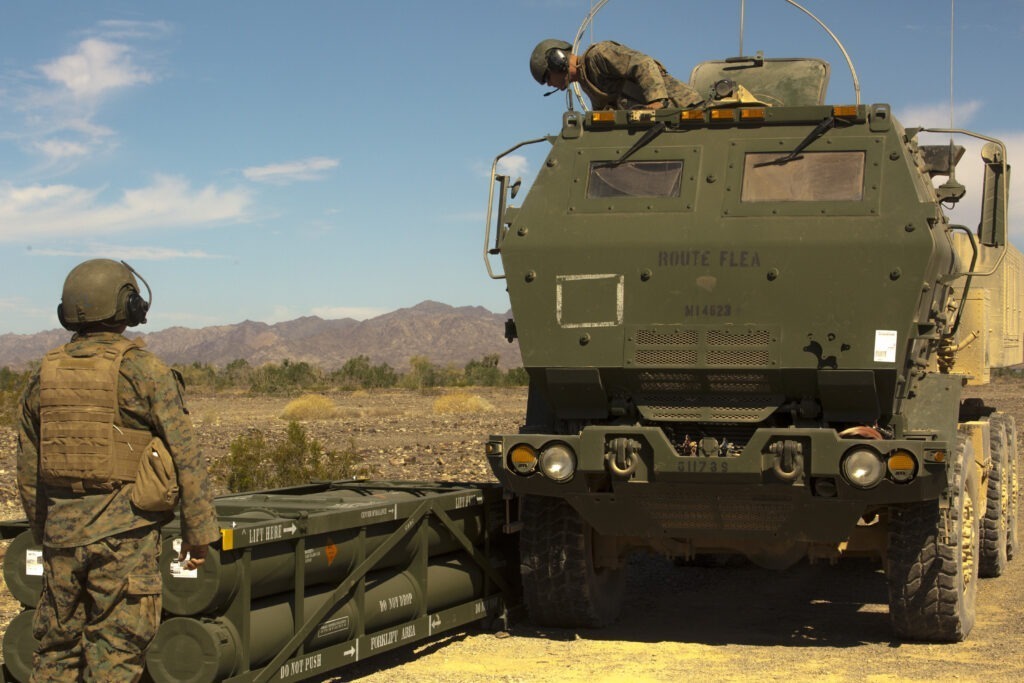
Launcher compatibility is a core strength, as both the tracked M270 series and the wheeled HIMARS use modular rocket pods, each typically holding six GMLRS rounds. That common pod architecture enables rapid reloads and flexible employment from fixed positions, vehicles, or austere forward strips.
Finally, logistics and interoperability are simplified by standardized pods and common fire-control interfaces. That standardization reduces training and sustainment burdens, streamlines ammunition handling, and allows allied forces that operate MLRS or HIMARS to cross-employ rounds and integrate fires more easily during coalition operations.
Tactical Performance and Strategic Impact
GMLRS bridges a crucial capability gap: it provides faster, cheaper, and more precise, long-range fires than cruise missiles, and more accurate and discriminating than unguided rockets.
Here are some of the operational benefits it provides:
- First-round effects: High accuracy reduces the number of rounds and sorties needed to destroy or neutralize a target.
- Mobility and survivability: HIMARS’ road mobility and the shoot-and-scoot doctrine reduce vulnerability to counterbattery fire.
- Force multiplier: A single launcher carrying multiple guided rockets can achieve effects previously needing aircraft or larger missiles, freeing air assets and complicating an adversary’s defenses.
- Coalition utility: Standardized rocket pods and well-defined doctrinal use make GMLRS attractive to allied forces for integrated fires.
Challenges and Road Ahead
GMLRS depends on satellite navigation, which creates vulnerability to jamming and spoofing in contested environments. Mitigations include better inertial navigation, resilient GPS receivers, and alternate guidance aids that together preserve accuracy when satellites are degraded or denied.
Because GMLRS rounds are guided, their unit cost is higher than that of unguided rockets but still well below that of large missiles. Commanders, therefore, weigh economies of scale and target value when allocating them.
That tradeoff drives the program’s near‑term upgrades, such as extended range, hardened navigation, more flexible warheads, and tighter sensor‑to‑shooter integration, so GMLRS can continue shaping fast, precise effects even under electronic attack.