Speed now wins wars, and information sets the pace. Long-range missiles, electronic warfare, and dispersed formations demand intelligence that travels farther and arrives faster than ever before.
That urgency is shaping HADES, the High Accuracy Detection and Exploitation System, to replace and surpass aging platforms.
Operating at high altitude with extended endurance, read this guide to uncover how the HADES system is expected to signal a major shift in gathering battlefield intelligence.

What HADES Is
HADES is a US Army intelligence, surveillance, and reconnaissance (ISR) program built around a crewed, fixed-wing airborne architecture.
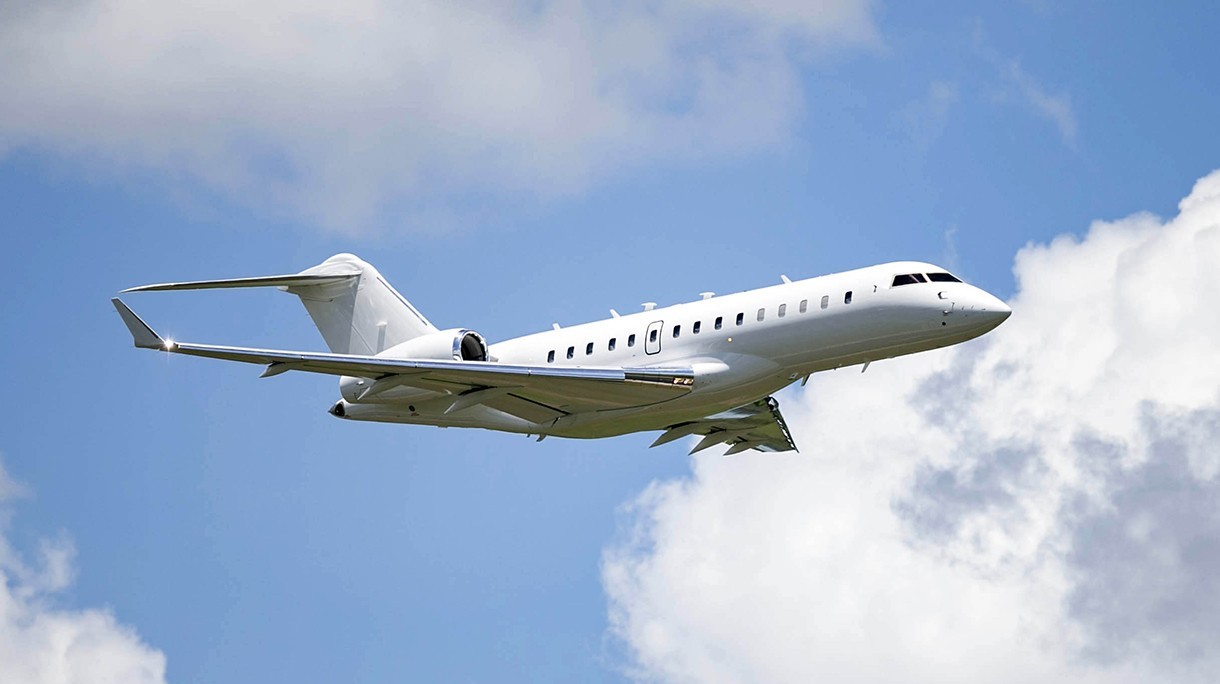
Unlike legacy turboprop ISR aircraft, HADES is based on a high-altitude business jet platform, giving it greater speed, range, survivability, and sensor capacity.
Its mission is to conduct deep sensing — detecting, identifying, and geolocating targets across vast areas in contested environments.
Rather than being a single aircraft model, HADES is a program framework that integrates advanced sensors, signals intelligence (SIGINT), and processing systems onto a jet-powered platform.
| Category: | Details: |
| Full Name | High Accuracy Detection and Exploitation System |
| Role | Crewed ISR aircraft |
| Platform Type | High-altitude business jet |
| Primary Mission | Signals and electronic intelligence, deep sensing |
| Replaces | RC-12 Guardrail and legacy turboprop ISR aircraft |
| Altitude | ~40,000+ feet (12,192 meters) |
| Core Advantage | Speed, altitude, extended sensing range |
How HADES Came to Be
For years, the US Army relied on turboprop aircraft such as the RC-12 Guardrail for signals intelligence missions. While effective, those aircraft were slower, lower-flying, and more vulnerable in contested airspace.
As potential adversaries developed long-range air defenses and electronic warfare capabilities, the service recognized the need for ISR aircraft capable of operating at higher altitudes, faster, and farther from threats.
Development and Industry Partners
The HADES concept evolved through competitive prototyping programs, including ARTEMIS (Aerial Reconnaissance and Targeting Exploitation Multi-Mission Intelligence System) and ARES (Airborne Reconnaissance and Electronic Warfare System) demonstrators.
Major defense firms, including Leidos, L3Harris, Bombardier, and MAG Aerospace, contributed to prototype development and systems integration.
However, Sierra Nevada Corporation was selected to serve as the lead system integrator. To anchor the program long term, the US Army selected a jet-based solution built on the Bombardier Global 6500, providing the speed, altitude, and endurance required for deep-sensing intelligence missions under the HADES framework.
How HADES Works: Inside the Platform
High-Altitude, Jet-Powered ISR
HADES uses a business-jet airframe capable of operating at high altitudes, allowing it to:
- Cover wider areas per sortie
- Remain outside many short-range air defense systems
- Maintain a longer time on station
Higher altitude also improves line-of-sight for sensors and communications.
Advanced Sensor Suite
HADES integrates multiple ISR capabilities, including:
- SIGINT for detecting electronic emissions
- Electronic intelligence for radar and air defense mapping
- Potential integration with imagery and radar systems
The aircraft processes and transmits intelligence in near real-time, supporting multi-domain operations.
Networked Data Integration
HADES is designed to integrate with the US Army’s evolving multi-domain command-and-control architecture, feeding real-time sensor data to ground forces, joint commanders, and potentially long-range fires units to support decision advantage in contested environments.
Advanced time-sensitive networking backbones are incorporated into the aircraft’s systems to enable low-latency data relay between onboard sensors and allied networks, enhancing situational awareness and multi-domain coordination.
Key Strengths and Limitations
Strengths
- High altitude and speed: Greater survivability than turboprop ISR aircraft
- Deep sensing capability: Designed for long-range detection in contested theaters
- Jet endurance and coverage: Larger operational footprint per mission
- Modern architecture: Built for integration with future command networks
Limitations
- Dependent on air superiority: Still vulnerable in heavily contested airspace
- High procurement and sustainment costs: Jet platforms are more expensive to operate
- Not a stealth aircraft: Relies on altitude and distance rather than low observability

Where and How It Has Been Used
While HADES itself is still progressing toward full operational capability, its prototype predecessors — ARTEMIS and ARES — have reportedly supported US Army operations in Europe, particularly in monitoring regional military activity.
These deployments helped refine sensor packages, validate high-altitude ISR concepts, and inform the army’s long-term acquisition path.
In April 2026, reports indicated Morocco was assessing a potential acquisition of HADES as part of efforts to expand its ISR capabilities.
Future Outlook: ISR for Multi-Domain War
The US Army aims for HADES to become its primary airborne ISR platform for large-scale combat operations, replacing aging fleets and aligning with modern battlefield doctrine.
Future iterations may integrate:
- AI-assisted target recognition
- Expanded electronic warfare capabilities
- Greater interoperability with joint and allied forces
As long-range fires and electronic warfare become central to modern conflict, HADES is expected to serve as a key enabler of deep targeting and multi-domain awareness.