Defense Programs Follow Industrial Investment — And Brazil Is Next
OEMs that don’t invest industrially in Brazil now risk being locked out of future programs, regardless of how good their platforms are.

Defense programs follow industrial investment — not the other way around. That principle has driven NATO’s response to the Ukraine war, reshaped European defense supply chains, and is now arriving in Brazil.
BAE Systems’ partnership with Knightec in Resende, Rio de Janeiro, is not a commercial footnote.
It is the first visible node of a global supply chain shift that carries direct consequences for NATO interoperability, for original equipment manufacturer (OEMs) still treating Latin America as an aftermarket, and for Brazil’s position in Western defense production.
The Capacity Crisis Behind the Shift
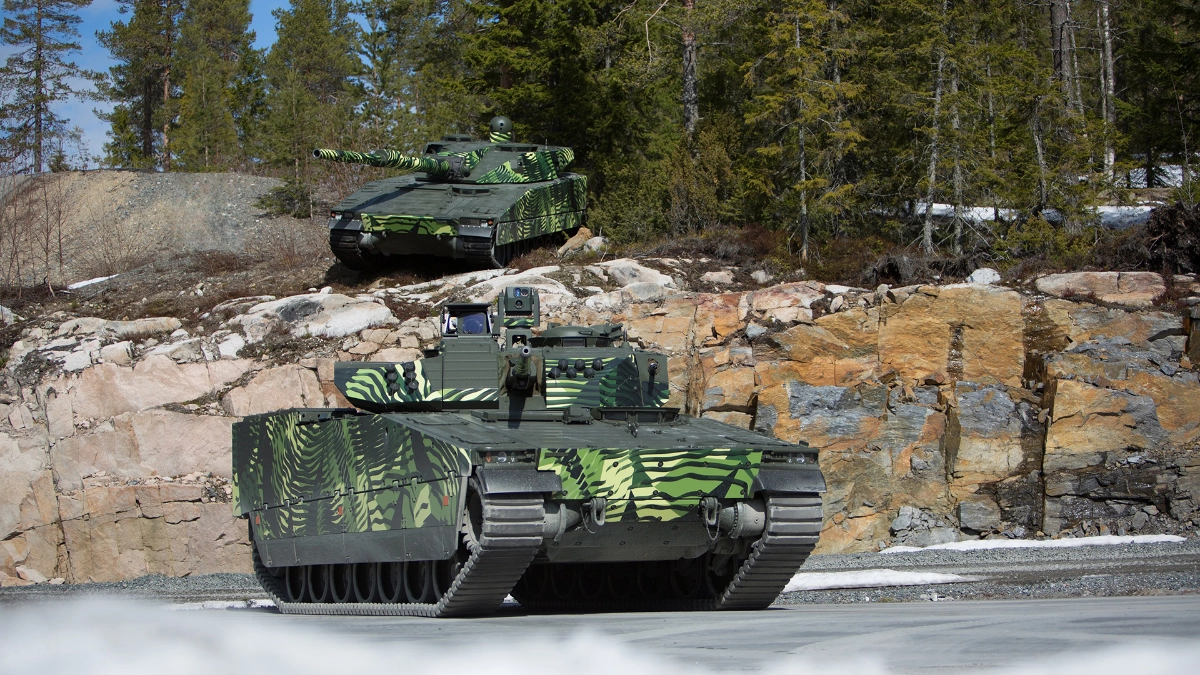
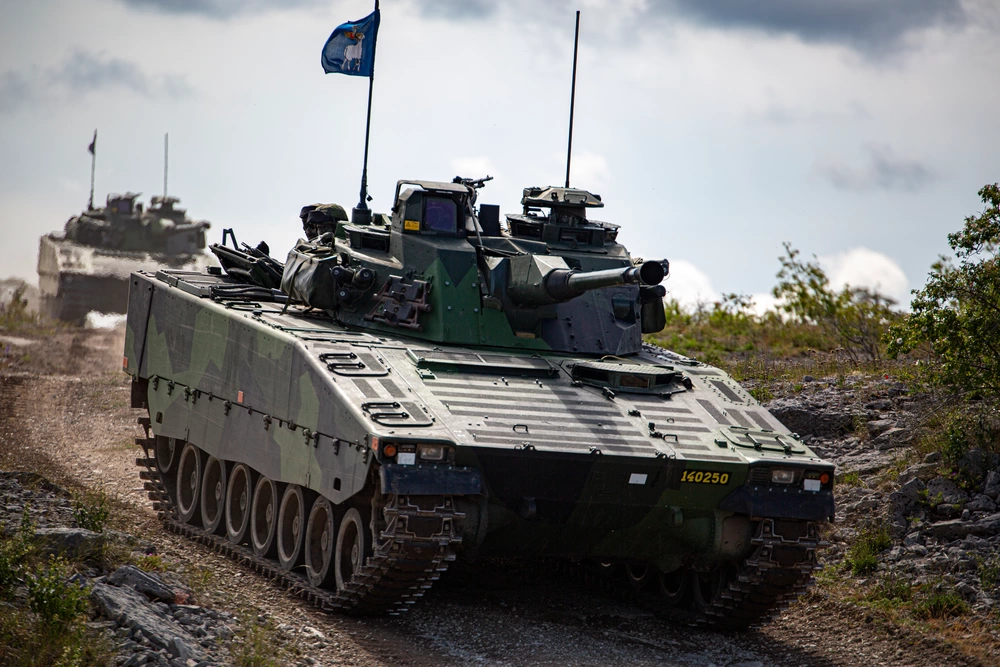
Ukraine changed the mathematics of European defense production. BAE Systems Hägglunds’ facility in Örnsköldsvik — the sole manufacturing hub for the CV90 — has expanded rapidly, increasing output fivefold since 2020.
New production lines, new facilities, and a stretched supplier base across Europe have followed.
And still, it’s not enough.
With a backlog of roughly 1,900 vehicles and new multinational orders expected, the limits of centralized production are clear. As BAE Systems Hägglunds President Tommy Gustafsson-Rask put it at DSEI 2025: “Just in time is dead.”
The response has been deliberate: distribute production across partner nations. Assembly in the Czech Republic and Slovakia, turret work in the Netherlands, components in Norway.
This model reduces strain, accelerates delivery, and embeds industrial participation in buyer countries.
Resende is not a deviation from this model. It is its logical extension into the Western Hemisphere.
The Geopolitical Signal
The timing of the Resende announcement — weeks before LAAD Security Milipol Brazil — was not incidental.
BAE Systems is signaling to Brasília, to competitors, and to Brazil’s institutional ecosystem that its commitment to Brazil is industrial, not merely commercial.
For NATO and its partners, the implications go beyond a single program. Brazil producing components for platforms used by European allies — and on order with the United States — is friend-shoring in practice, not theory.
For OEMs, the message is sharper. Treating this as a one-off commercial decision misses the shift underway.
As competition in Latin America intensifies, particularly with China expanding its industrial footprint, companies that establish production in Brazil are not just entering a market — they are anchoring themselves in it for decades.
Why Brazil
BAE Systems is not building in a vacuum. Resende is already one of Brazil’s main heavy manufacturing hubs, with an established base in commercial vehicle production and the workforce to support it.
More importantly, Brazil’s procurement model rewards exactly this kind of move. Its offset framework favors technology transfer and local production, meaning industrial presence is no longer a bonus — it is a prerequisite.
OEMs that fail to build locally are starting competitions at a disadvantage, regardless of platform quality.
BAE Systems has understood this. After more than a century in Brazil, its shift from supplier to industrial partner now has a physical footprint.
What the Industry Should Take From This
The qualification of Knightec Group Brazil as a supplier meeting NATO standards is more than a technical milestone. It establishes a reference point — one that lowers the barrier for other OEMs to follow and raises the cost of standing still.
Brazil is no longer just a procurement market. It is becoming part of the production base for Western defense systems.
That shift will shape future competitions. Industrial presence will determine access. And the companies that move early will define the terms.
Defense programs follow industrial investment. The OEMs that act on that reality in Brazil now will not be explaining their absence when the next wave of programs is decided.

Paulo Dominonni is a Brazil and Latin America Defense Industrial Strategist specializing in military vehicle industrialization, licensed production structures, and strategic industrial partnerships.
He advises global OEMs and national defense stakeholders on market entry architecture, regulatory navigation, and long-term industrial integration within Latin American defense.
The views and opinions expressed here are those of the author and do not necessarily reflect the editorial position of The Defense Post.
The Defense Post aims to publish a wide range of high-quality opinion and analysis from a diverse array of people – do you want to send us yours? Click here to submit an op-ed.