Industrial Density: The New Battlefield in Latin American Vehicle Procurement
In Latin America, vehicles compete on performance but contracts are won on industrial integration.

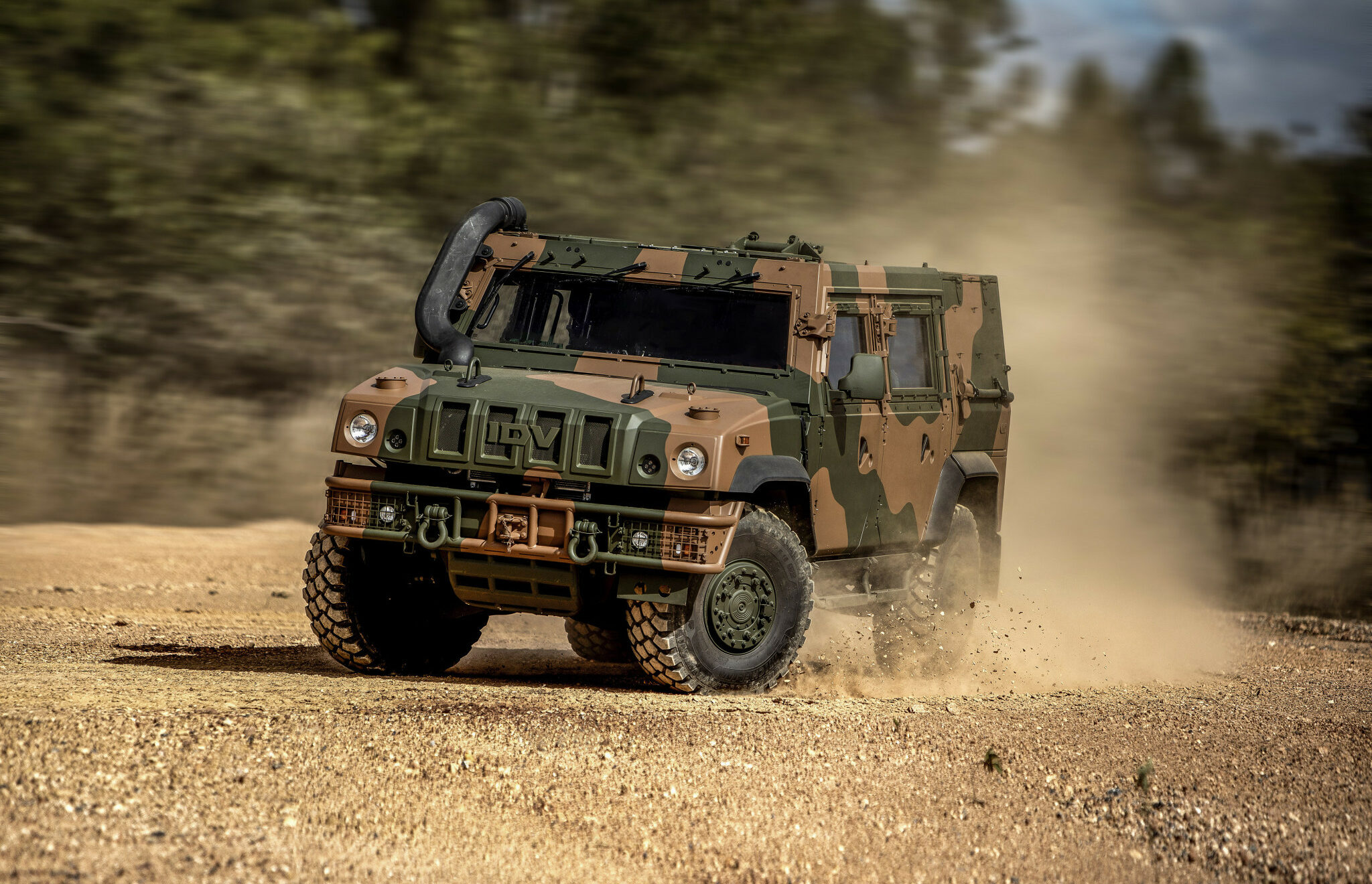
When the Brazilian Army selected the Iveco LMV-BR as its new light multirole vehicle, the decision was not simply about armor thickness or mobility performance. It was about control.
Control over production. Control over sustainment. Control over long-term operational autonomy.
The platform was evaluated not just as a vehicle, but as an industrial commitment. Domestic manufacturing footprint, supplier integration, in-country maintenance, repair, and overhaul (MRO) capability, and lifecycle resilience were central to the decision.
The vehicle was embedded in an industrial architecture — not treated as a standalone import.
That decision reflects a wider structural shift underway in Latin America. The long-dominant transactional model — import, assemble lightly, outsource sustainment — is steadily losing relevance.
In its place, governments are constructing procurement frameworks anchored in sovereignty, domestic capability expansion, and lifecycle autonomy.
At the center of this transition lies a decisive competitive variable: industrial density.
Industrial density is the measurable depth of domestic industrial integration embedded within a defense program, encompassing production capacity, supplier development, technology absorption, governance alignment, and national sustainment autonomy across a platform’s lifecycle.
Beyond Off-the-Shelf
For years, foreign original equipment manufacturers (OEMs) could approach the region with export-led strategies supplemented by modest localization. That formula is eroding.
Defense ministries are no longer evaluating vehicles solely on technical merit and acquisition price. Finance ministries are assessing economic return. Industry ministries are evaluating supplier development. Planning authorities are scrutinizing resilience.
Defense spending is being leveraged as industrial policy. Programs that fail to demonstrate tangible domestic integration risk being viewed not as modernization efforts, but as missed development opportunities.
Brazil as Structural Benchmark
Brazil represents the most mature expression of this model in the region.
Vehicle programs are now judged against industrial criteria as sharply as operational performance: integration into the national defense industrial base, durability of the manufacturing footprint, supplier network expansion, workforce development, and full lifecycle sustainment autonomy.
Proposals that demonstrate credible industrial architecture accumulate institutional capital over time. Those that do not encounter structural skepticism during evaluation cycles.
Brazil’s framework is increasingly shaping regional expectations and influencing how OEMs structure their Latin American strategies.
Regional Convergence
Colombia, Chile, and other regional actors are following suit, steadily weaving industrial participation into their evaluation frameworks. The depth and scope vary, but the trajectory is unmistakable.
This shift is fueled by three forces.
Fiscal rationalization demands defense spending generate tangible domestic economic returns.
Strategic autonomy concerns make reliance on foreign supply chains politically sensitive.
And institutional maturation ensures procurement decisions now involve coordinated assessment by defense, finance, industry, and planning authorities.
Acquisition is no longer a technical comparison alone, but a test of industrial credibility, political alignment, and long-term national capability.

Industrial Density as Competitive Filter
In this environment, industrial density functions as a competitive filter.
OEMs that anchor production domestically, commit to progressive localization, and build sustainment ecosystems accumulate institutional credibility. They are perceived as long-term partners aligned with national objectives.
Export-only proposals — even technically sophisticated ones — face increasing skepticism. Platforms that lack robust industrial architecture may qualify technically yet struggle politically and institutionally.
Misreading this shift carries measurable consequences.
Firms that treat Latin America as a transactional export destination often remain confined to limited contracts, fail to scale, and become vulnerable to sovereignty-driven counter-narratives.
Industrial presence builds credibility. Credibility builds competitive endurance.
The End of Symbolic Localization
Superficial assembly models without meaningful capability transfer are encountering heightened scrutiny.
Decision-makers distinguish between symbolic localization and structural integration.
Programs that fail to expand domestic supplier networks, embed technical competence, or establish autonomous sustainment capacity are discounted in comparative evaluation frameworks.
Industrial density must be demonstrated through tangible capability, not declaratory intent.
Sustainment Autonomy as Strategic Insurance
Latin American fleets operate over decades, not years. That longevity exposes programs to currency swings, sanctions regimes, and global supply disruptions.
Dependence on foreign sustainment is no longer just inconvenient, it is a strategic liability.
Programs that embed national MRO capability turn that liability into insurance. They shield operational readiness from external shocks, stabilize budgets, and ensure fleets remain mission-ready under any geopolitical scenario.
Lifecycle sovereignty is now a core evaluation variable.
A Structural Regional Pattern
This transformation reflects institutional evolution rather than episodic protectionism.
Defense procurement is no longer a series of isolated acquisitions. It is increasingly integrated into national industrial strategies, workforce development plans, technology transfer frameworks, and resilience architecture.
Across the region, industrial density has become the connective tissue linking acquisition, capability, and sovereignty. Programs that fail to embed it risk being sidelined — not for lack of technical merit, but for lack of structural credibility.
For OEMs assessing Latin American military vehicle markets, the message is clear: industrial integration is no longer optional. It defines who wins, who scales, and who can sustain operational independence over decades.
Technical performance remains necessary.
But in contemporary Latin America, platforms compete on capability, and industrial structures compete on sovereignty, resilience, and institutional alignment.
Industrial density is no longer peripheral to competition. It is battlefield advantage.

Paulo Dominonni is a Brazil and Latin America Defense Industrial Strategist specializing in military vehicle industrialization, licensed production structures, and strategic industrial partnerships.
He advises global OEMs and national defense stakeholders on market entry architecture, regulatory navigation, and long-term industrial integration within Latin American defense.
The views and opinions expressed here are those of the author and do not necessarily reflect the editorial position of The Defense Post.
The Defense Post aims to publish a wide range of high-quality opinion and analysis from a diverse array of people – do you want to send us yours? Click here to submit an op-ed.