Maritime security today extends far beyond hunting submarines. Navies must monitor vast ocean spaces, track surface vessels, deter submarine threats, and support joint operations across air, sea, and land domains.
At the center of this mission is Boeing’s P-8 Poseidon, a multi-role maritime patrol aircraft designed for persistent awareness and long-range strike in contested waters.
This guide covers how the P-8 redefines the standards for multi-mission patrol and reconnaissance across navies worldwide.
The P-8 Poseidon Overview
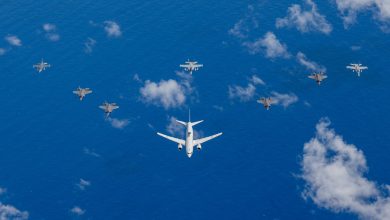
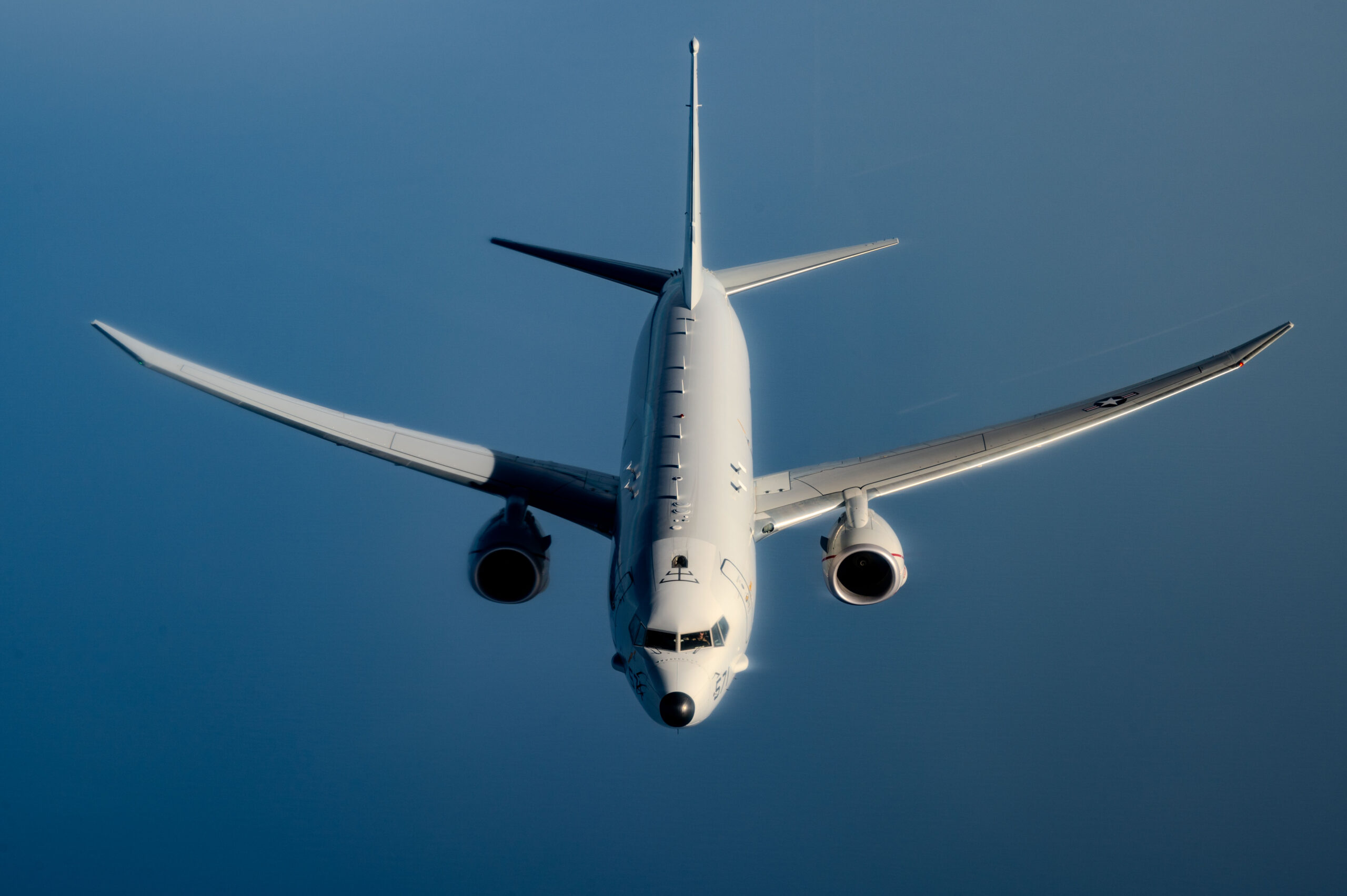
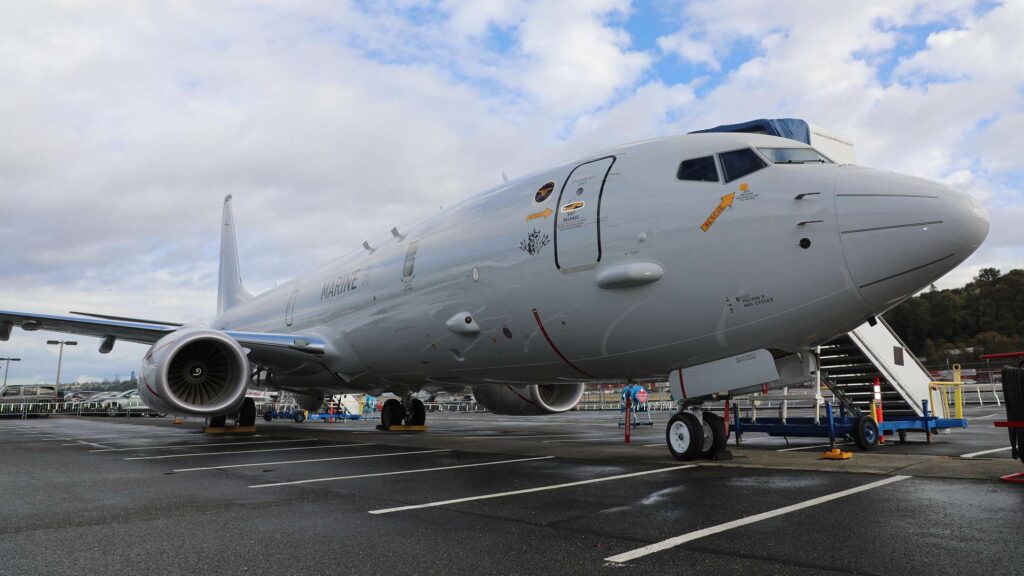
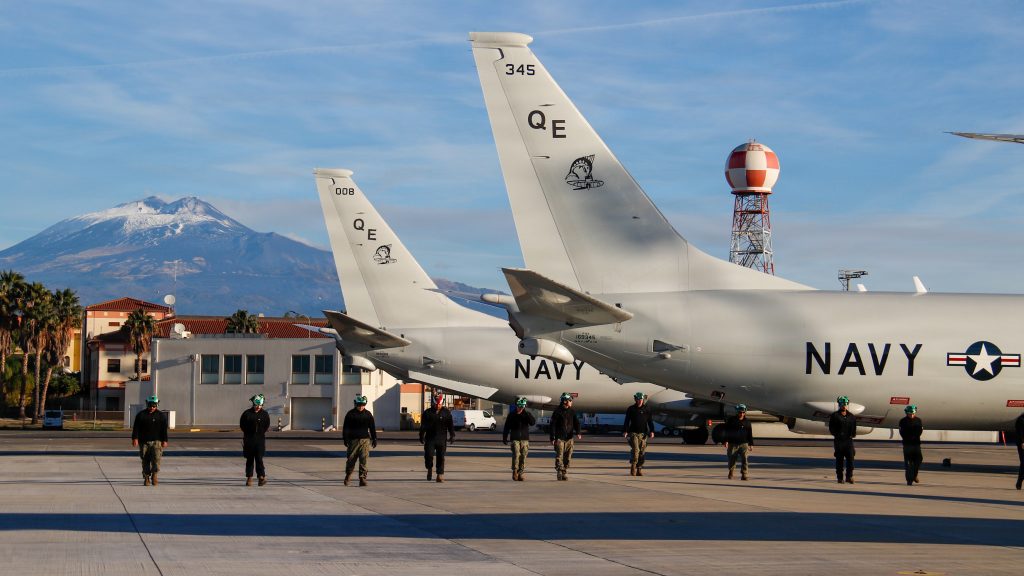
The P-8 Poseidon is a long-range maritime patrol and reconnaissance aircraft operated primarily by the US Navy and by an increasing number of allied forces.
Developed by Boeing and based on the commercial 737-800 airframe, the P-8 was designed to replace the aging P-3C Orion while delivering far greater speed, range, and sensor integration.
Unlike its turboprop predecessor, the Poseidon is optimized for high-altitude transit and wide-area surveillance, enabling it to quickly cover large patrol areas and respond to emerging threats across entire theaters of operation.
| Category | Details |
| Type | Maritime patrol, anti-submarine, and anti-surface warfare aircraft |
| Manufacturer | Boeing |
| Crew | ~9 (pilot, co-pilot, mission systems officers, tactical coordinator) |
| Primary Role | Anti-submarine warfare, anti-surface warfare, ISR, maritime patrol, search-and-rescue support |
| Length | 129.5 feet (39.5 meters) |
| Height | 42.1 feet (12.8 meters) |
| Wingspan | 123.6 feet (37.6 meters) |
| Max. Gross Takeoff Weight | 189,200 pounds (85,820 kilograms) |
| Engine | 2 × CFM56-7B turbofan engines |
| Speed | ~490 knots (910 kilometers/565 miles per hour) |
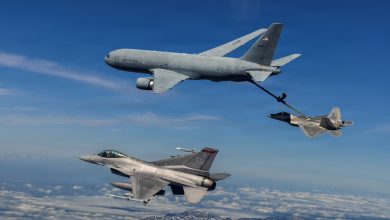
| Range or Endurance | ~1,200 nautical miles (2,200 kilometers/1,381 miles) with 4+ hours on station; extendable with aerial refueling |
| Sensors | AN/APY-10 maritime surveillance radar, sonobuoys, magnetic anomaly detector (MAD), electro-optical/infrared (EO/IR) systems |
| Communications and Network | Tactical data links (Link-16), secure satcom, multifrequency communications |
| Weapons or Payloads | MK 54 lightweight torpedoes, AGM-84 Harpoon anti-ship missiles, depth charges, A-size sonobuoys |
| Global Operators | Cooperative engagement with naval assets, real-time data fusion, and rapid redeployment |
| Notable Capabilities | Persistent long-range maritime surveillance, networked targeting, integrated sensors for multi-domain ops |
| Special Features | Cooperative engagement with naval assets, real-time data fusion, rapid redeployment |
| First Flight / Service Entry | 2009 / Initial US Navy service 2013 |
Core Mission
The P-8 is best known for its anti-submarine warfare (ASW) role, but it also supports broader maritime surveillance, strike, and intelligence missions.
It can conduct ASW using sonobuoys, magnetic anomaly detectors, and torpedoes; anti-surface warfare with missiles and radar targeting; and ISR missions, providing commanders with real-time situational awareness.
It can also support search-and-rescue operations and integrate seamlessly with allied naval assets.
Variants
While the basic airframe for the P-8 Poseidon remains consistent, there are variants used globally:
- P-8A Poseidon: The P-8A is the primary operational variant used by the US Navy and several allied air arms, including Australia, the UK, Norway, and others. While allied P-8As are largely similar to the US baseline, they typically incorporate national mission system adaptations to meet specific force integration requirements.
- P-8I: The P-8I is India’s customized version of the platform. It retains the core P-8 architecture but includes modifications to communications, navigation, and mission systems to meet Indian operational requirements.
How the Aircraft Works
Two CFM56 turbofan engines power the P-8 to cruise faster and higher than earlier maritime patrol aircraft, enabling rapid repositioning and improved survivability.
Once on station, it descends as needed to conduct detailed surveillance and targeting operations.
The aircraft’s effectiveness stems from its sensor-fusion architecture. These sensors feed into a common tactical picture, allowing crews to detect, classify, and track targets in real time.
Its onboard suite includes:
- A multi-mode maritime surveillance radar for surface and air search
- Electro-optical and infrared sensors for visual identification
- Electronic support measures to detect and classify emissions
- Acoustic processing systems to track submarines using sonobuoys

Strengths and Operational Impact
Poseidon’s defining strength is persistent, networked awareness, operating as a forward sensor that feeds real-time targeting data to ships, submarines, and strike aircraft.
Its speed and range allow it to patrol critical chokepoints, monitor adversary naval movements, and support deterrence missions in regions such as the Indo-Pacific, North Atlantic, and Arctic.
The patrol aircraft’s ability to integrate seamlessly with surface combatants and undersea forces makes it a central node in modern maritime operations.
Limitations
But despite its advanced sensors, the P-8 is not a stealth platform and relies on distance, altitude, and escort support when operating near hostile air defenses.
Its effectiveness in anti-submarine missions also depends on sonobuoy inventories and acoustic conditions, which can vary by region.
Like all high-demand platforms, fleet availability and sustainment remain ongoing challenges as operational tempo increases.
Why It Matters
The P-8 Poseidon reflects the evolution of maritime patrol from a niche ASW role to a multi-domain intelligence and strike mission.
As great-power competition returns to the world’s oceans, the P-8 has become more than a patrol aircraft — it is a critical enabler of naval dominance and deterrence in the modern era.