Combined Joint All-Domain Command and Control (CJADC2): Connecting the Modern Battlespace

In today’s battlespace, actions in the air can trigger effects in space, cyberspace, or at sea within seconds.
Combined Joint All-Domain Command and Control, or CJADC2, was created to operate in that reality, linking data, decision-makers, and weapons across all domains and coalition partners.
The problem it addresses is not a shortage of sensors or firepower, but the need to connect information and act faster than an adversary can respond.
This guide will unpack how CJADC2 is designed to link data, decisions, and effects across every warfighting domain.
What CJADC2 Actually Is
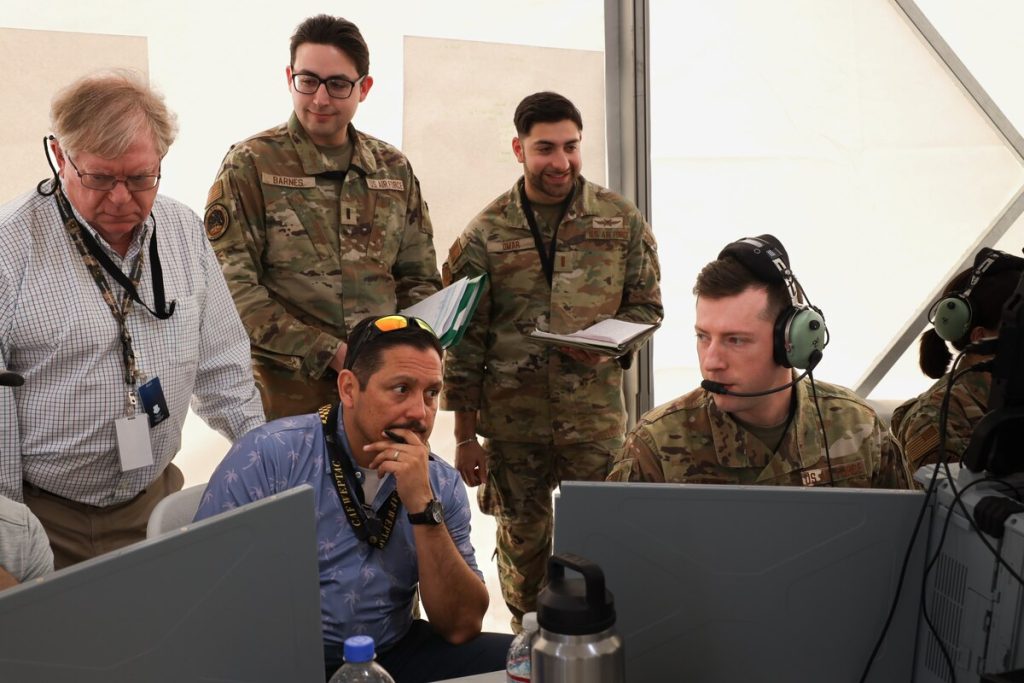
CJADC2 is the US Department of Defense’s evolving framework for enabling faster, more effective decision-making by linking sensors, commanders, and shooters across services and coalition partners.
Put simply, CJADC2 aims to:
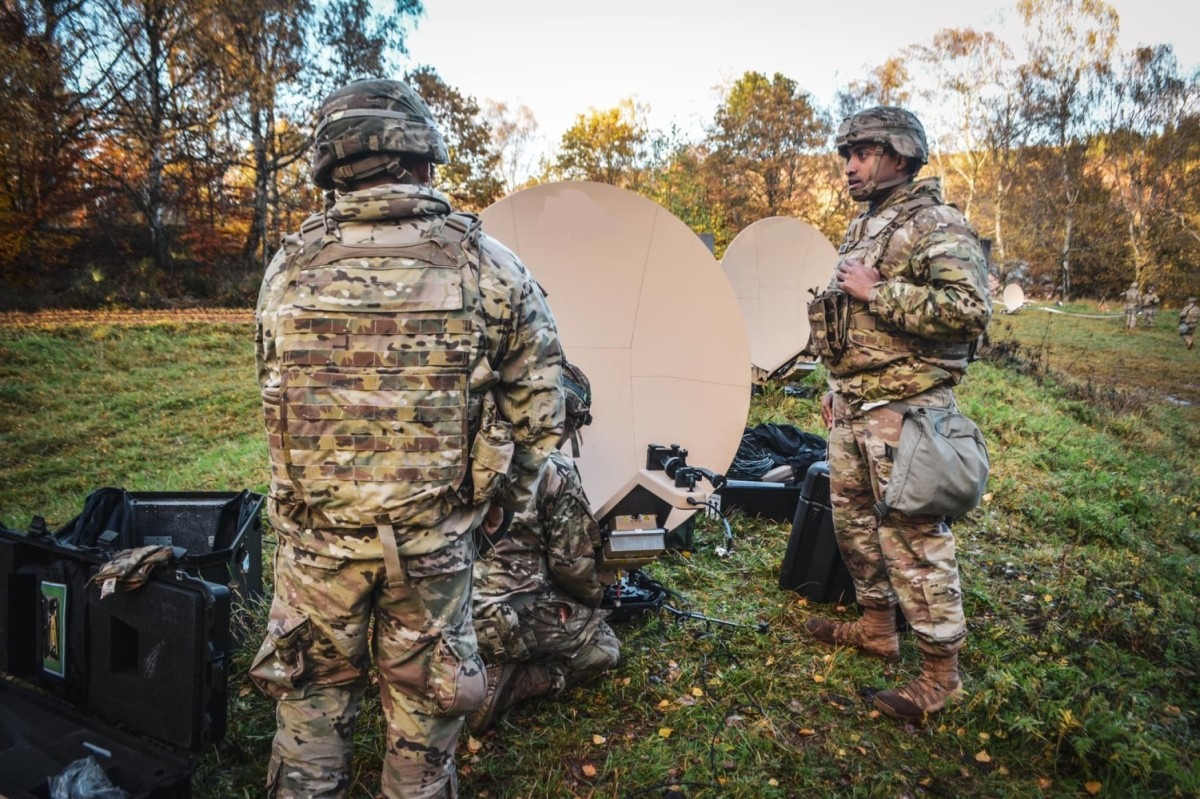
- Collect data from sensors across all domains.
- Process and fuse that data into a coherent operational picture.
- Distribute actionable information to the right decision-makers and weapons systems.
- Enable rapid, synchronized action across services and allies.
Rather than a single system or platform, CJADC2 is a concept, architecture, and approach for how future forces share data, coordinate actions, and fight as an integrated whole.
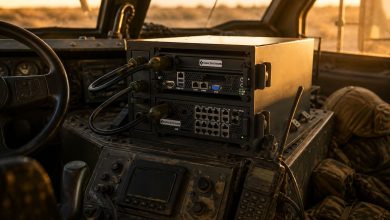
CJADC2 is not a single software program or command center. Instead, it is a federated approach that connects existing and future systems through shared data standards, secure networks, and interoperable architectures.
Expanding on JADC2
JADC2, the initial strategy, was proposed in March 2022 and is organized around five lines of effort to deliver its capabilities: data enterprise, human enterprise, technology enterprise, integration with nuclear command and control (C2) and communications, and modernization of mission partner information sharing.
While both aim to modernize C2, JADC2 focuses on linking US military forces across all domains, whereas CJADC2 extends this network to allied and partner nations, enabling a more interoperable and collaborative multinational defense posture.
Artificial intelligence and machine learning also play an increasingly important role by helping prioritize targets, manage information overload, and recommend courses of action, while human commanders retain decision authority.
Why CJADC2 Exists
For decades, each military service developed C2 systems optimized for its own domain. However, these systems often struggled to communicate with one another, creating data silos that slowed decision-making, which could prove decisive in the end.
CJADC2 emerged from the recognition that future wars will be highly contested, fast-moving, and data-intensive.
To maintain an advantage in long-range fires, electronic warfare, cyber operations, and anti-satellite capabilities, CJADC2 does one central thing well: connecting sensors, decision-makers, and effects across domains faster than an adversary can disrupt or outpace them.
Its value lies less in any single weapon and more in how those weapons are coordinated and employed.
How It Works in Practice
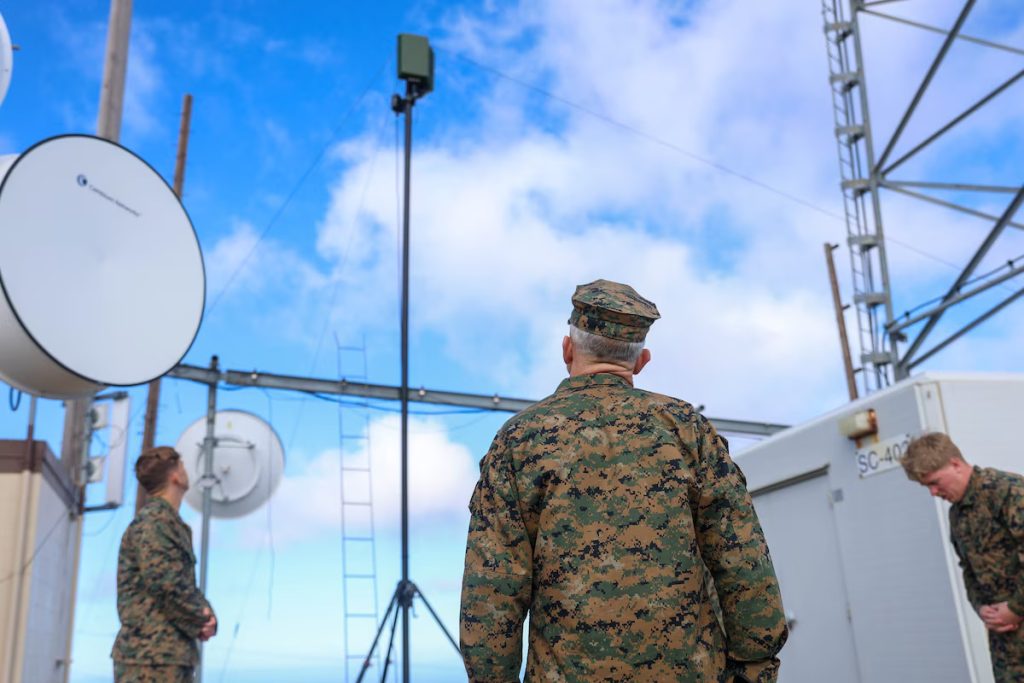
In a CJADC2-enabled environment, a sensor detecting a threat in one domain, such as a Space-Based Infrared System satellite tracking a missile launch, an Aegis-equipped Navy destroyer radar identifying a hostile aircraft, or an Army Sentinel radar spotting incoming rockets, can immediately share that data across the force.
An MIM-104 Patriot battery, a F-35 fighter jet, or a Tomahawk missile–armed Virginia-class submarine could then engage the target, even if they did not detect it themselves.
This approach decouples sensors from shooters, allowing the most suitable platform and weapon to respond regardless of service or domain.
The result is a more resilient and flexible force that can continue operating effectively even if individual nodes, such as AWACS aircraft, ground radar sites, or satellites, are degraded or destroyed.
Challenges and Limitations
Despite its promise, CJADC2 faces significant challenges. Interoperability remains a major hurdle, particularly when integrating legacy systems and multinational partners with different standards and security requirements.
Cybersecurity and resilience are also critical concerns, as more connectivity creates more potential attack surfaces.
Additionally, CJADC2 depends heavily on reliable networks, including space-based assets that may be targeted in a conflict. Ensuring the system can function in degraded or denied environments is a central focus of ongoing development.
Finally, there is an organizational challenge: aligning doctrine, training, and culture across services and nations to fully exploit the technology.
Why CJADC2 Matters
CJADC2 represents a shift from platform-centric warfare to network-centric decision dominance.
In future conflicts, victory may depend less on who has the most weapons and more on who can connect, decide, and act the fastest.
By enabling seamless coordination across domains and allies, CJADC2 aims to ensure that modern forces remain agile, resilient, and effective in an increasingly complex and contested battlespace.