In the quiet plains of the American Midwest, beneath layers of reinforced earth and decades of nuclear doctrine, a new generation of deterrence is taking shape.
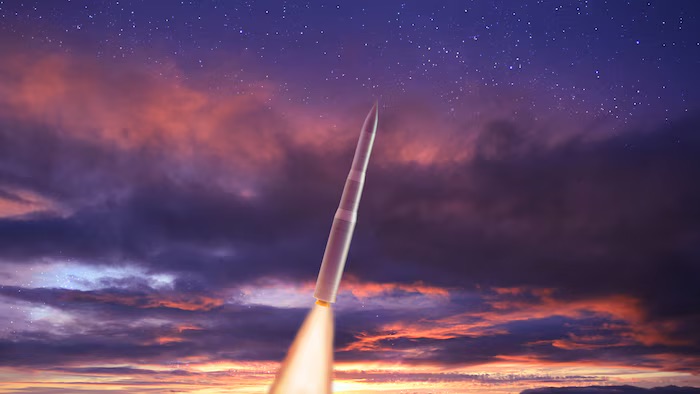
The LGM-35 Sentinel ICBM represents a recalibration of how the US maintains strategic stability in an era defined by peer competition, cyber threats, and rapid technological change.
Built to endure for decades, it blends modern engineering with the enduring logic of nuclear deterrence. Let’s break down what it is, how it works, and why it matters.

At a Glance
| Category: | Details: |
| Type | Land-based intercontinental ballistic missile |
| Role | Strategic nuclear deterrence; replacement for Minuteman III in US nuclear triad |
| Developer | Northrop Grumman as prime contractor |
| Operator | US Air Force (Air Force Global Strike Command) |
| Range | 6,000+ miles (9,656 kilometers) |
| Propulsion | Intercontinental (exact range classified; estimated >10,000-kilometer/6,214-mile class capability) |
| Speed | Mach 23 (28,400 kilometers/17,647 miles per hour) at burnout |
| Ceiling | 700 miles (1,126 kilometers) |
| Warhead | Designed for W87-1 thermonuclear warhead (single-warhead configuration planned, with future growth potential) |
| Power plant | Three solid-propellant rocket motors |
| Launch Platform | Hardened underground silos (new-build infrastructure replacing Minuteman III-era facilities) |
| Deployment Timeline | Development in 2020s; initial capability projected for the early 2030s |
| Inventory | 400 |
What Is the Sentinel ICBM?
The LGM-35 Sentinel intercontinental ballistic missile (ICBM) is a next-generation long-range nuclear missile designed to modernize the land-based component of the US nuclear triad, which is considered the bedrock of national security.
To put its scale and power into perspective, an ICBM can reach targets anywhere on the planet in roughly 30 minutes.
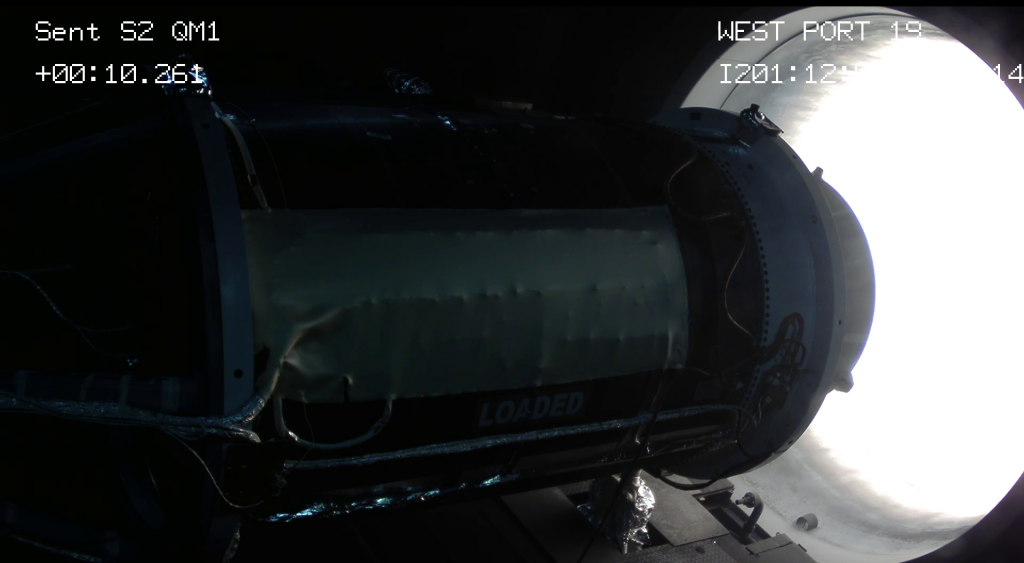
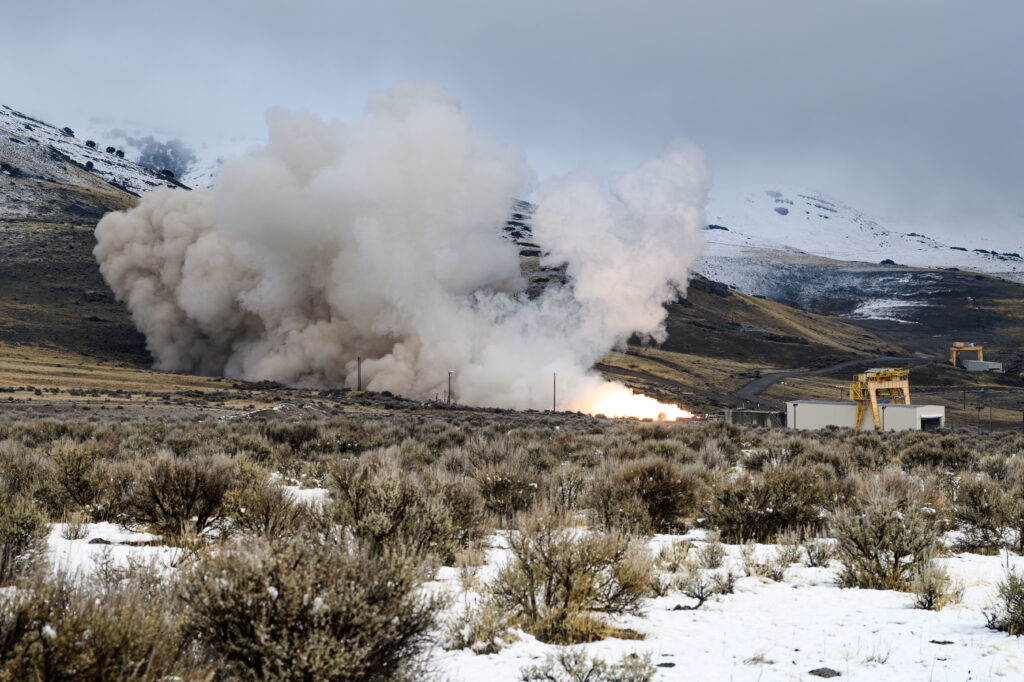
After launch, it rapidly accelerates through a brief boost phase as solid-fuel rockets push it beyond the atmosphere.
From there, it transitions into a silent, arcing trajectory through space, releasing its warhead mid-course before the reentry vehicle separates and continues unassisted toward its distant target.
Origins and Development
With over 50 years of service under its belt, the aging Minuteman III ICBM was bound for an improvement.
In response, the US Air Force, with primary development led by Northrop Grumman, created the Sentinel program.
Formerly known as the Ground-Based Strategic Deterrent, the Sentinel ICBM was initiated to address the limitations of the Minuteman III.
This includes its aging infrastructure, increasingly obsolete command-and-control and guidance technologies, and the growing difficulty of sustaining decades-old components and silo systems without major life-extension overhauls.
The Sentinel program, intended to remain operational into the 2070s, includes not just the missile itself but also new silos, launch facilities, and communications architecture.
A New Standard for Land-Based Deterrence
Three-Stage Booster Propulsion Design
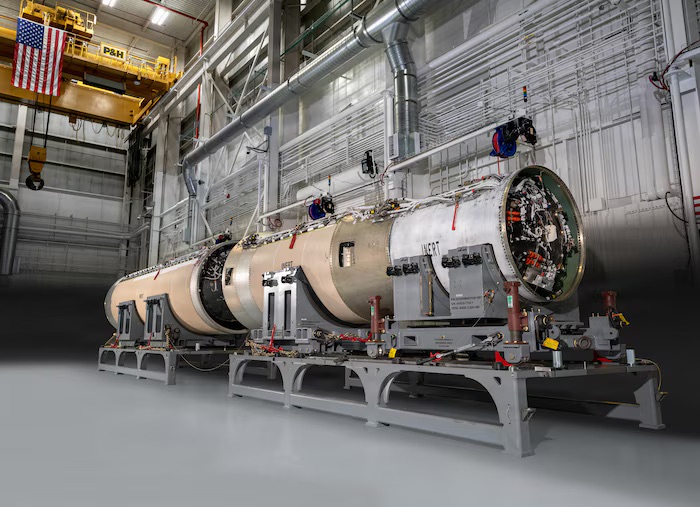
A key upgrade is the Sentinel ICBM’s modernized three-stage solid-fuel booster system.
While it retains the proven multi-stage solid rocket architecture, Sentinel benefits from improved materials, updated manufacturing processes, and a more modular design approach that simplifies maintenance and future upgrades.
This refined propulsion system is intended not only to preserve rapid launch capability but also to reduce lifecycle strain and ensure higher readiness levels across decades of service.
Integrated Launch, Mobility, and Digital Infrastructure
The program also enhances the entire ecosystem that supports the missile, including launch silos, transport and handling systems, and the underlying computer networks that enable command and control.
Existing silos are refurbished or rebuilt to improve structural resilience, security, and long-term sustainability.
At the same time, upgraded transport and support vehicles and modernized computer networks and command-and-control systems create a more integrated, responsive, and hardened infrastructure.
Guidance, Survivability, and Targeting
While the Minuteman III depends on upgraded but fundamentally older guidance architecture, the Sentinel integrates next-generation digital systems designed for a more contested battlespace.
Enhanced inertial navigation is paired with modernized processing power and hardened electronics, improving resilience against electronic warfare, jamming, and cyber-enabled disruption.
This upgrade reflects a shift from simply maintaining accuracy to ensuring reliability in degraded or actively contested environments.
Sentinel Strengths
- System-wide modernization: Unlike incremental upgrades to Minuteman III, Sentinel replaces and modernizes the entire ecosystem in a single coordinated effort.
- Enhanced cyber and electronic resilience: Built with modern digital architecture that prioritizes resistance to cyber threats, electronic warfare, and communications disruption.
- Strategic stability contribution: Reinforces deterrence by maintaining a credible, survivable land-based leg of the nuclear triad, supporting overall strategic balance with peer adversaries.
- Higher force readiness and responsiveness: Streamlined support systems and improved launch infrastructure are intended to keep a larger portion of the force at consistent readiness levels.
Limitations of the Missile
- Program costs and delay: Early development and infrastructure modernization have faced significant cost growth and schedule pressure, driven by the scale of replacing an entire strategic system rather than upgrading components piecemeal.
- Strategic transition and force structure uncertainty: The extended overlap with the aging Minuteman III poses significant challenges. The Sentinel program must operate within strict congressional mandates requiring a minimum of 400 deployed, on-alert ICBMs distributed across fixed silo fields, limiting flexibility in force restructuring.
- Prolonged dual-system burden: Rather than a direct replacement, Sentinel is being fielded alongside the Minuteman III for an extended transition period, requiring the US Air Force to maintain two overlapping ICBM systems simultaneously, complicating logistics, training, and long-term modernization planning.
- Transition risk and congressional oversight pressure: The Minuteman-to-Sentinel transition has been identified as a high-risk phase, prompting requirements for formal risk mitigation strategies and legislative mandates to extend the life of legacy systems, reflecting uncertainty in execution timelines and modernization sequencing.
Global Context and Use
The Sentinel ICBM is not yet operational but central to the United States’ future deterrence strategy. It will replace roughly 400 Minuteman III missiles deployed across states like Montana, Wyoming, and North Dakota.
Globally, ICBMs remain a cornerstone of nuclear-armed states’ arsenals, including Russia and China, both of which are actively modernizing their own missile forces.
Future Outlook
The Sentinel ICBM is less about building a new weapon than replacing a system the United States can no longer sustain.
But doing so at scale — across hundreds of missiles, silos, and command systems — makes it one of the most complex and expensive nuclear modernization efforts ever attempted.
Whether it stays on schedule and within budget may prove just as important as its technical capabilities. Because in nuclear deterrence, credibility depends not only on what a system can do but on whether it can actually be delivered.