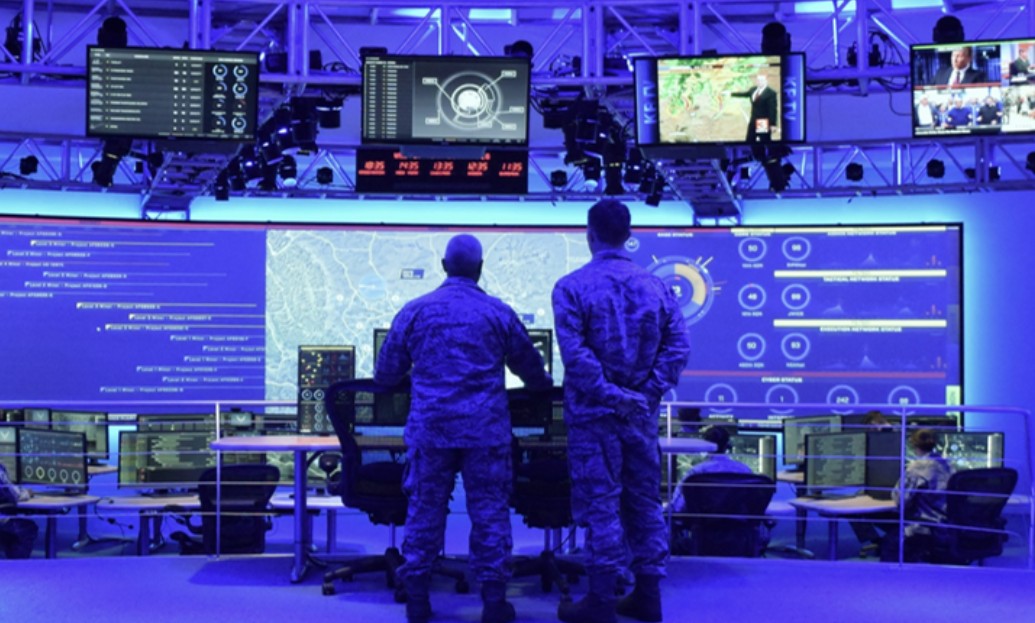
In partnership with the US Air Force, Northrop Grumman has completed the critical design review for the Sentinel Launch Support System (LSS).
The LSS is the digital command-and-control infrastructure that will support the development, testing, and operational launches of the LGM‑35A Sentinel intercontinental ballistic missile (ICBM).
With the completion of the critical design review, the project now moves into the construction, testing, and qualification phase.
Manufacturing is planned at Northrop Grumman facilities in Roy, Utah, with system installation scheduled at Vandenberg Space Force Base in California.
“By advancing the Sentinel program, we are addressing one of the nation’s most critical deterrence missions, providing resilient and dependable capabilities to safeguard our country’s future,” stated Sarah Willoughby, VP and general manager of strategic deterrent systems at Northrop.
Sentinel Program
The Sentinel program aims to modernize the US land-based nuclear deterrent by replacing all Minuteman III missiles, which have been in service for over 50 years.
The upgrade will replace all major missile components, including the three rocket motors, two interstages, the propulsion system, and the guidance system.
Northrop Grumman and the US Air Force are advancing the program, moving through critical testing and qualification phases.
In August, they completed the first qualification test of the stage-two solid rocket motor, a key component of the missile’s propulsion system.
The test took place inside a vacuum chamber at the Arnold Engineering Development Complex in Tennessee, where flight conditions were simulated to evaluate both the stage-two motor and its Thrust Vector Control system, which manages missile steering during powered flight.
After experiencing delays due to extended lead times for the missile’s guidance computer components, the first flight test of the Sentinel ICBM is now scheduled for February 2026, instead of December 2023 as originally planned.