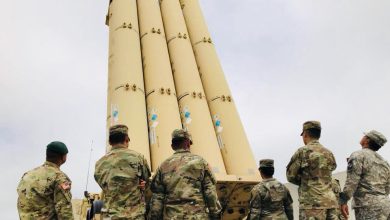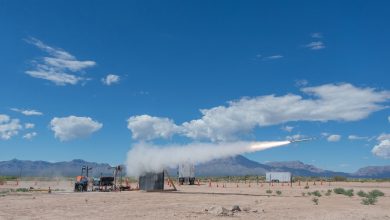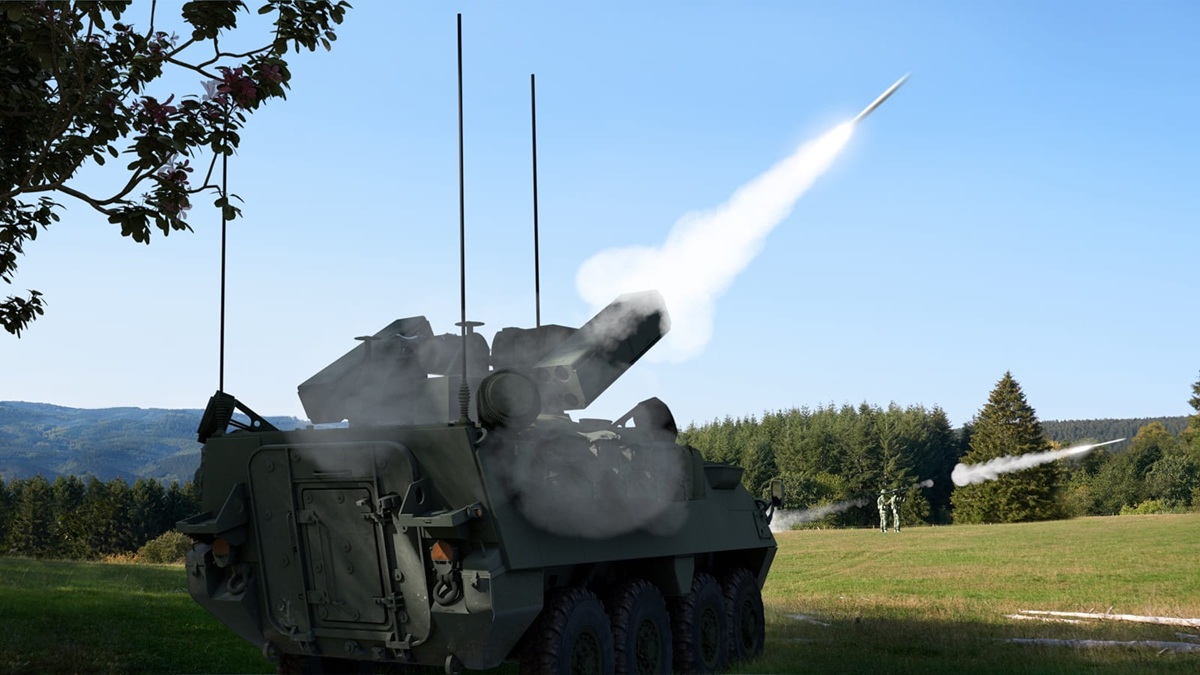
Lockheed Martin has conducted a full-scale assembly demonstration of its Next-Generation Short-Range Interceptor (NGSRI) at one of its facilities in Texas, with US Army representatives in attendance.
Inside the Grand Prairie facility, engineers assembled a full-scale interceptor using production-representative processes.
According to the company, the site was stood up in a short timeframe and is designed to support multiple programs through shared infrastructure.
The event was aimed at showcasing manufacturing readiness for the system, which is being developed as a potential successor to the FIM-92 Stinger used for short-range air defense.
The NGSRI program, part of the company’s Missiles and Fire Control Advanced Programs portfolio, focuses on improving production efficiency while enabling rapid scaling.
Manufacturing Approach
The production approach relies on increased use of additive manufacturing to reduce build time and streamline assembly.
Automated and semi-automated workstations, including dual-robot work cells, are intended to minimize manual handling and increase throughput.
Standardized tooling and interchangeable fixtures allow technicians to move across different parts of the assembly line with minimal reconfiguration, supporting a more flexible workforce.
Lockheed Martin also emphasized the modular design of the facility, which allows equipment and personnel to be shifted between programs based on demand.
The model is intended to support higher production rates, including rapid scaling under future procurement requirements.
Program Context
The US Army is seeking a replacement for the Stinger as part of broader modernization efforts in short-range air defense, driven by evolving threats from unmanned aerial systems and low-flying aircraft.
NGSRI is one of several contenders under consideration.
Lockheed Martin said the demonstration provided an opportunity to present its production model and discuss potential scaling timelines with US Army officials, as the program moves toward later acquisition phases where output capacity and delivery schedules are expected to play a key role.