Armored vehicles have long faced a tradeoff: mobility or protection. Light trucks could move fast but were vulnerable to roadside bombs and ambushes, while heavier vehicles offered survivability at the cost of speed and agility.
The Joint Light Tactical Vehicle (JLTV) was created to break that compromise.
In this guide, we break down what the JLTV is, how it was developed, its variants, how it works, and why it has become one of the most important tactical vehicles in service today.
What Is the Joint Light Tactical Vehicle?
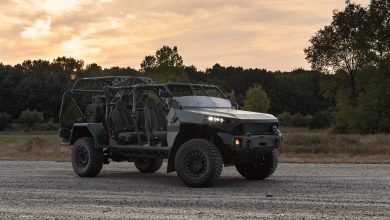
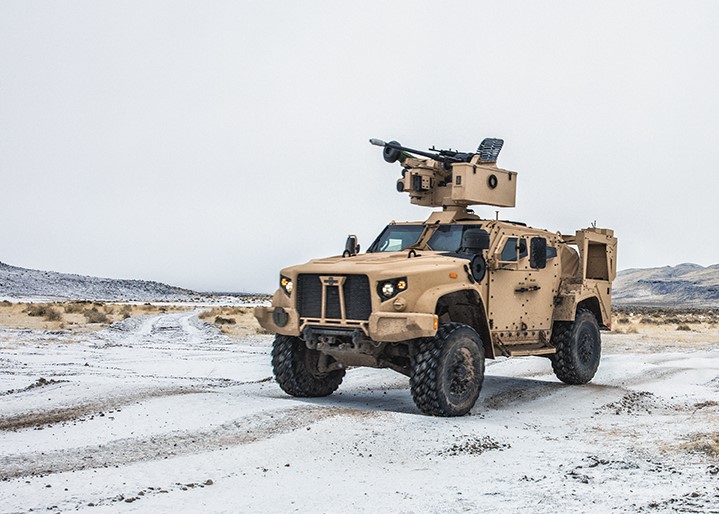
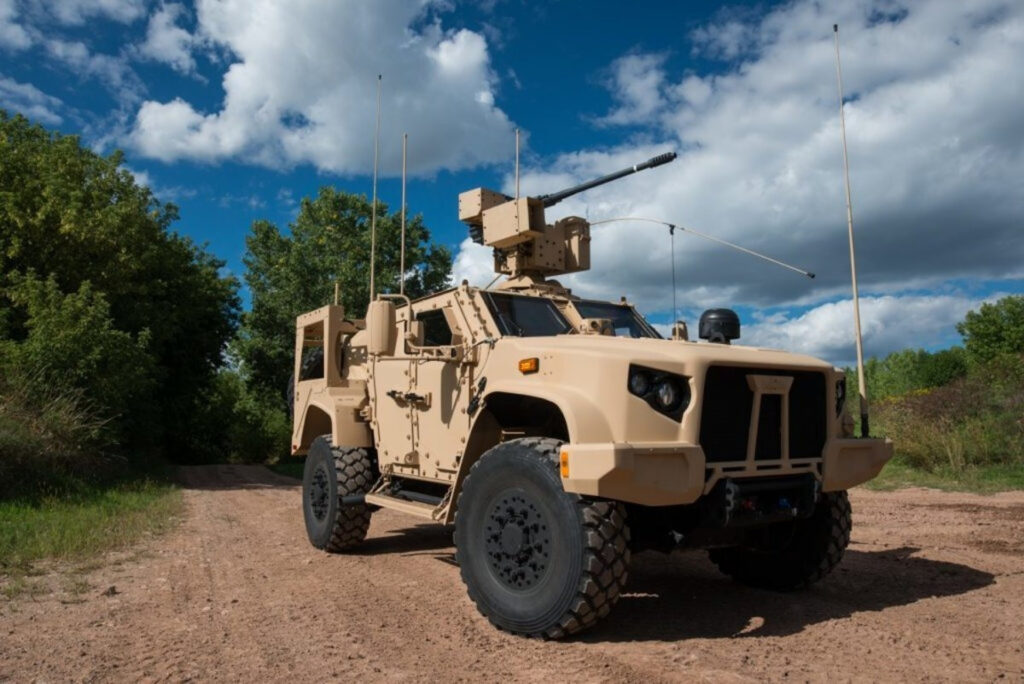
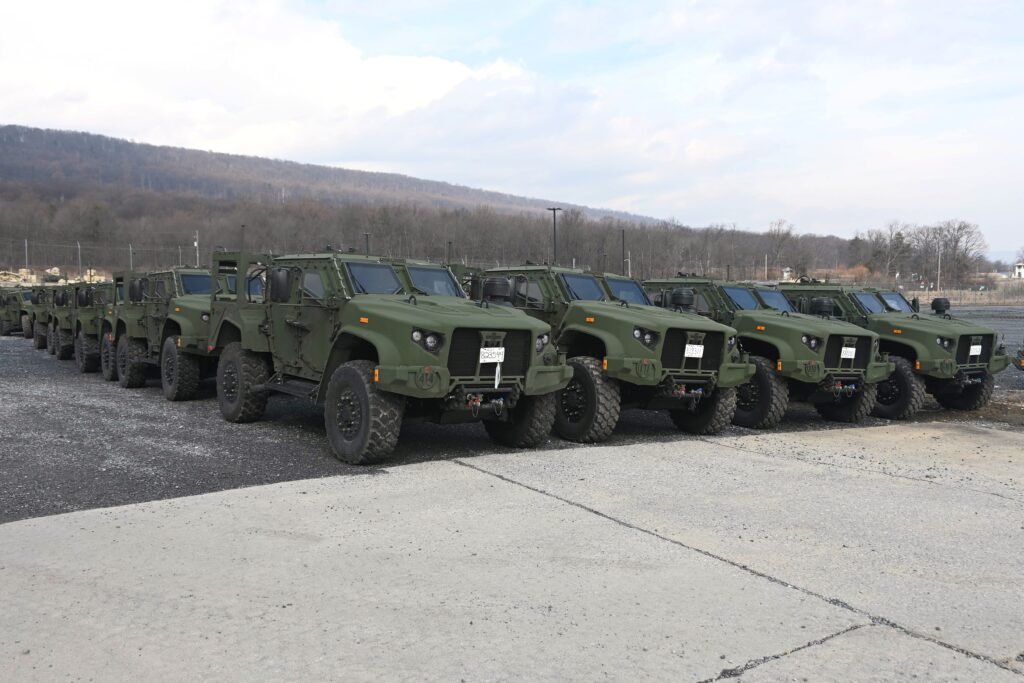
The Joint Light Tactical Vehicle is a modern military light tactical truck designed to replace a portion of the aging Humvee fleet.
Developed primarily for the US Army and US Marine Corps, the JLTV offers significantly improved protection, off-road mobility, and payload capacity while remaining adaptable for multiple battlefield roles.
It was originally developed by Oshkosh Defense, which won the production contract in 2015. The vehicle combines lessons learned from the Humvee and MRAP programs.
Production has since expanded globally, with allied nations adopting the vehicle to modernize their tactical fleets.
How the JLTV Came to Be
The JLTV program emerged from hard lessons learned during conflicts in Iraq and Afghanistan. The Humvee, once the backbone of US ground mobility, proved vulnerable to improvised explosive devices and ambushes.
To address this gap, the Pentagon launched the JLTV program in the mid-2000s with clear objectives:
- Provide stronger protection than a Humvee
- Maintain the mobility of a light tactical vehicle
- Remain transportable by aircraft and helicopters
Several defense contractors competed in the program, but Oshkosh Defense ultimately secured the production contract after extensive testing.
The resulting vehicle introduced advanced suspension systems, modular armor, and modern digital architecture, enabling it to perform a wide range of missions.
Variants and Configurations
The JLTV family includes several configurations designed to support different battlefield roles.
- General Purpose Variant (GP): The most common configuration, used for troop transport, logistics support, and patrol operations.
- Heavy Guns Carrier (HGC): Designed to support heavier weapon systems such as large-caliber machine guns or automatic grenade launchers.
- Close Combat Weapons Carrier (CCWC): Configured to carry anti-armor missile systems or other heavy weapons.
Each variant can also be equipped with remote weapon stations, communication systems, and mission-specific equipment depending on operational needs.
How the JLTV Works
Mobility and Suspension
One of the vehicle’s defining features is its TAK-4i intelligent suspension system. This advanced suspension allows the JLTV to adjust ride height and absorb shock across rough terrain.
The system gives the vehicle exceptional off-road mobility, enabling it to navigate obstacles, steep inclines, and uneven terrain while maintaining stability.
Protection and Survivability
The JLTV incorporates MRAP-inspired blast protection, including a reinforced hull designed to deflect explosive forces away from occupants.
Modular armor kits allow operators to adjust protection levels depending on mission requirements.
Digital Architecture
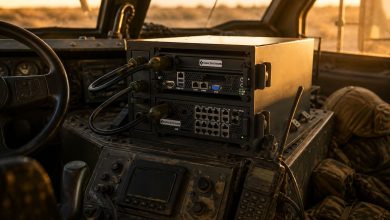
The vehicle features a modern digital backbone, enabling integration with communications systems, sensors, and remote weapon stations.
This architecture allows the JLTV to function as part of a networked battlefield, supporting situational awareness and coordinated operations.
Strengths
- Survivability: Its blast-resistant hull and modular armor provide far greater protection than legacy light tactical vehicles.
- Mobility: Despite its armor, the JLTV maintains excellent off-road performance thanks to its advanced suspension.
- Modularity: The vehicle can support multiple mission profiles, from reconnaissance and patrol to weapons carrier roles.
Limitations
- Weight and logistics: Although lighter than many armored vehicles, the JLTV is still heavier than the Humvee, which can complicate transport and logistics in certain environments.
- Cost: The vehicle is significantly more expensive than older tactical trucks, which can affect procurement numbers.
Global Adoption and Operational Use
The JLTV has rapidly gained traction among allied militaries. In addition to the United States, the vehicle has been adopted by countries including North Macedonia, Lithuania, and Romania.
These forces use the JLTV for reconnaissance, troop transport, command-and-control missions, and weapons platforms.
The vehicle’s adaptability makes it particularly valuable in expeditionary operations, where mobility and protection must be balanced.
Future Outlook
The JLTV continues to evolve as militaries integrate new weapons systems, sensors, and autonomous technologies.
Future upgrades may include:
- Advanced counter-drone defenses
- Hybrid or electric propulsion systems
- Greater integration with networked battlefield systems
As threats evolve and tactical mobility becomes more critical, the Joint Light Tactical Vehicle is likely to remain a cornerstone of modern military ground operations for years to come.