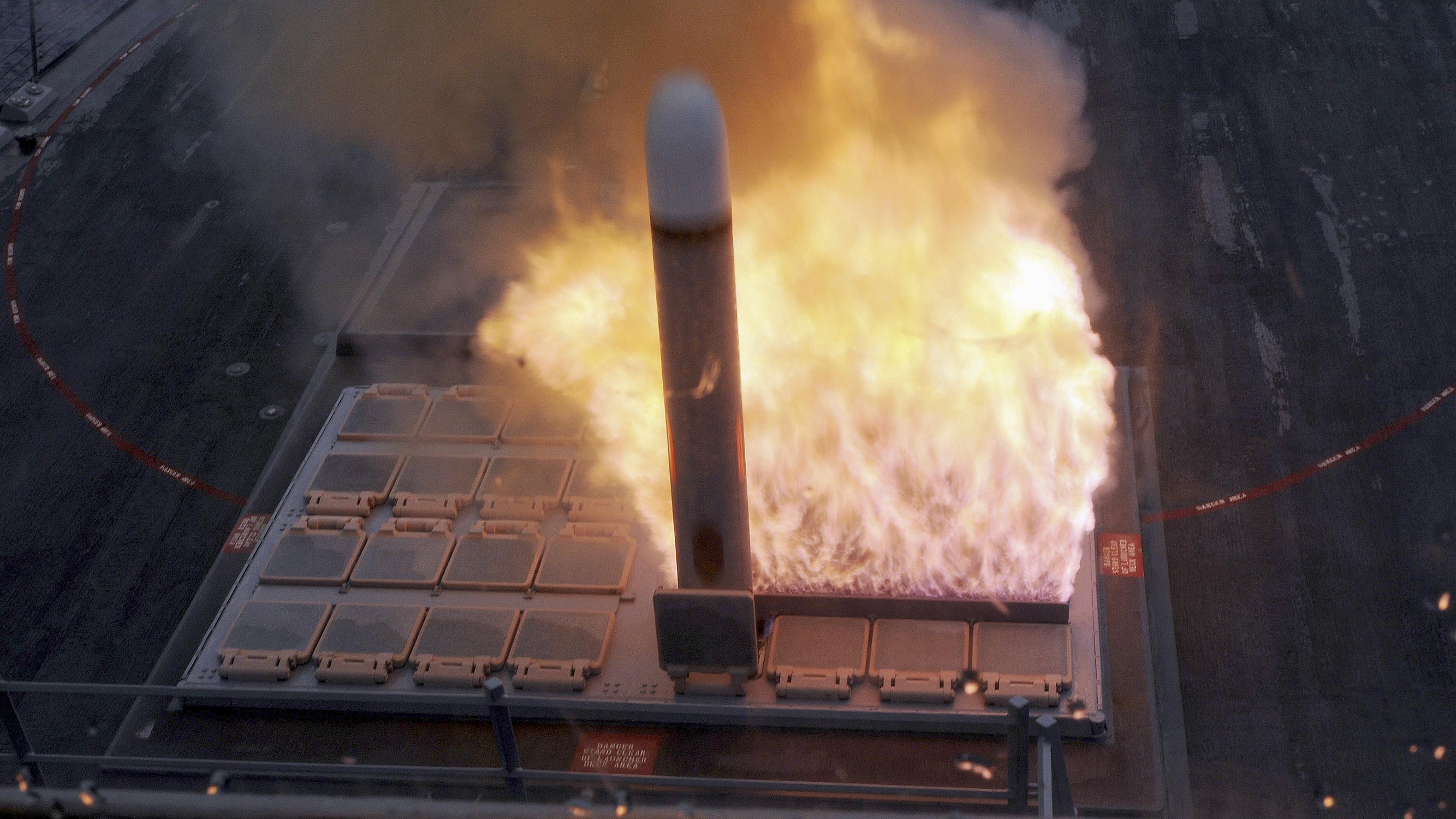
Modern naval firepower is no longer defined by turrets or launch rails, but by what lies beneath the deck. The MK 41 Vertical Launch System (VLS) replaces specialized launchers with a universal approach, storing missiles vertically and firing them on demand in any direction.
It has become a foundational element of Western warship design, quietly determining how surface combatants defend themselves, strike targets ashore, and adapt to new threats over time.
Explore this guide to understand how this silent powerhouse keeps modern warships ready for any threat.
What Is the MK 41 Vertical Launch System?
The MK 41 is a highly versatile missile launching platform installed on modern surface warships, most notably US cruisers and destroyers.
Unlike traditional angled launchers or deck-mounted tubes, the MK 41 VLS stores and fires missiles vertically from cells built into the ship’s deck. The system also stands apart as the only launcher able to support air and missile defense to surface strike, anti-submarine warfare, and land attack.
These features give warships rapid access to a wide range of weapons without complex moving parts and deliver operational flexibility unmatched by other launch systems.
Since entering service in 1986 aboard the USS Bunker Hill, the launching system has become the backbone of Western naval firepower. It is installed aboard US combatants, including the Ticonderoga-class cruisers and Arleigh Burke-class destroyers, and aboard ships of a dozen more navies worldwide.
How It Works: Modular Cells and Vertical Launching
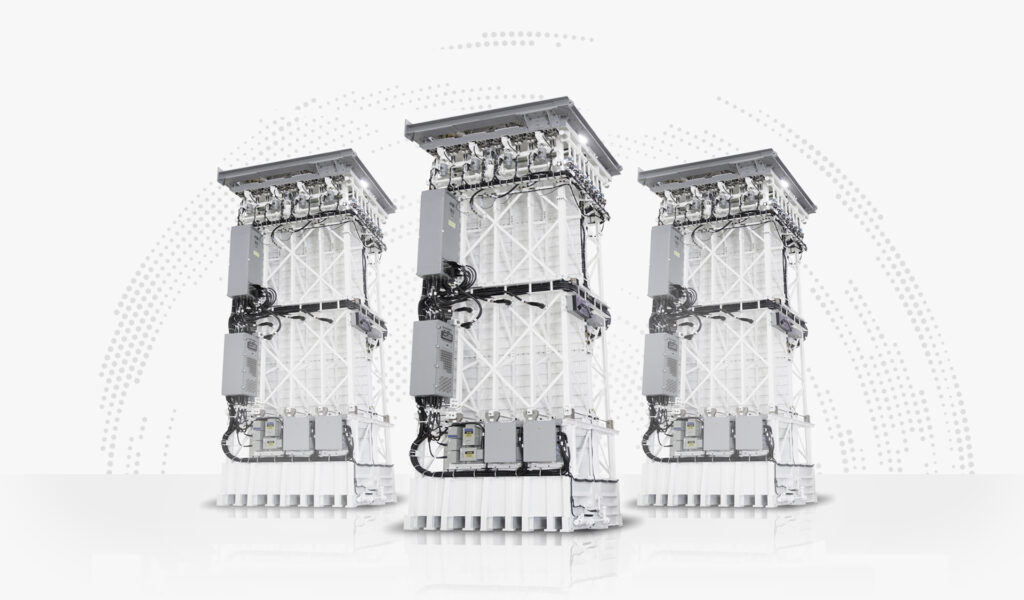
At the core of the MK 41 is an eight-cell module that can be scaled to fit different ships and mission requirements. Depending on the platform, installations range from a single module with eight cells to large arrays totaling 122 cells across 16 modules.
The modules can be produced in two lengths to support different missile classes and mission requirements:
- Strike-length module (25 feet/7.6 meters) is designed to accommodate larger missiles, including long-range strike weapons and sea-based ballistic missile defense interceptors.
- Tactical-length module (22 feet/6.7 meters) supports many of the same missile types but excludes Tomahawk cruise missiles and weapons intended for ballistic missile defense.
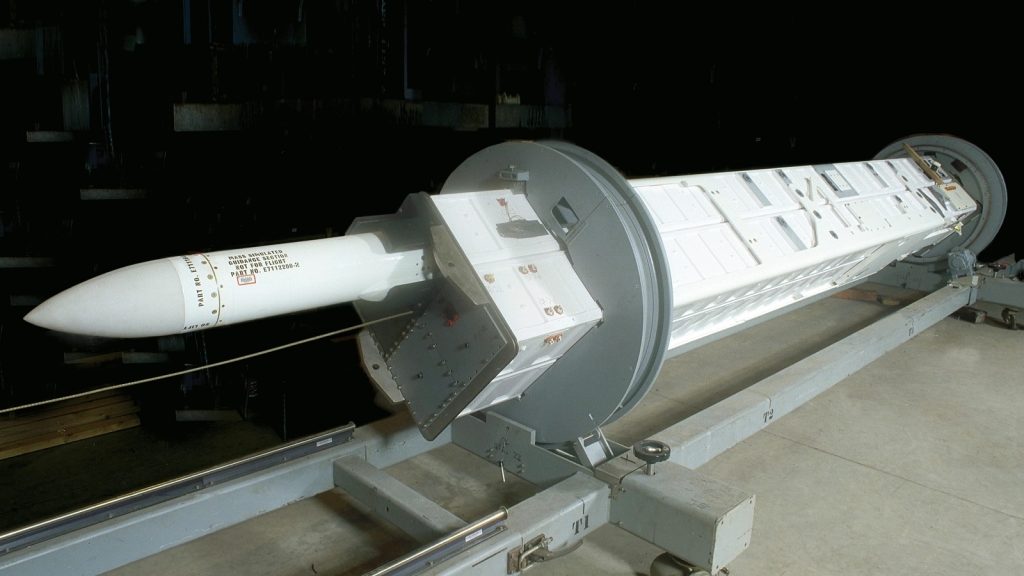
These modules sit below deck and open vertically through hatches, while missiles are stored within sealed canisters that fit into the individual cells. The launcher handles storage, environmental control, and missile preparation for launch.
Strengths and Limitations
The MK 41 and vertical launch systems in general offer several advantages:
- Speed of engagement: Missiles can be launched quickly without the need for traversing external rails or mechanical arms.
- All-around coverage: Vertical launch allows missiles to maneuver toward any direction immediately after exiting the cell.
- Efficient use of space: A dense grid of cells stores multiple missile types, maximizing firepower within limited hull volume.
- Open, distributed architecture: Standardized mechanical, electrical, and weapon-control interfaces allow any compatible missile to be loaded into any cell and enable straightforward integration of future technologies.
But it is not without some setbacks:
- Hot-launch architecture: The MK 41 employs a hot-launch design that demands robust exhaust and safety systems, adding complexity compared to cold-launch alternatives.
- No at-sea reload capability: Once missiles are expended, the system cannot be reloaded under combat conditions, making port access or specialized logistics essential for replenishment.
- Cell dimension constraints: Missile integration is limited by fixed cell length and diameter, which can complicate the incorporation of very large or unconventional weapons.
- Dependence on ship systems: The launcher provides no organic targeting or guidance and relies entirely on the ship’s combat management system and sensors for effectiveness.
Future and Specialized Weapons
The open architecture of the MK 41’s fire control and mechanical interfaces allows new missile types to be integrated over time — from anti-ship missiles like LRASM and NSM to emerging air defense and strike munitions.
A Real Multi-Mission Launcher
What makes the MK 41 particularly powerful is its mission flexibility. It serves as a universal launcher across virtually all naval warfare domains:
Anti-Air Warfare
Surface-to-air missiles like the Standard Missile family (Standard Missile MR, ER, and ERAM) and the Evolved Sea Sparrow Missile provide layered air defense — from defending the ship itself to protecting an entire task group.
Ballistic Missile Defense
Interceptors such as the Standard Missile 3 can be fired from MK 41 cells to destroy short- or medium-range ballistic missiles in flight, extending naval defenses into strategic ballistic missile defense.
Land Attack
The Tomahawk missile has been launched from MK 41 VLS in major conflicts, such as the 2003 invasion of Iraq, allowing ships to strike land targets hundreds to thousands of kilometers inland.
Anti-Submarine Warfare
Specialized canisters like the RUM-139 VL-ASROC deliver lightweight torpedoes to distant underwater contacts, combining rocket propulsion with underwater homing torpedoes once deployed.
Why It Matters
In an era of rapidly evolving threats — from hypersonic weapons to swarming drones and ballistic missiles — the MK 41 VLS stands as a cornerstone of modern naval combat systems.
By enabling a single launcher to handle diverse missions and by being continually upgradable, the MK 41 ensures that surface warships remain flexible, survivable, and potent across the full spectrum of maritime warfare.
Whether defending a carrier strike group, engaging enemy aircraft or missiles, attacking land targets from the sea, or hunting submarines, the MK 41 VLS is central to how modern fleets project power and protect national interests at sea.