The Naval Strike Missile (NSM) is one of the most adaptable and advanced anti-ship and land-attack cruise missiles in Western service today.
Compact yet capable, it’s designed to give surface vessels and coastal forces a way to engage enemy ships or coastal targets from standoff ranges, even against modern air defenses.
This explainer looks at how the NSM came to be, how it works, and why it’s becoming a cornerstone of allied coastal and naval defense strategies.
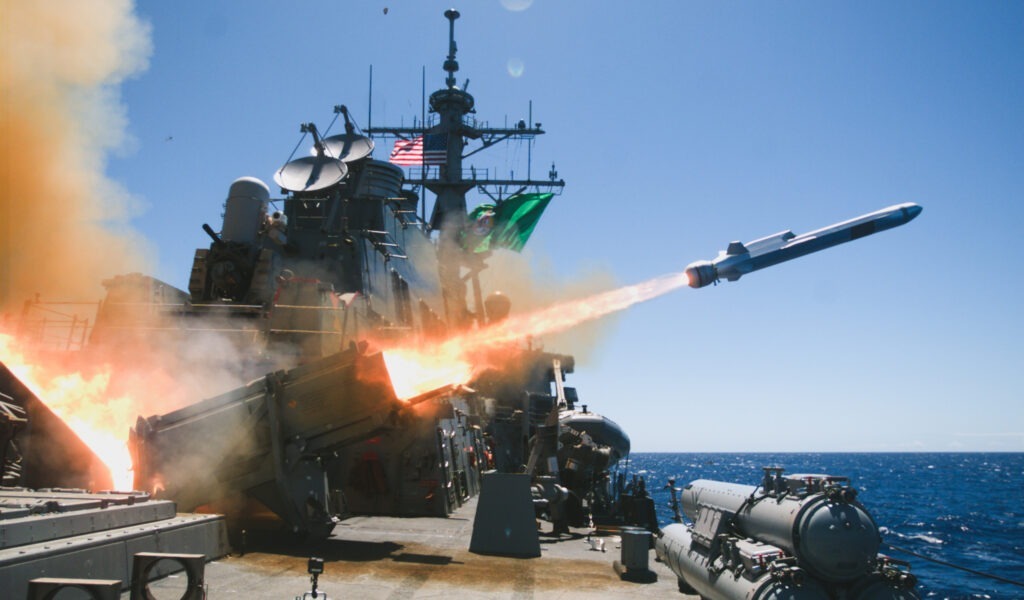
From Norway to NATO: The NSM’s Origins
The NSM was developed by Kongsberg Defence & Aerospace in Norway during the early 2000s, following the country’s search for a successor to its Penguin anti-ship missile.
The goal was straightforward: a new-generation weapon that could operate in challenging coastal environments, fly at low altitude to evade radar, and strike ships with pinpoint accuracy.
Unlike larger, older systems, the NSM emphasized autonomy, target discrimination, and survivability, which are key priorities for a nation whose coastline and fjords make radar and GPS reliability unpredictable.
Since its introduction, the missile has been steadily adopted or integrated by the US Navy and other NATO partners, including Poland, Germany, and Canada.
Open‑source contract data and defense‑industry summaries suggest that NSM missiles tend to cost on the order of $1.9 million each, though older or export‑oriented sources have quoted much lower (around $656,000) or higher (around $2.2 million) prices, depending on package contents and contract terms.
How the Naval Strike Missile Works
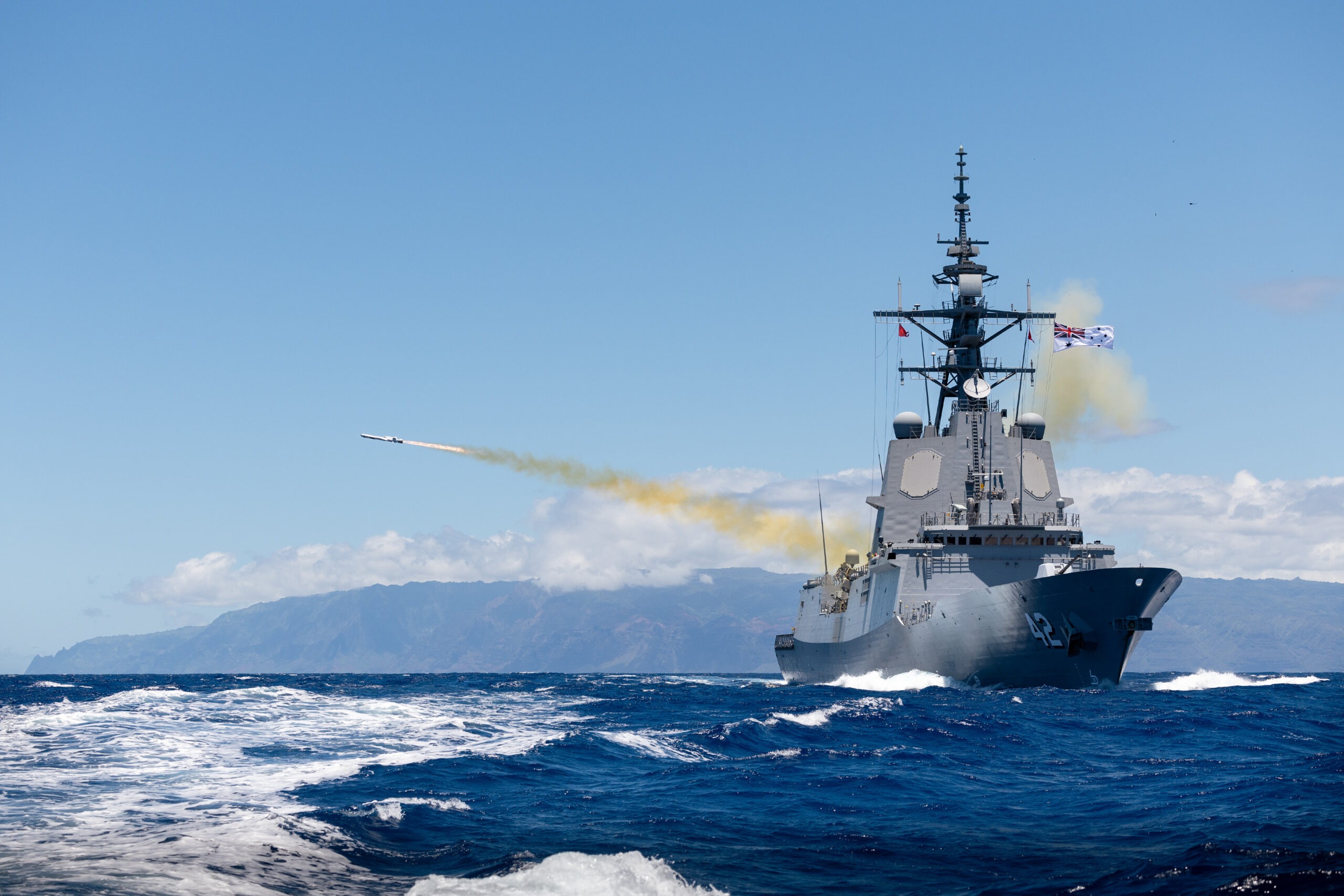
The NSM is a subsonic, sea-skimming missile powered by a turbojet engine and launched from ships, coastal batteries, or mobile ground vehicles.
Its range exceeds 185 kilometers (115 miles), allowing operators to strike well beyond the horizon while remaining outside most counterattack envelopes.
Instead of relying solely on radar or GPS, the NSM uses a passive infrared imaging seeker, enabling it to recognize and classify targets by their shape and thermal signatures. This makes it much harder to jam or decoy, particularly in cluttered maritime environments.
During flight, the missile uses terrain-following and sea-skimming flight profiles, flying extremely low over the water to minimize radar detection. Near the target, it performs evasive maneuvers before impact, further reducing the chance of interception.
Its 158-kilogram (348-pound) warhead is a blast-fragmentation design with programmable fuzing, optimized to penetrate ship hulls and cause internal damage.
Key Features and Flexibility
- Passive seeker: Uses imaging infrared, not radar, so it’s less detectable and immune to many electronic countermeasures.
- Multi-role capability: Effective against both sea and land targets.
- Flexible launch platforms: Can be fired from ships, coastal defense systems, and mobile launchers.
- Network-ready: Compatible with modern datalink architectures for coordinated or autonomous targeting.
- Compact design: Allows smaller ships, such as corvettes or littoral combat ships, to field a credible long-range strike option.
One of the NSM’s notable traits is its use of composite materials and stealth shaping, which reduce radar cross-section and heat signature. This design philosophy emphasizes survivability through discretion; the missile’s best defense is not being seen at all.
Limitations
While the NSM is celebrated for its stealth and precision, its relatively small warhead and subsonic speed reveal key limitations in high-end naval combat. The following constraints are often associated with the missile:
- Limited explosive power relative to heavy missiles may require hitting vulnerable points (such as the engine room, bridge, or magazines) rather than relying solely on warhead mass to sink a large warship.
- Subsonic speed means a limited survivability window. The NSM has less kinetic punch and allows more reaction time for enemy defenses.
- Less decisive against heavily armored or large surface combatants compared to heavy/missile‑cruise alternatives.
- More effective for smaller to medium vessels, littoral/near‑coast scenarios, or as part of salvo/overmatch tactics — fewer drawbacks in those contexts, but limitations emerge in high‑intensity blue‑water operations against large ships.
Global Deployment and Operational Use
The NSM has become one of the most widely fielded new-generation anti-ship missiles among NATO and allied forces.
- Denmark fields it on its Iver Huitfeldt-class frigates.
- Poland operates it from coastal defense batteries.
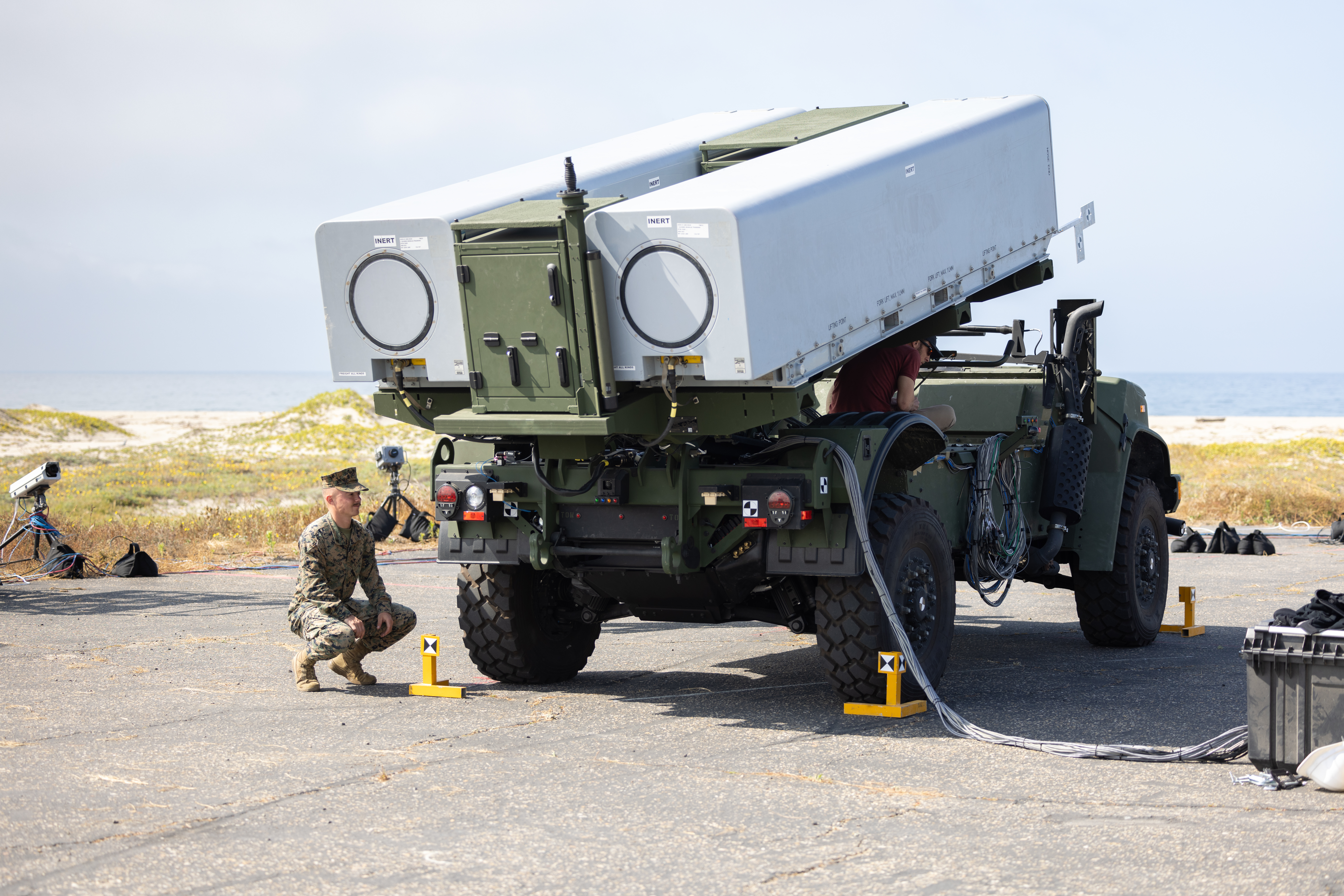
- The US Navy and Marine Corps are deploying it aboard ships and as part of the Navy/Marine Expeditionary Ship Interdiction System (NMESIS), a mobile coastal launcher integrated with unmanned vehicles.
- Other adopters include Germany, Canada, Australia, and Malaysia.
Its modular design has made it attractive for nations modernizing naval arsenals without investing in entirely new launch infrastructure.
Strategic Role and Future Outlook
The NSM’s blend of autonomy, stealth, and target discrimination makes it particularly relevant in littoral zones, where cluttered radar returns and civilian traffic make target identification difficult.
The system’s land-attack capability also allows operators to strike high-value coastal assets, expanding its role beyond ship-to-ship engagements.
As navies pivot toward distributed operations and multi-domain deterrence, the NSM’s design philosophy of low visibility, precision, and platform flexibility positions it well for continued adoption and upgrades.