The US Air Force will begin transitioning to a new deployment construct known as Air Expeditionary Wing 2.0 (AEW 2.0), a revised wing-level unit of action intended to replace key elements of the service’s legacy expeditionary framework.
Initial preparations are set to begin this year, with full implementation planned for fiscal year 2027.
The move comes as the service reassesses how it generates and deploys combat airpower in response to changes in the global security environment, including increased emphasis on high-end conflict and peer competition.
Senior leaders have argued that these conditions require higher levels of readiness, tighter unit cohesion, and more predictable force generation.
Evolution of Air Force Deployment Models
Over the past decade, the air force has experimented with several force presentation models aimed at improving how units deploy and fight.
These included concepts such as the Expeditionary Air Base, Air Task Force, and Deployable Combat Wing.
Each sought to address shortcomings in the long-standing Air Expeditionary Force (AEF) system, which relied heavily on assembling deployed units from multiple home stations on short timelines.
According to the air force, lessons learned from these initiatives informed the development of AEW 2.0. Under the new model, an expeditionary wing will be formed approximately 18 months before deployment.
This timeline is intended to allow assigned elements to train, integrate, and certify together as a single unit prior to deploying.
In contrast, the legacy Air Expeditionary Wing often relied on personnel and capabilities drawn from multiple units through the AEF process, a method critics said could reduce cohesion and complicate command-and-control in deployed environments.
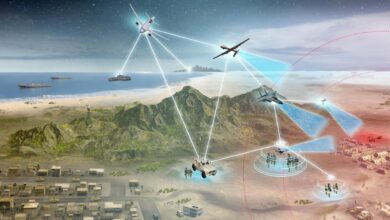
AEW 2.0 is designed as a modular and scalable wing that can be adjusted to meet theater-specific requirements. The air force describes it as a standardized baseline force package capable of command and control and projecting airpower independent of specific platforms.
The updated construct also retains features from earlier models, such as capabilities-based force packages and alignment with the Air Force Force Generation cycle.
Additional changes include continued use of group commanders at deployed locations and the replacement of traditional deployed A-Staffs with Wing Operations Centers.
Officials say the revised approach is intended to balance overseas deployment demands with the need to maintain capacity at home stations for training, homeland defense, and day-to-day operations.