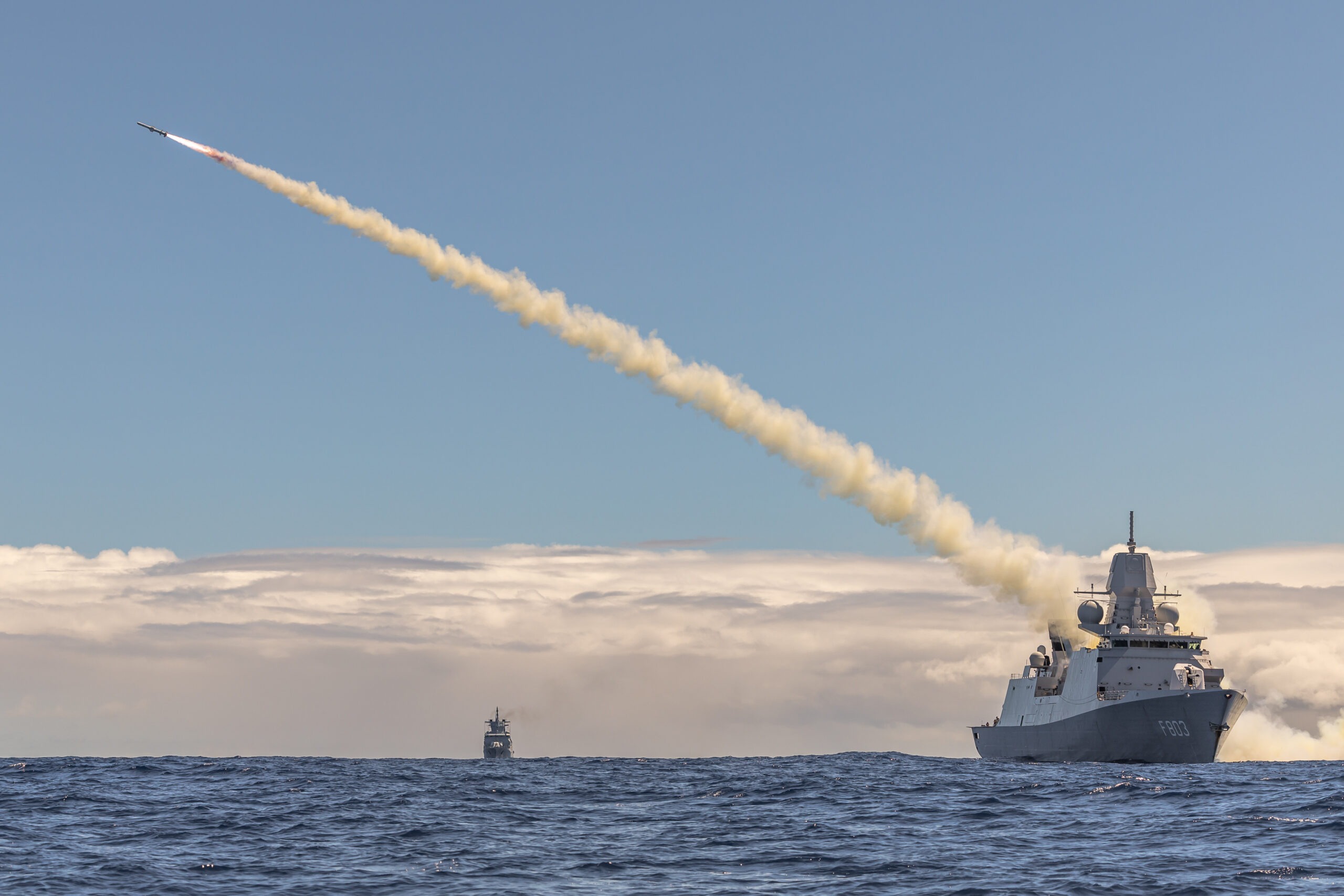
First fielded in the late 1970s, the Harpoon missile remains one of the US Navy’s most enduring precision strike options at sea. The subsonic cruise missile is built for flexibility to hit targets beyond the horizon.
Continuous upgrades over the decades have extended its range, improved its navigation, and kept the system relevant across generations of naval warfare.
This overview explores how the anti-ship missile evolved from a Cold War project into one of the most enduring and adaptable anti-ship missiles in service.
What is the Harpoon Missile?
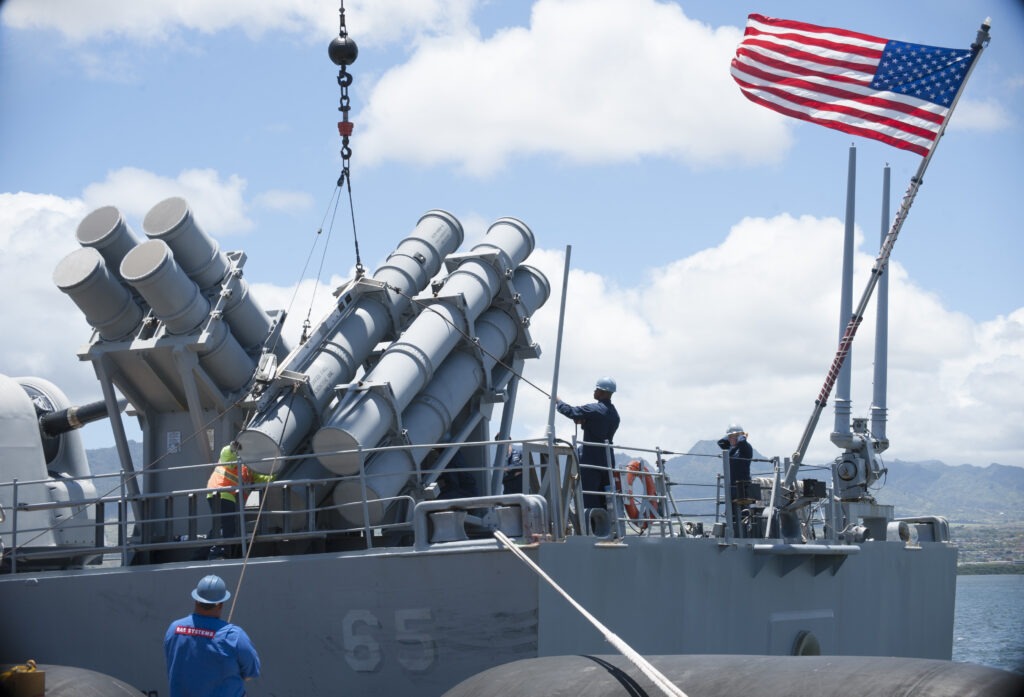
Boeing designed the A/U/RGM-84 Harpoon, a family of all-weather, over-the-horizon anti-ship missiles, to locate, track, and engage surface vessels with pinpoint precision.
Built to be flexible and easily integrated, it comes in several versions:
- AGM-84: Air-launched version for strike aircraft and patrol planes.
- RGM-84: Surface-launched missile for destroyers, frigates, and coastal batteries.
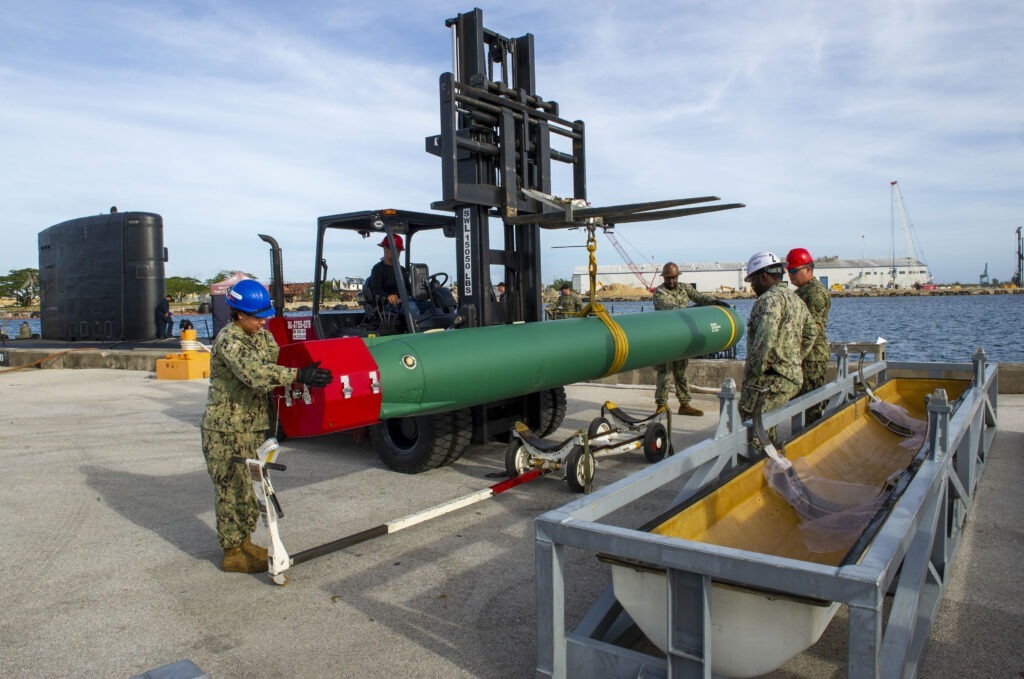
- UGM-84: Submarine-launched model encapsulated in a canister for underwater firing.
Used by over 30 allied nations, the Harpoon is a core component of Western and partner naval arsenals.
Anatomy of the Harpoon Missile
At its core, the Harpoon is a turbojet-powered cruise missile designed to stay low and fast. Once fired, a solid-fuel booster (for ship- or sub-launched variants) propels it into flight before the Teledyne CAE J402 turbojet takes over.
The missile then cruises at around Mach 0.7 to 0.9 (800-850 kilometers/497-528 miles per hour), skimming just 5 to 10 meters (16 to 33 feet) above the sea surface to stay below radar detection.
Guidance begins with inertial navigation, and in later variants, a GPS-aided inertial navigation system keeps it on course.
In the terminal phase, typically the final 10 to 15 kilometers (6.2 to 9.3 miles), the missile activates its active radar seeker, autonomously locking onto the target and executing small evasive maneuvers to avoid countermeasures.
The Harpoon carries a 226-kilogram (500-pound), high-explosive blast fragmentation warhead, built to penetrate a ship’s hull before detonating inside, maximizing internal damage.
The combination of precision, low altitude, and destructive payload makes it lethal against even well-defended surface ships.
Upgrades and Modern Variants
Over the decades, the Harpoon has seen steady modernization to remain competitive:
- Block I: The original analog-guided version optimized for open-ocean attacks.
- Block II: Added GPS guidance for near-shore and littoral targets, improving flexibility.
- Block II+ and Block II+ ER: Introduced a digital datalink for in-flight retargeting and extended range — up to 248 kilometers (154 miles) — along with improved radar seekers and electronic counter-countermeasures.
These updates ensure compatibility with modern platforms such as the F/A-18 Super Hornet, P-8A Poseidon, and Littoral Combat Ships, enabling seamless integration with existing fire-control systems and logistics infrastructure.
Open‑source contract data and defense‑industry summaries suggest that modern Harpoon missiles (Block II) tend to cost in the order of $1 million to $1.4 million each, though actual per‑unit cost may vary depending on contract terms, bundle contents, and procurement packages.
How the Harpoon Began
The Harpoon’s story begins during the Cold War, when the US Navy faced growing threats from Soviet warships armed with long-range cruise missiles. The 1967 sinking of the Israeli destroyer Eilat by an Egyptian missile boat underscored the danger, and the West needed a countermeasure.
In response, McDonnell Douglas (now Boeing) began developing a guided anti-ship missile capable of striking enemy vessels in all weather and from multiple launch platforms.
The concept started as an “airborne torpedo” before evolving into a radar-guided, turbojet-powered missile optimized for low-altitude, over-the-horizon attack.
The first Harpoons entered service in 1977, initially deployed on P-3 Orion maritime patrol aircraft and later on US Navy surface ships and submarines.
The system quickly became a standard across NATO fleets, setting a new benchmark for naval strike capability.
The Harpoon’s Global Footprint
Since its debut, the Harpoon has become one of the most widely exported Western missiles, fielded by navies in Europe, Asia, and the Middle East.
Nations such as Japan, South Korea, Australia, India, and the UK maintain active Harpoon inventories, often upgrading their systems alongside US improvements.
The missile has seen combat in several conflicts — from the 1980s “Tanker War” in the Persian Gulf to the more recent Ukraine-Russian war.
Role in Contemporary Defense Strategy
The Harpoon’s enduring relevance lies in its balance of range, precision, and interoperability. It offers a cost-effective way to threaten enemy surface fleets, providing credible deterrence without relying on high-end, long-range missiles.
As naval competition intensifies in regions like the Indo-Pacific and Baltic Sea, systems like the Harpoon continue to serve as reliable backbone weapons for allied maritime strike forces.
Even as newer missiles, such as the Naval Strike Missile and Long-Range Anti-Ship Missile, come online, the Harpoon remains indispensable thanks to its proven reliability and massive installed base.