When the MQ-9 Reaper demonstrated vulnerabilities in contested airspace, the need for a drone that could fly faster, survive longer, hit harder, and adapt faster emerged.
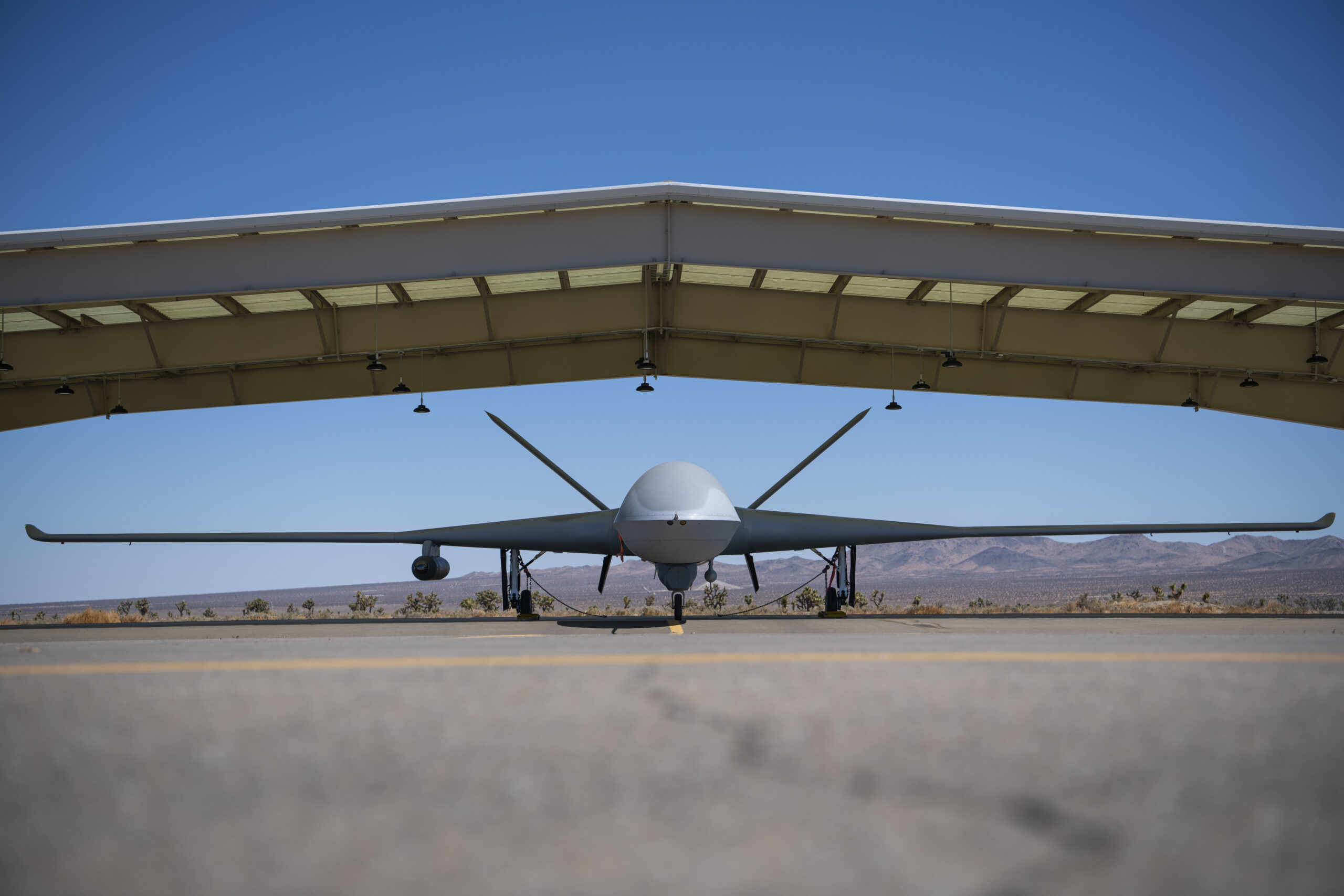
The answer to the call came in the form of the MQ-20 Avenger, also known as the Predator C.
As a jet-powered remotely piloted aircraft system with precision strike capability, stealth shaping, and an internal weapons bay, the Avenger stepped up its game in autonomous combat and AI-driven targeting, bridging the gap between the propeller-driven Reaper and the stealth drones now on the horizon.
How the MQ-20 Avenger Originated
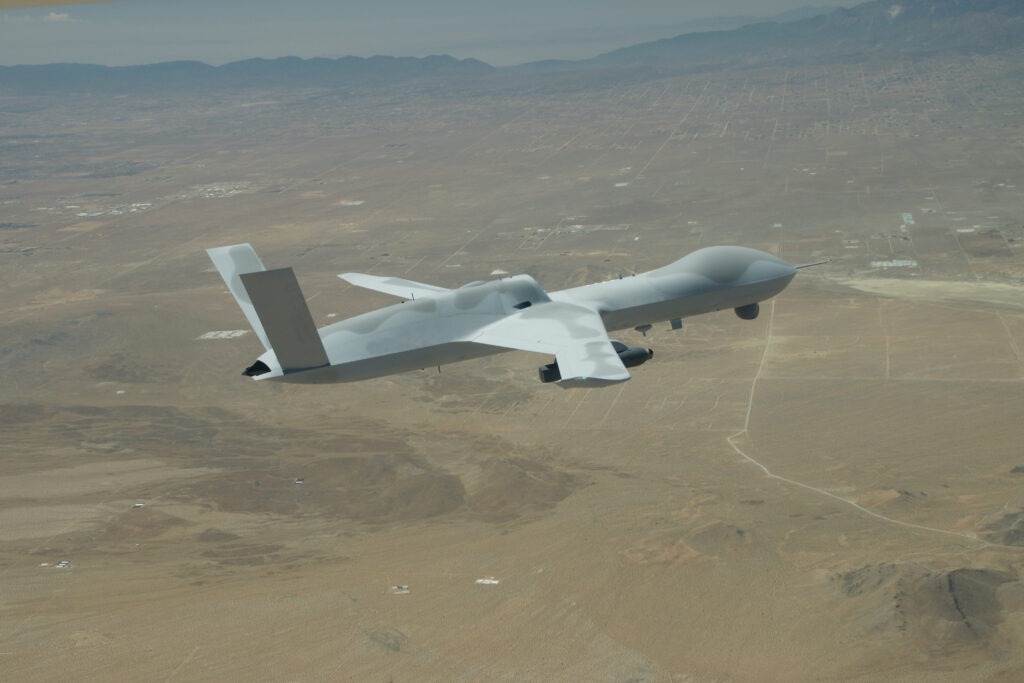
Work on the Avenger began in the 2000s. General Atomics Aeronautical Systems (GA-ASI) built it to advance beyond the Reaper and the MQ-1 Predator — the Avenger’s pioneering predecessors that set the template for armed persistence with their long-endurance sensor suite and AGM-114 Hellfire loadout.
The early models have been invaluable in counterinsurgency operations as a medium-altitude intelligence, surveillance, and reconnaissance (ISR) and precision-strike platform. Still, they could not meet emerging requirements for higher speed, greater reach, and reduced radar signature.
The Avenger’s stealthier lines, jet engine, and internal weapons carriage make it better suited for operations against more sophisticated adversaries.
Manufacturers evaluated the Avenger as a potential complement to the Reaper fleet in 2009. A year later, GA-ASI developed the Sea Avenger, a carrier-based derivative of the Predator C, “to fulfill the US Navy’s need for an unmanned carrier-launched airborne surveillance and strike system.”
Although it did not enter mass production, the design positioned General Atomics as a competitor in the next wave of unmanned combat systems.
How It Works
Powered by a Pratt & Whitney PW545B turbofan engine, the MQ-20 can fly at 460 miles (740 kilometers) per hour and reach altitudes of 50,000 feet (15,240 meters), putting it well beyond the capabilities of the propeller-driven Reaper.
Its sleek fuselage and internal weapons bay are designed to reduce radar visibility, while optional external hardpoints allow it to carry up to 3,500 pounds (1,588 kilograms) of additional payload.
The Avenger’s arsenal ranges from AGM-114 Hellfire missiles to GBU-12 Paveway II laser-guided bombs and GBU-38 JDAMs, giving it flexibility against both hardened and mobile targets.
Onboard, it integrates electro-optical/infrared sensors, synthetic aperture radar, and satellite communications, allowing it to scout, track, and strike from long distances.
Key Limitations
The Avenger’s primary limitation is its lack of adoption. With only a handful produced, it does not benefit from the economies of scale that made the Reaper cost-effective.
Its endurance, while respectable at around 20 hours, is shorter than the MQ-9’s 27 hours, limiting its persistent surveillance roles.
Finally, competing programs such as the MQ-25 Stingray for carrier-based refueling and the US Air Force’s Collaborative Combat Aircraft initiative have overshadowed the Avenger, further reducing prospects for mass production.
Role in Modern Warfare
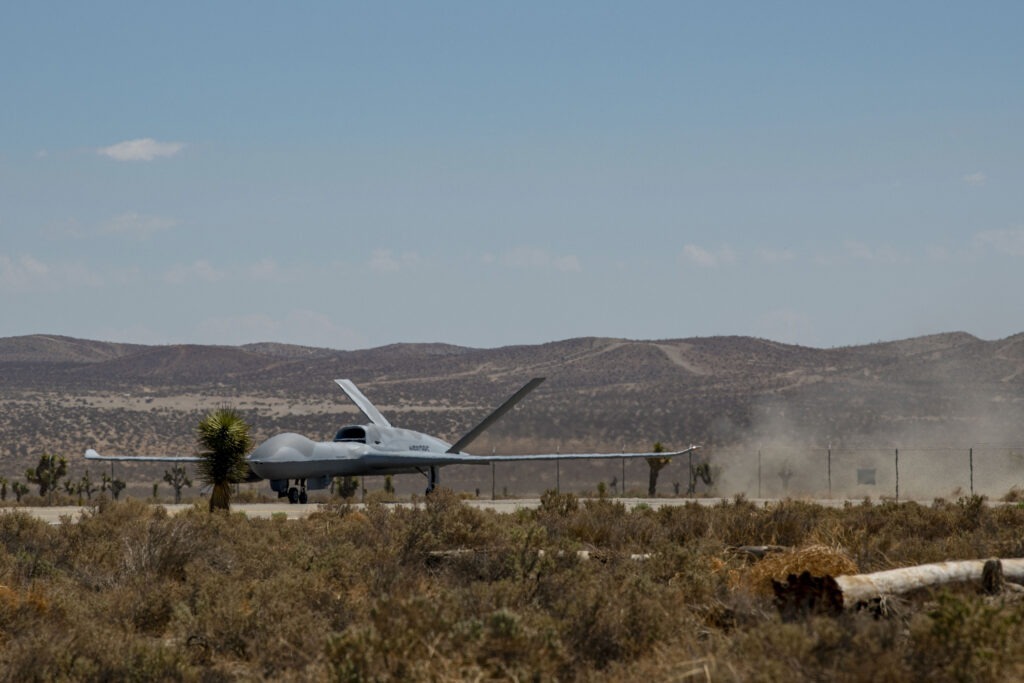
Though it never became a fleet mainstay, the Avenger has been used in demonstrations, evaluations, and as a testbed for emerging technologies.
In recent years, General Atomics has positioned the Avenger as a platform for autonomous teaming experiments, including “loyal wingman” concepts where drones fly alongside manned fighters to extend sensing and strike capabilities.
The Avenger serves as a bridge between the Predator/Reaper era and future stealthy unmanned combat air vehicles, shaping how the US military approaches survivability, autonomy, and integration with next-generation aircraft.
The Predator Legacy
Even without widespread service, the MQ-20 holds a significant place in drone development.
It was the first of the Predator family to incorporate stealth shaping and jet propulsion, proving that unmanned systems could evolve beyond counterinsurgency roles into platforms capable of surviving contested airspace.
As a technology demonstrator, it continues to test autonomy, teaming, and advanced sensors, shaping the future of unmanned combat aviation.