Guide to the MQ-9 Reaper: America’s Armed Drone

In the first month of 2020, a US MQ-9 Reaper circled above Baghdad International Airport. Moments later, its Hellfire missiles struck a convoy, killing Iranian General Qassem Soleimani in one of the most high-profile drone strikes in history.
Already a mainstay of US drone operations, the Reaper became a global symbol of modern warfare — an unmanned aircraft designed for long-range surveillance and precision strikes.
Developed as the successor to the MQ-1 Predator, it combines long-endurance surveillance with heavy strike capability, making it the backbone of US and allied unmanned aerial operations.
Its dual role as a persistent “eye in the sky” and armed hunter-killer has made it a defining weapon of 21st-century conflicts.
This explainer breaks down what the MQ-9 is, how it works, and why it matters.
Peak Behind MQ-9 Reaper Drone: What It Is, How It Works
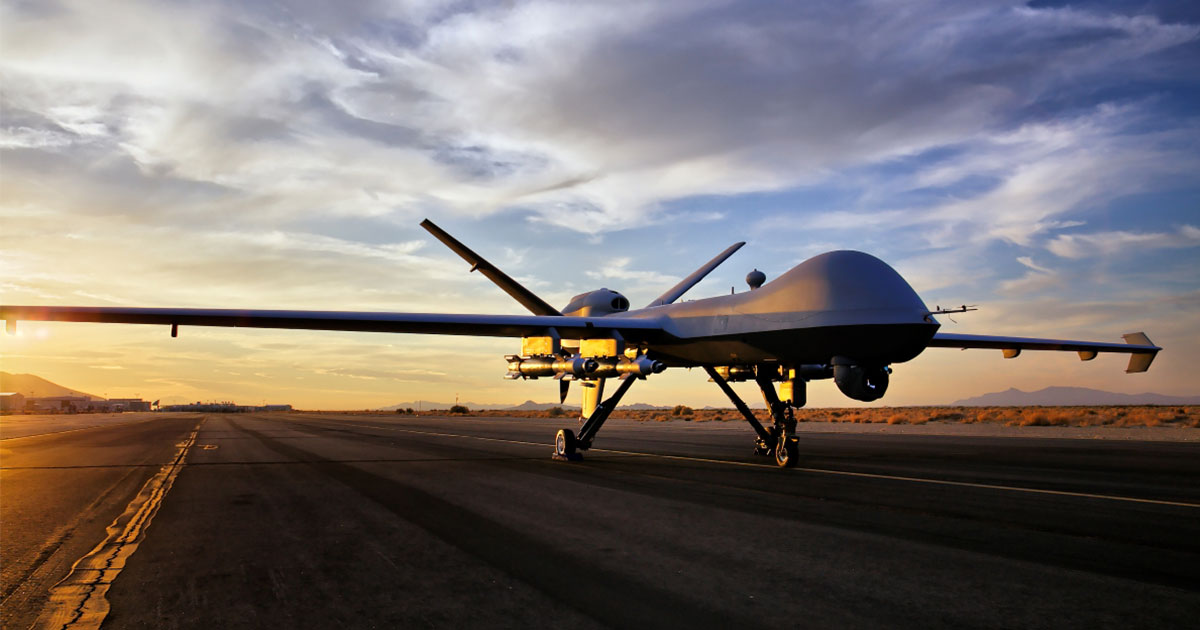
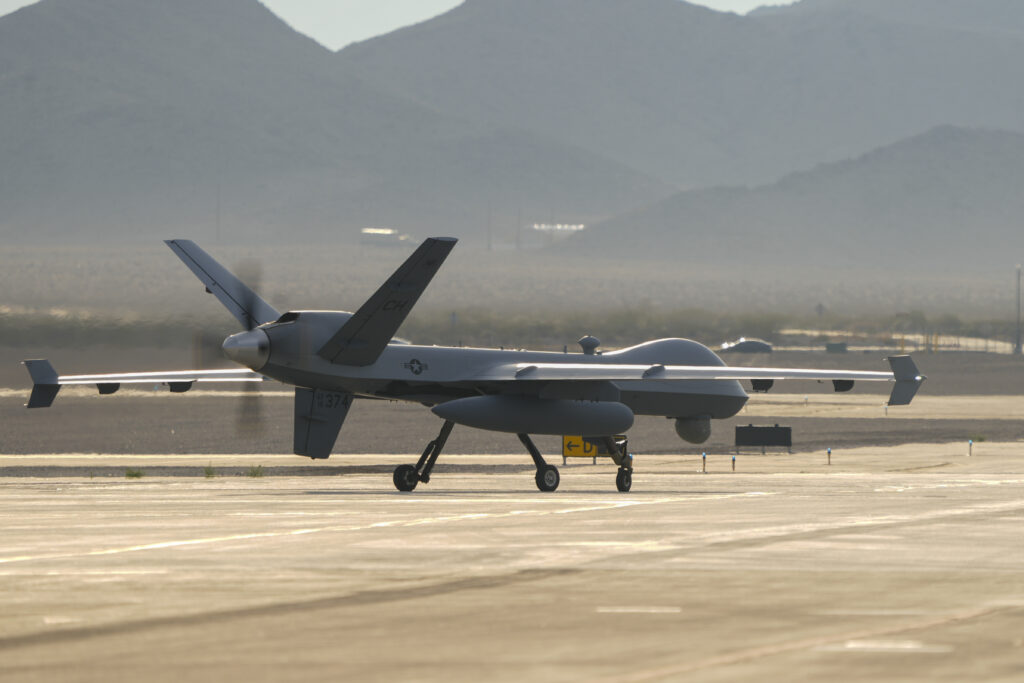
The MQ-9 is a medium-altitude, long-endurance, remotely piloted aircraft with a wingspan of 66 feet (20 meters) and endurance of more than 27 hours.
It cruises at roughly 200 to 230 miles (322 to 370 kilometers) per hour and can fly at altitudes up to 50,000 feet (15,240 meters), giving it reach across wide areas of operation.
Its maximum payload is about 3,800 pounds (1,724 kilograms), allowing it to carry a mix of weapons: AGM-114 Hellfire missiles for precision strikes, GBU-12 Paveway II laser-guided bombs, and GBU-38 Joint Direct Attack Munitions.
Equipped with the AN/DAS-1 MTS-B multi-spectral targeting system, synthetic aperture radar, and communications relay gear, it provides operators with high-fidelity intelligence.
Pilots and sensor operators typically control the Reaper from ground stations thousands of miles away, connected by secure satellite links. This allows the aircraft to loiter above a target area for hours while crews rotate shifts, delivering unmatched persistence compared to manned aircraft.
MQ-9 Reaper in Action: Operational Use and Impact
The drone has been a central tool in US counterterrorism campaigns, having conducted thousands of strikes in Iraq, Afghanistan, Yemen, Somalia, and Syria, and providing close support to ground forces.
NATO allies have also deployed the aircraft in joint operations and reconnaissance roles.
Its defining strength is persistence: the Reaper can monitor a target for hours or days before striking at the right moment. This ability has altered how commanders approach surveillance and targeting, narrowing the gap between “finding” and “finishing” an adversary.
The Reaper’s role as both sensor and shooter has made it a symbol of modern drone warfare — praised for precision but also controversial due to civilian casualty incidents and the politics of targeted strikes.
The Predator Drone Family
| Variant | Key Features & Developments | Limitations |
| MQ-1 Predator | First operational Predator (1995); medium-altitude surveillance drone later armed with 2x AGM-114 Hellfires | Slow (max 135 mph), limited payload, highly vulnerable to air defenses |
| MQ-1C Gray Eagle | Larger army variant; improved endurance (30+ hrs), heavier payload, integrated into ground brigades | Still subsonic and non-stealth; limited survivability in contested airspace |
| MQ-9 Reaper (Predator B) | Successor to MQ-1; faster (200+ mph), higher payload (~3,800 lbs), capable of carrying bombs and multiple Hellfires | Dependent on satellite links; vulnerable to advanced air defense systems |
| Predator C / Avenger | Jet-powered, stealthier design; internal weapons bay; developed for higher survivability and future missions | Experimental, limited production; higher costs, not widely adopted |
The Predator family has evolved from a light surveillance platform into a set of increasingly capable unmanned aircraft.
The MQ-1 Predator, first fielded in the 1990s, introduced armed drones but was slow and lightly armed.
The MQ-1C Gray Eagle, tailored for the US Army, extended endurance and payload but remained vulnerable in contested airspace.
The MQ-9 Reaper, or Predator B, became the workhorse of modern drone warfare, combining long endurance with a heavy weapons load.
The experimental Predator C Avenger added stealth and jet propulsion, although high costs and limited adoption prevented it from achieving full fleet integration.
As the primary gunner of the Predator drone family, the MQ-9 Reaper is considered the most widely used armed drone of its generation, combining long endurance, advanced sensors, and precision strike capability.
It has reshaped modern warfare by giving militaries the ability to watch and strike with minimal delay.
Though vulnerable in contested airspace, it remains a key asset for counterterrorism, coalition operations, and persistent surveillance.