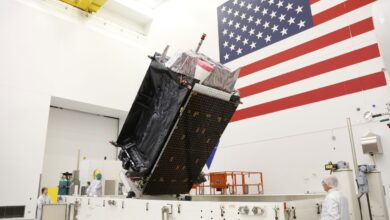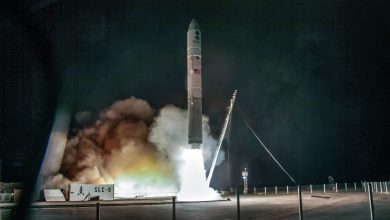
The US Space Force has awarded contracts worth up to $3.2 billion to 12 companies to develop prototypes for the Space-Based Interceptor (SBI) program, tapping a mix of traditional and emerging defense firms.
A total of 20 Other Transaction Authority (OTA) agreements were awarded to Anduril, Booz Allen Hamilton, General Dynamics Mission Systems, GITAI USA, Lockheed Martin, Northrop Grumman, Quindar, Raytheon, Sci-Tec, True Anomaly, and Turion Space.
The OTAs provide the government with operational flexibility to select the most suitable provider, with an initial capability demonstration scheduled in 2028.
“Adversary capabilities are advancing rapidly, and our acquisition strategies must move even faster to counter the growing speed and maneuverability of modern missile threats,” Program Executive Officer for Space Combat Power, Col. Bryon McClain, stated.
“Utilizing Other Transaction Authority agreements, we attracted both traditional and non-traditional vendors, while harnessing American innovation, and ensuring continuous competition.
With the commitment and collaboration of these industry partners, the Space Force will demonstrate an initial capability in 2028.”
Space-Based Interceptor Program
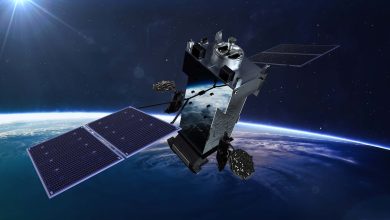
The SBI program aims to develop a Low Earth Orbit constellation of interceptors capable of neutralizing aerial threats in their early, or boost, phase before they deploy warheads or decoys.
Missiles are slower and generate intense heat signatures during the boost phase, making them easier to detect and track. Early detection from space-based sensors enables interceptors to engage targets at their most vulnerable stage.
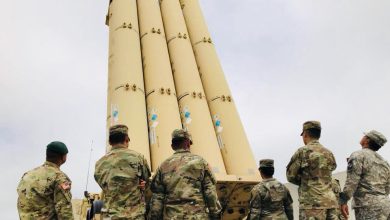
Current missile defense systems, such as the Terminal High Altitude Area Defense and Aegis Ballistic Missile Defense, typically operate in the midcourse or terminal phases of a missile’s trajectory.
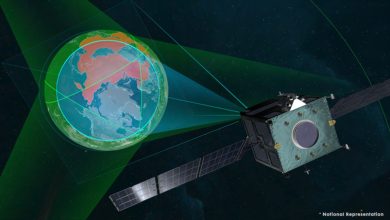
A constellation of hundreds — or potentially thousands — of satellites equipped with sensors and interceptors could provide near-global coverage, including over remote regions such as oceans and polar areas.
The program is part of the Golden Dome initiative, which aims to build a layered homeland missile defense network integrating ground, air, and space assets against evolving ballistic, hypersonic, and cruise missile threats.