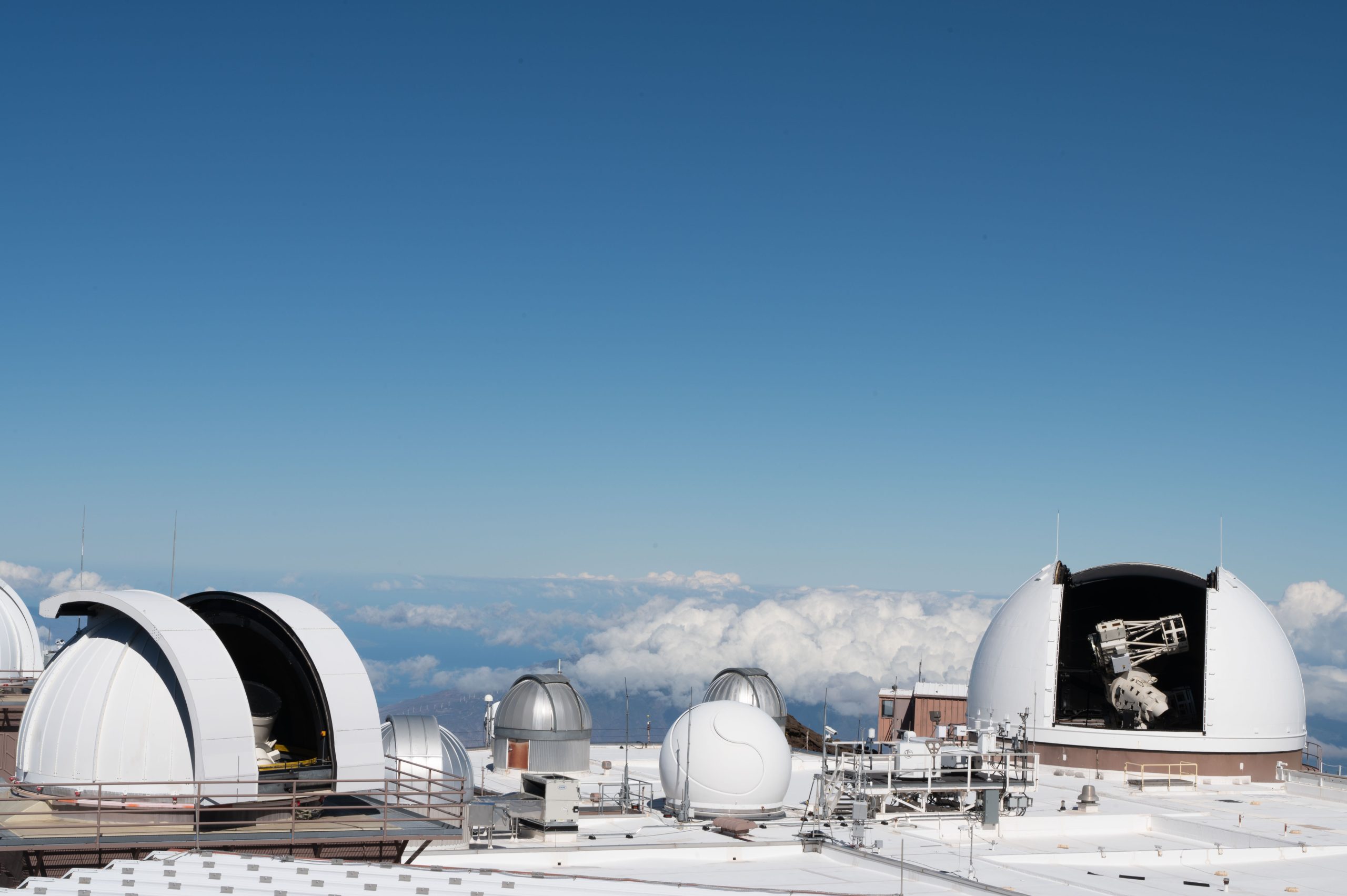
The US Space Force has approved upgrades for its Ground-Based Optical Sensor System (GBOSS) at the Maui Space Surveillance Complex in Hawaii, expanding its ability to track objects across Earth’s orbits.
Developed by L3Harris, the capability replaces the legacy Ground-Based Electro-Optical Deep Space Surveillance (GEODSS) sensors with advanced optics that double the field of view and search speed while more than tripling sensitivity.
Officials said the revamp enables faster detection of small, dim, and closely spaced objects across medium, geostationary, and high-Earth orbits, as well as cislunar space.
“The advancements we’re seeing with GBOSS significantly enhance our awareness in space,” said Maj. Latina Jones, deputy commander of the military’s 15th Space Surveillance Squadron.
“Seeing faster, clearer, and with a wider view enables decisive advantage for combatant commanders.”
Maintaining ‘High-Fidelity’ Information
The service greenlit the GBOSS modernization in April 2026, making it the second site to reach operational status after White Sands Missile Range in New Mexico in 2025.
It was then authorized for early use in October 2025, allowing users to conduct missions while testing continued and accelerating deployment.
“Space superiority starts with space domain awareness,” said Col. Barry Croker, commander at the US Space Force Combat Forces Command. “Objects in space that were once too dark, too small, or too close to one another are now observable.”
Industry partner L3Harris added that the GBOSS delivers “high-fidelity” data to operators, supporting faster decisions and improved satellite protection.
“GBOSS delivers exactly what today’s warfighters need: faster, more precise awareness in a domain where seconds matter,” said Jeff Hanke, president of space systems at the company.