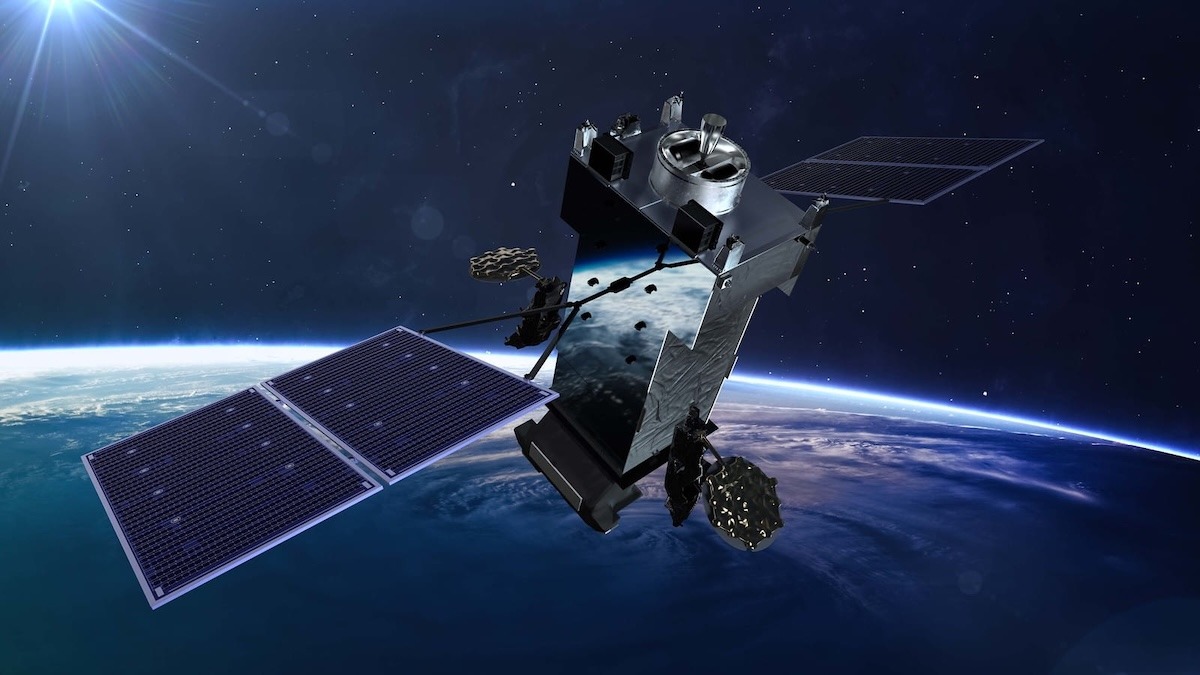
Raytheon has delivered its second sensor to Lockheed Martin, the lead contractor for the US Space Force’s (USSF) mid-latitude missile warning and tracking satellite program.
The sensor payloads feature advanced optical designs and algorithms to detect the heat signatures of missile launches, including hypersonic weapon systems.
Lockheed secured a $4.9-billion contract in January 2021 to produce three Next-Generation Overhead Persistent Infrared (Next-Gen OPIR) Geosynchronous Earth Orbit (GEO) Block 0 satellites, commonly known as NGG satellites, by May 2028.
The first satellite — also featuring Raytheon’s sensors — is already complete and ready to support initial launch capability, according to the RTX-owned company.
VP for Mission Solutions & Payloads at Raytheon Jeff McCall said that such satellite programs “demonstrate how high-altitude, long-duration observation sensing unlocks new mission coverage in key areas.”
Next-Gen OPIR GEO Satellite Program
The Next-Gen OPIR GEO program intends to replace the aging Space-Based Infrared System.
Featuring enhanced sensors and persistent missile-warning coverage from geosynchronous orbit roughly 22,000 miles (35,400 kilometers) above Earth, the satellites will complement the Space Systems Command’s MEO missile-track custody satellites and the Space Development Agency’s Tracking Layer constellation in low Earth orbit.
The program passed a critical design review in August 2021, initially targeting a 2025 launch for its first satellite, which the Government Accountability Office warned was overly ambitious.
In June 2025, officials confirmed the first launch would be pushed to 2026 due to technical challenges and high demand for launch services, as per Defense News.