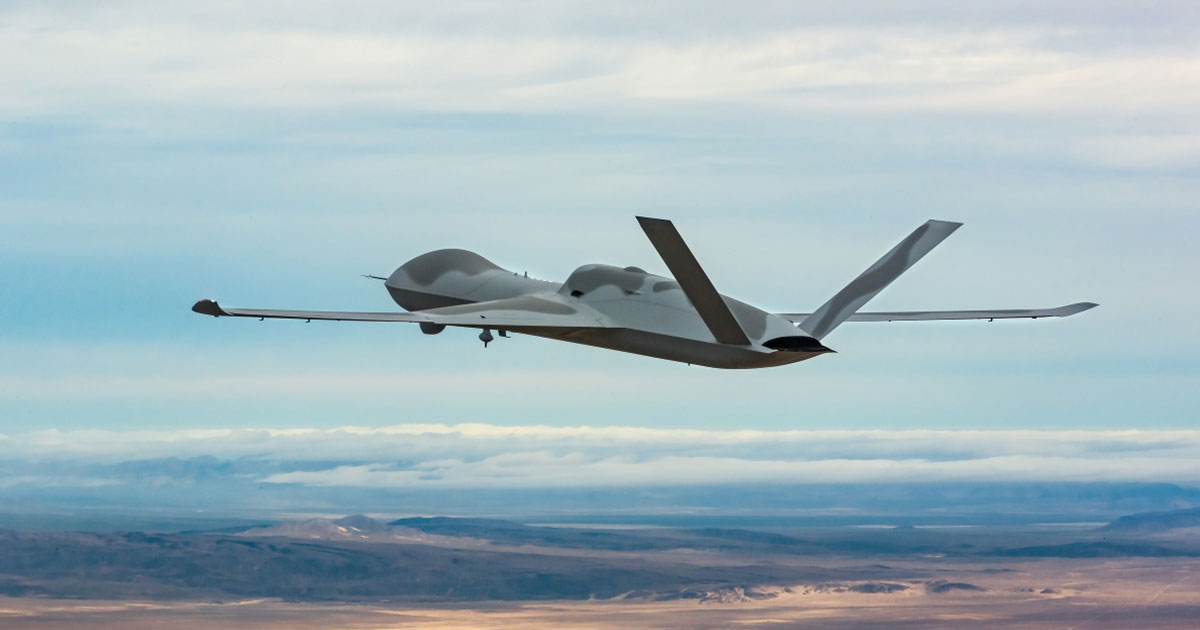
MQ-20 Avenger to Support US Navy’s Autonomy Battle Planning Effort

The US Navy has partnered with General Atomics Aeronautical Systems, Inc. (GA-ASI) to deploy its MQ-20 Avenger unmanned aerial system for the service’s Collaborative Autonomy Mission Planning and Debrief (CAMP) project.
CAMP supports the Naval Air Systems Command’s Strike Planning and Execution Systems Office (PMA-281) in developing operation mapping solutions, artificial intelligence model management, and autonomy workflows to modernize uncrewed tactical platforms.
Progress will cap off with a live evaluation at a fleet exercise later this year, with activities incorporating planning and debrief approaches for autonomous operations across demanding scenarios.
The MQ-20 ordered for CAMP will be fitted with government reference implementation software, electronic warfare countermeasures, and infrared search and track payloads.
At the demonstrations, the drone will also be tested for threat neutralization and air patrol, as well as connectivity using the Link 16 Tactical Targeting Network Technology and Starlink satellite communications.
Coordinations will involve other navy systems that employ similar military digital data network capabilities, including F/A-18 Super Hornet multirole fighter jets.
Fostering ‘Human-Autonomy Teaming’
According to GA-ASI, CAMP helps the PMA-281 in its broader role to expand force-wide mission planning assistance across autonomy operations, AI decision limits, behavioral tasking, rules of engagement, and comprehensive mission analysis.
Tools and processes of that effort are also integrated with the navy’s Joint Digital Autonomy Range and Joint Simulation Environment, bolstering quick validation of autonomy-related strategies.
“This project demonstrates our commitment to delivering integrated mission planning and debrief solutions that enable effective human-autonomy teaming,” said Mike Atwood, vice president of advanced programs at GA-ASI.
“By advancing collaborative autonomy workflows and leveraging government simulation environments, we’re providing the Navy with critical capabilities to rapidly test, evaluate, and deploy autonomous systems for complex operational missions.”