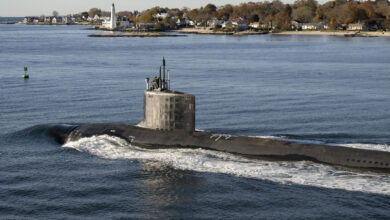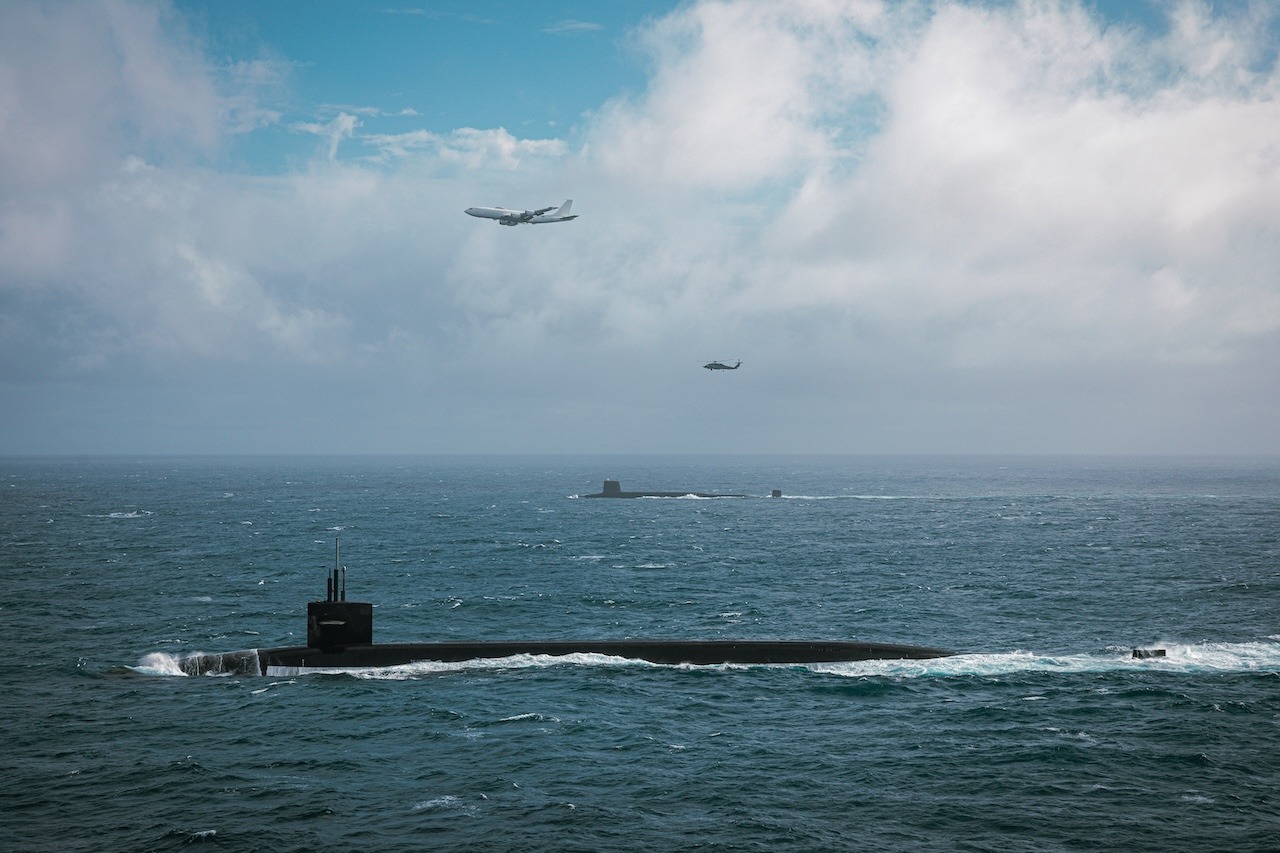
Beneath the grey swells of the North Atlantic, a silent hull patrols without fanfare. It carries no visible weapons, makes no public port visits, and rarely appears in headlines. Yet its presence underwrites an entire nation’s strategic posture.
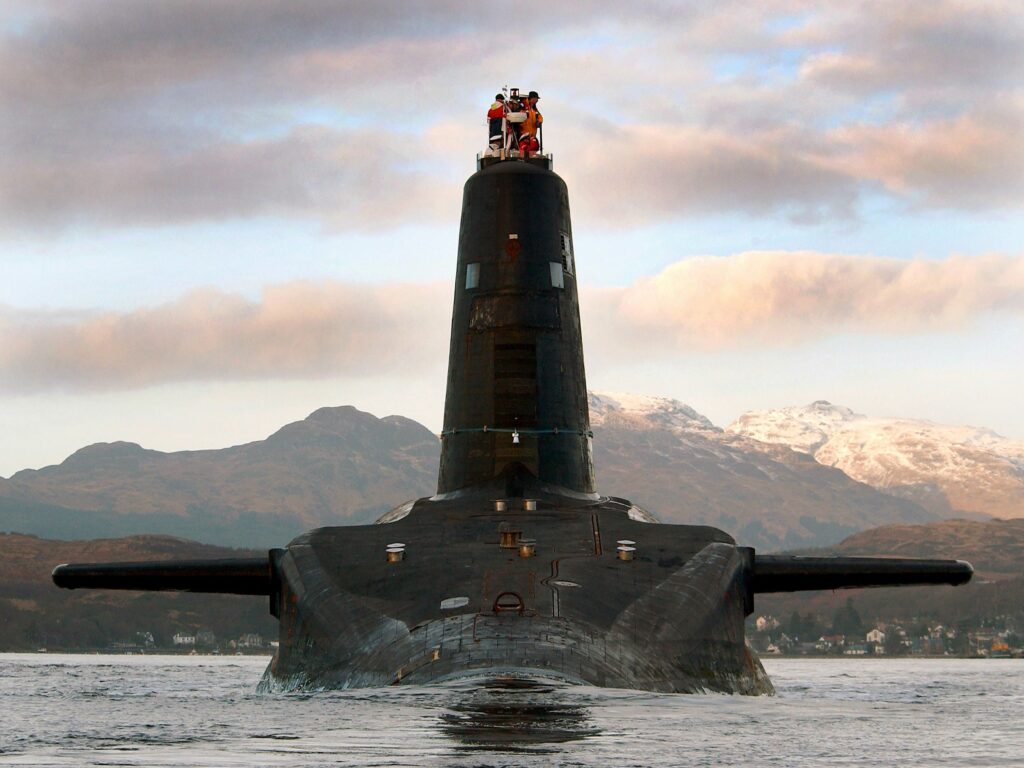
This is the Vanguard-class submarine — the backbone of the United Kingdom’s continuous at-sea nuclear deterrent.
Dive deeper into the Vanguard-class submarine and explore how it quietly safeguards Britain’s strategic posture.
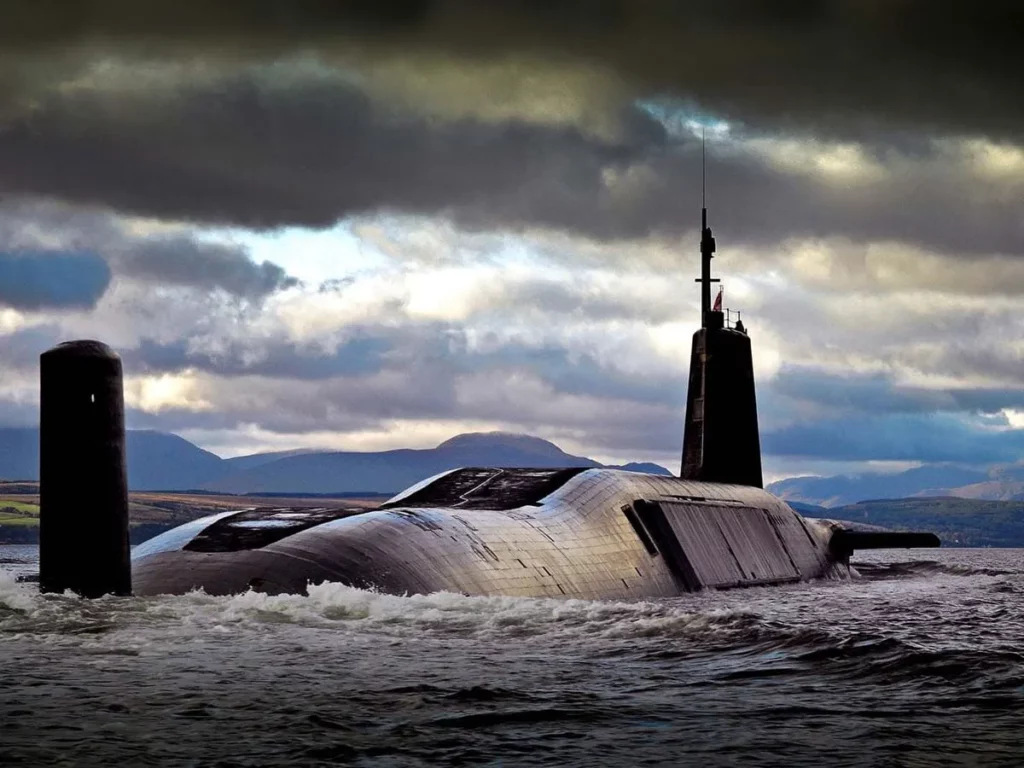
What Is the Vanguard-Class?
The Vanguard class consists of four nuclear-powered ballistic missile submarines (SSBNs):
Commissioned between 1993 and 1999, they replaced the aging Resolution-class boats and maintain the UK’s policy of Continuous At-Sea Deterrence, in place since 1969.
| Category: | Details: |
| Displacement | ~15,900 tons (submerged) |
| Length | 149.9 meters (491.8 feet) |
| Beam | 12.8 meters (41.9 feet) |
| Propulsion | 1 × Rolls Royce PWR2 nuclear reactor |
| Speed | 25+ knots (46 kilometers/28 miles per hour) submerged |
| Crew | 132 personnel |
| Armament | 16 × Trident II D5 SLBMs, torpedoes |
| Homeport | HMNB Clyde, Faslane, Scotland |
How It Came to Be
The Vanguard program emerged in the 1980s, following the UK’s decision to replace the Polaris missile system with the US-built UGM-133 Trident II. This required a new, larger submarine design capable of carrying the Trident D5 ballistic missile.
The boats were built by Vickers Shipbuilding and Engineering Ltd (later absorbed by BAE Systems) at Barrow-in-Furness. The design incorporated US missile compartment technology while retaining British nuclear warheads and command authority.
The result was the largest submarine ever constructed for the Royal Navy.
Unlike some naval classes, the Vanguard submarines are largely uniform in design. However, they have undergone:
- Mid-life refueling overhauls
- Combat system modernizations
- Sonar and stealth upgrades
- Trident missile life-extension integration
These incremental upgrades have extended operational life well beyond original timelines.
How It Works
Key Features
- Nuclear propulsion: The Rolls-Royce PWR2 reactor enables months-long submerged patrols without refueling, limited primarily by food supplies and crew endurance.
- Ballistic missile capability: Each submarine carries up to 16 Trident II D5 missiles, each capable of delivering multiple independently targetable warheads.
- Stealth design: Acoustic dampening, pump-jet propulsion, and advanced sonar systems reduce detectability, ensuring survivability — the cornerstone of credible deterrence.
Strengths
- Continuous deterrence: At least one boat remains on patrol at all times, ensuring second-strike capability.
- Survivability: Submerged operation and global reach make SSBNs the most secure leg of the nuclear triad.
- Strategic autonomy: Though reliant on US missile technology, the UK maintains independent launch authority.
Limitations
- Aging platforms: The submarines have exceeded their original service-life expectations, increasing maintenance demands.
- High operating costs: Sustaining nuclear infrastructure and specialized crews is expensive.
- Finite missile tubes: Reduced from earlier Cold War configurations, reflecting post-Cold War arsenal reductions.
Global Role and Use
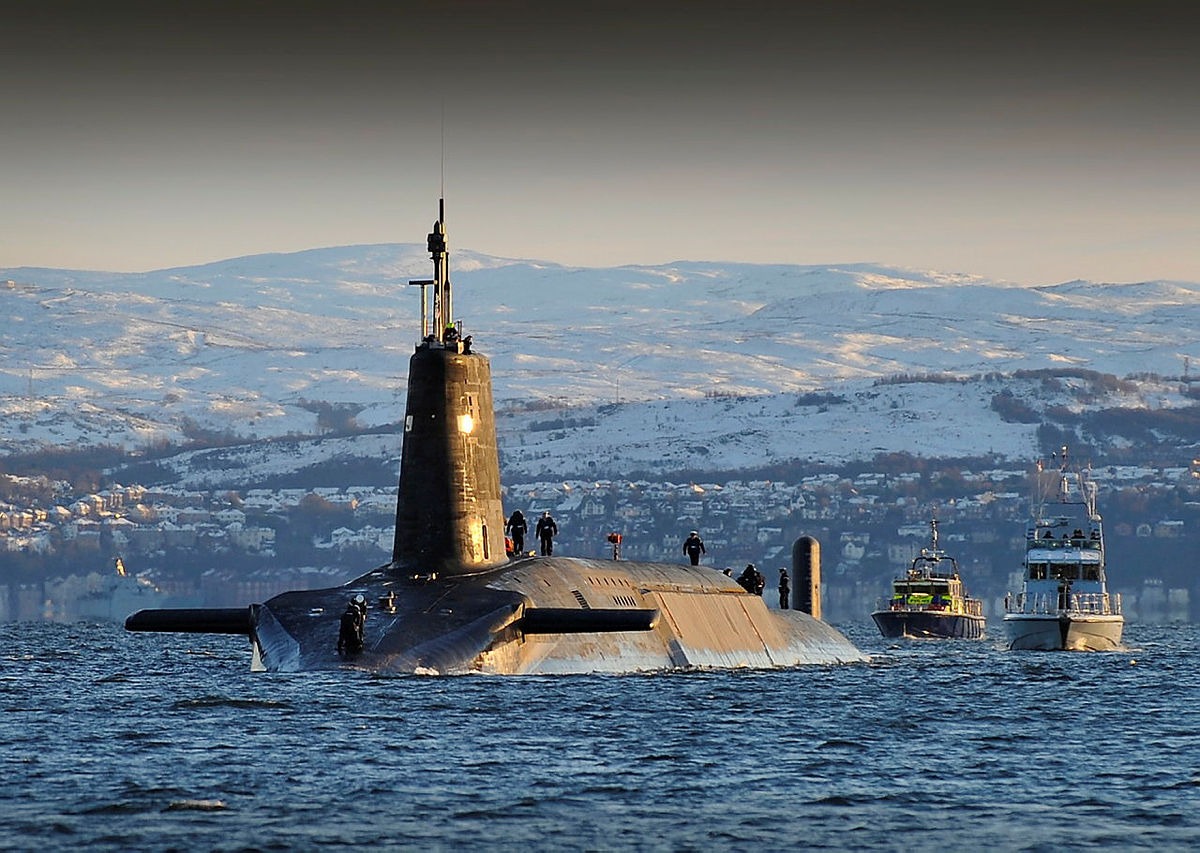
Operating primarily from HMNB Clyde in Scotland, these submarines patrol undisclosed regions of the Atlantic and beyond.
Their mere existence complicates adversary planning by ensuring that any nuclear aggression would trigger devastating retaliation.
The UK also cooperates closely with the United States in missile servicing and technology.
Future Outlook
The Vanguard boats are being replaced by the upcoming Dreadnought-class submarine, expected to enter service in the early 2030s. Delays and cost pressures have pushed the existing fleet well beyond its planned retirement window.
Until the Dreadnought class becomes fully operational, Vanguard remains the silent guarantor of Britain’s nuclear posture.
Even in an era of hypersonics and cyber warfare, the logic underpinning ballistic missile submarines remains unchanged: survivability equals credibility, and credibility sustains deterrence.
The Vanguard-class submarines may operate unseen, but their strategic weight is immense. As the UK prepares for the next generation of deterrence, these vessels continue to patrol quietly, ensuring that the balance of power holds beneath the surface.