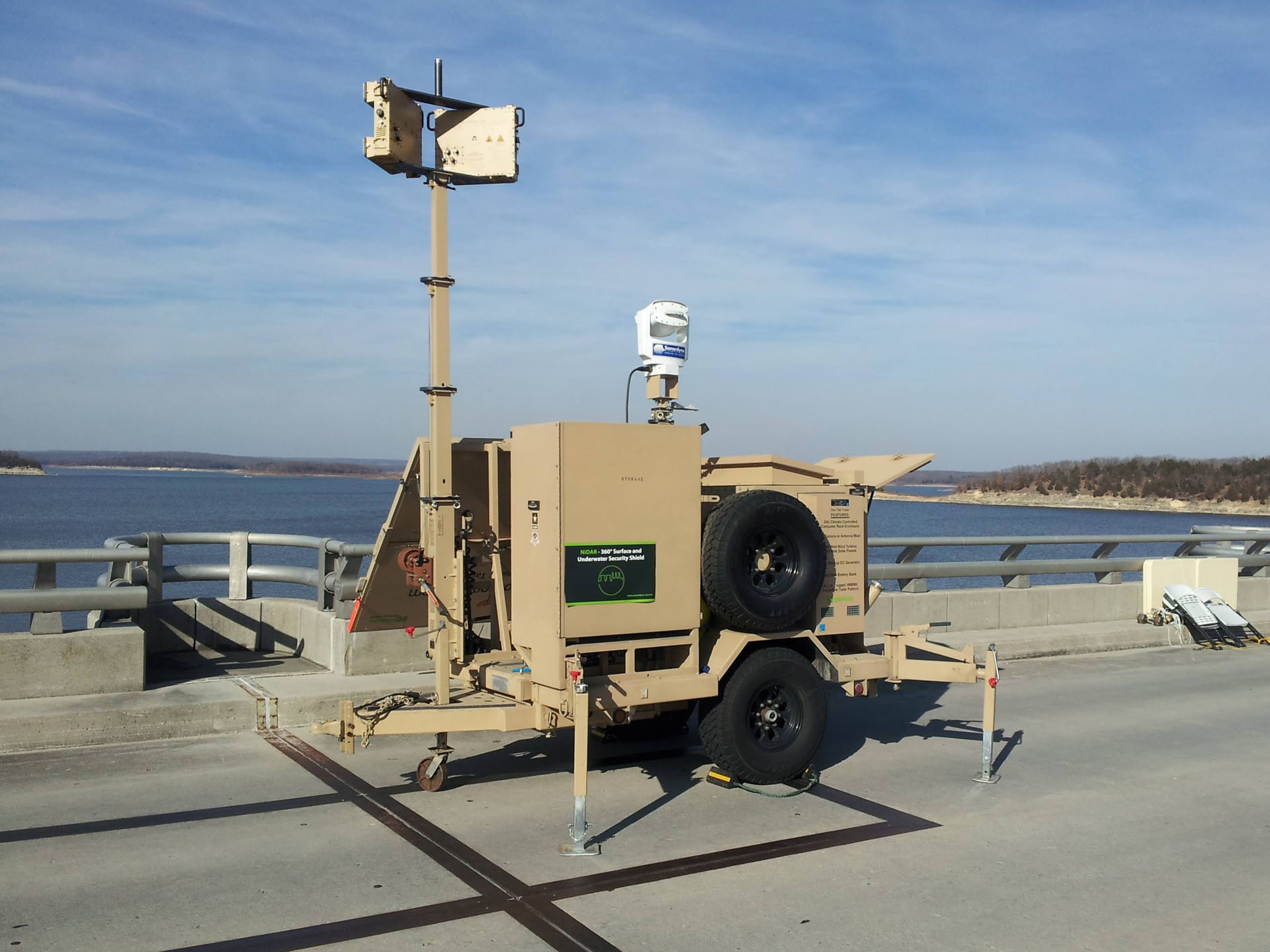
UK defense firm Blighter has won a contract to supply ground surveillance radars to an unnamed Eastern European army to strengthen monitoring along the country’s borders.
The company will deliver its B400 series radars together with BlighterNexus AI-assisted software, which will be integrated into the army’s command-and-control networks and other sensors to create a unified operating picture across multiple border regions.
Under the deal, the radars will be deployed at fixed sites along the border and installed on reconnaissance vehicles to provide both stationary and mobile surveillance. Blighter said the system is designed to operate continuously in difficult conditions, including dense fog and poor visibility.
The B400 radar series runs on low power and uses low probability-of-intercept technology, making it harder for adversaries to detect while scanning large areas. Its sensors can identify and track people, vehicles, and low-flying aerial threats at distances of up to 32 kilometers (19 miles).
Blighter will also install its BlighterNexus software platform, which connects radar feeds with other sensors and operator interfaces to provide a single common operating picture.
Blighter radars are already used in at least 40 countries, including the UK, South Korea, and the US.
Europe Boosts Border Surveillance and Security
Across Europe, governments have accelerated efforts to strengthen border monitoring through new surveillance systems, radars, and unmanned technologies.
Poland, for example, began receiving ARSUS 100 reconnaissance and surveillance systems from Turkish defense firm Aselsan in 2025.
Mounted on locally-built AMZ Kutno vehicles, the systems provide high-resolution imaging, long-range communications, and moving-target tracking for missions such as border security and infrastructure protection.
Warsaw has also expanded radar-based monitoring capabilities. In 2026, US defense company SRC secured a follow-on contract to supply SR Hawk surveillance radars to the Polish Armed Forces.
Integrated into reconnaissance vehicles and command networks, the radars can track personnel, vehicles, and other targets to support battlefield and border awareness.
Meanwhile, Lithuania has taken broader steps to reinforce its frontier with Russia and Belarus.
In 2025, the government unveiled plans to spend about $1.2 billion to fortify border defenses, including surveillance upgrades, electronic warfare systems, and early-warning networks along key corridors.
New technologies are also being deployed across the Baltic region to counter emerging threats. In 2025, Latvian and Estonian firms partnered to develop a mobile counter-drone system under the European Union’s proposed “drone wall” initiative, designed to detect and intercept unmanned aircraft along the bloc’s eastern frontier.