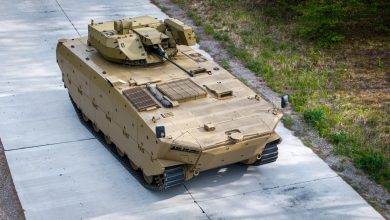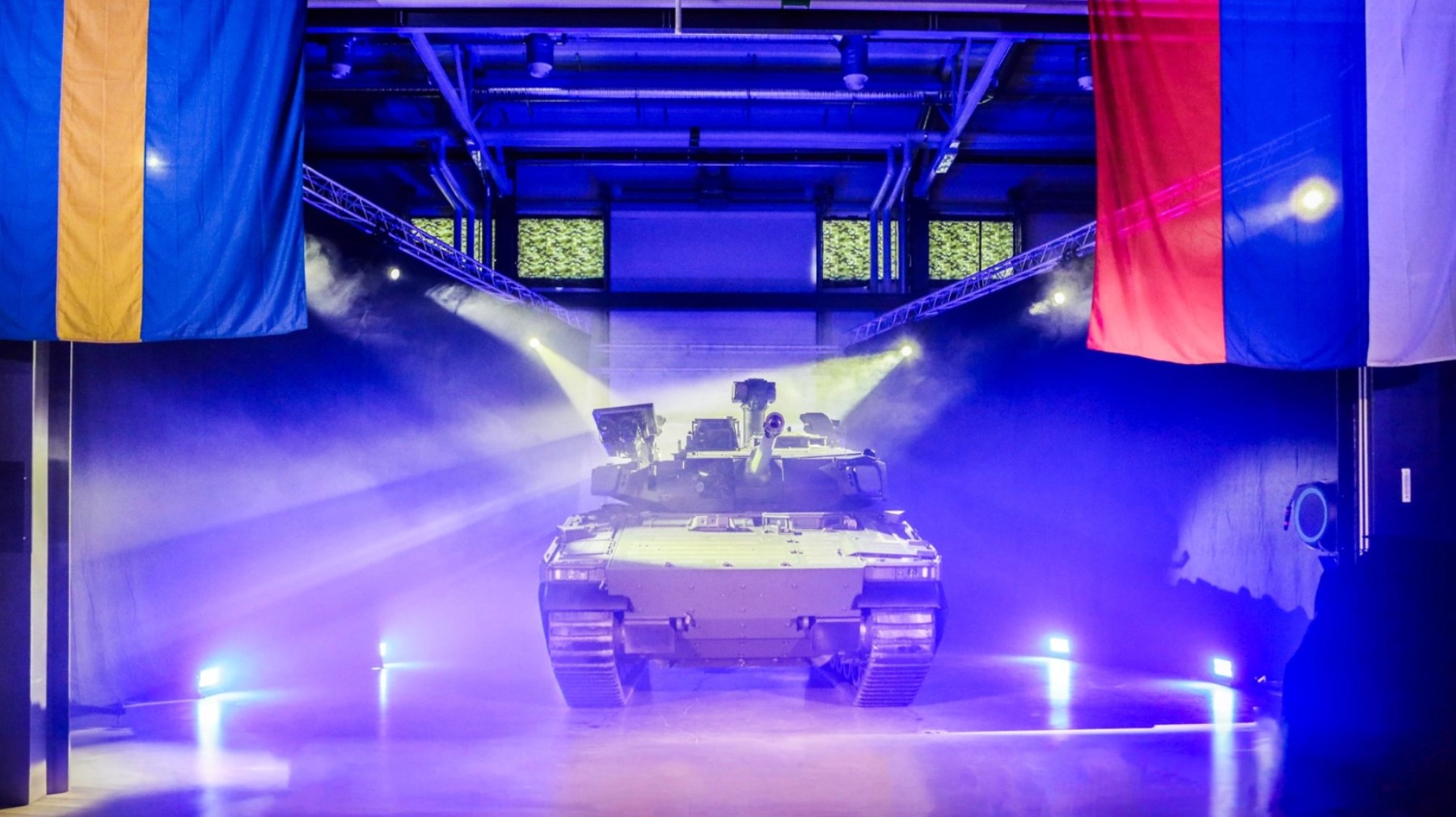
BAE Systems Hägglunds has unveiled the first CV9035 MkIV infantry fighting vehicle configured for the Slovak Armed Forces, which is currently undergoing comprehensive testing in Sweden.
The rollout marks a step forward in Slovakia’s program to acquire 152 CV90 vehicles under a government-to-government agreement with Sweden.
The procurement is one of Slovakia’s largest military modernization efforts in recent decades and is intended to help replace aging equipment and fulfill NATO capability commitments.
Slovak industry plays a significant role in the program, accounting for more than 40 percent of the contract value.
Nearly 30 Slovak firms are involved in the supply chain, including Hriňovské Strojárne, Konštrukta-Defense, MSM Land Systems, S.M.S. spol sro, STV Machinery, and ThyssenKrupp Rothe Erde Slovakia.
The cooperation includes local production work, facility expansion, and technology transfer arrangements.
The CV90 platform is in service with several NATO armies in Europe, and additional vehicles are currently in production.
Participating countries coordinate training, sustainment, and future upgrades through a multinational CV90 user framework.
CV9035 MkIV Platform
Compared with earlier CV90 versions, the CV9035 MkIV infantry fighting vehicle combines upgraded firepower and protection with improved digital systems integration.
The Slovak configuration features a 35mm Bushmaster III automatic cannon.
It can be fitted with integrated anti-tank guided missiles, supported by an advanced fire-control system to improve engagement accuracy.
It also has enhanced ballistic and mine protection, and the vehicle can be equipped with an Active Protection System designed to detect and defeat incoming threats.
In terms of mobility, the MkIV features an engine rated at up to 1,000 horsepower, providing the power needed to maintain maneuverability even when additional armor or mission systems are installed.
The vehicle uses a modern digital architecture that enables integration of new sensors, weapons, and battlefield management tools while improving situational awareness for both the crew and embarked troops.
Its modular construction is intended to simplify future upgrades and enable configurations tailored to national operational requirements, supporting capability improvements over the platform’s service life.