Is Canada’s Artillery Modernization Headed for the Same Pitfalls as the F-35?
Narrow requirements risk sidelining viable alternatives and repeating past procurement mistakes.

When the Canadian Army talks about modernizing its artillery, the intent is clear: greater lethality, mobility, and survivability for major combat operations.
But the requirements now emerging from Ottawa suggest the outcome of that modernization effort may already be decided — and that should worry anyone who has watched Canada’s defense procurement system stumble before.
Last year’s Inflection Point 2025 laid out the Canadian Army’s ambition to upscale land combat proficiency and capacity for major combat operations.
Central to that vision is investment in lethality and firepower, including the long-overdue acquisition of self-propelled artillery (SPA).
Yet, much like the protracted F-35 fighter replacement, Canada risks turning a necessary capability upgrade into another procurement fiasco — not because of the quality of any single platform, but because requirements appear increasingly tailored to favor one solution over others.
Requirements That Narrow the Field
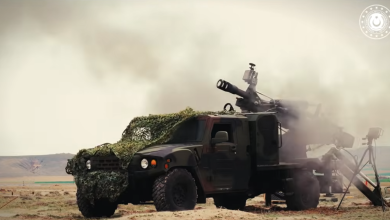
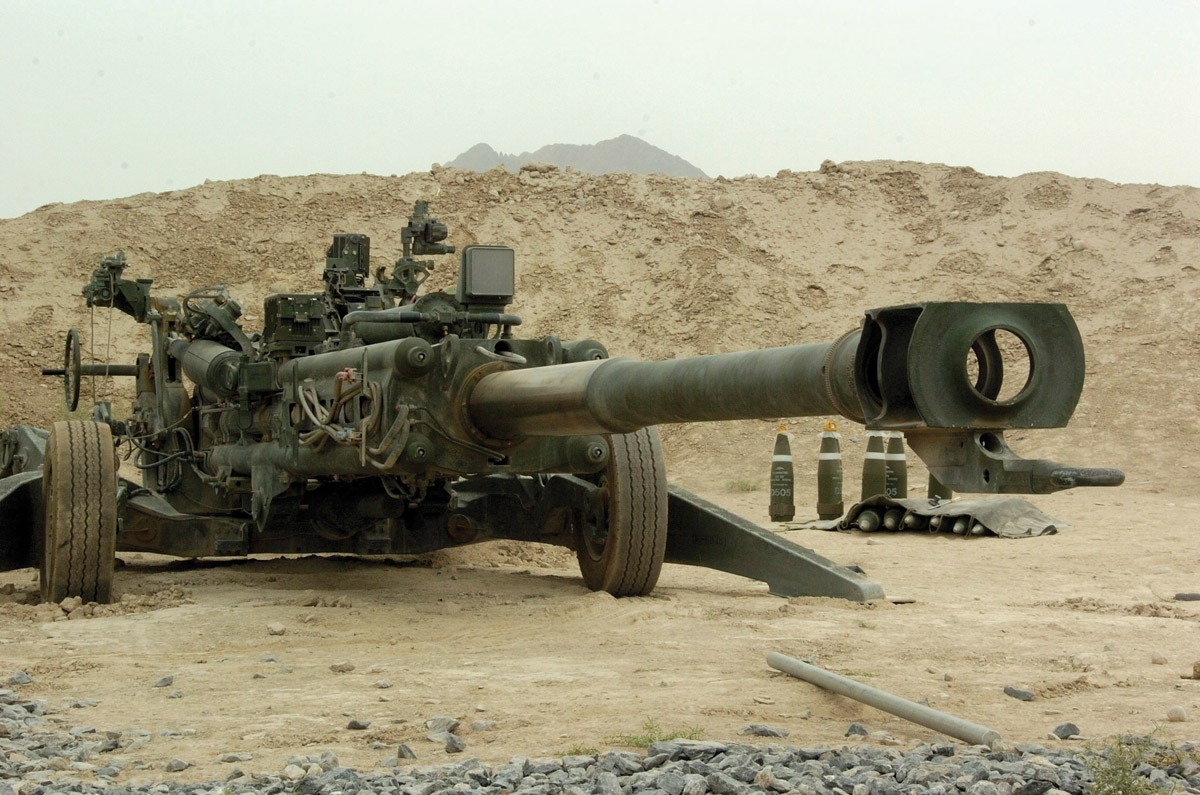
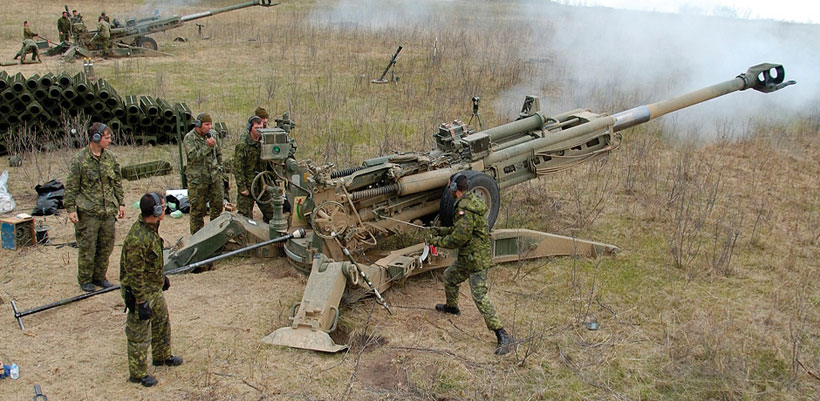
Under the indirect fire modernization program, the Canadian Army (CA) aims to replace its towed M777 155-mm howitzers with more lethal, mobile systems capable of maneuvering with brigade combat teams.
In its recent request for information (RFI), the CA outlined key requirements for a new artillery system: a driving range of 450 kilometers (280 miles), road speeds up to 80 kilometers (50 miles) per hour to keep pace with light armored vehicle-based brigades, and firing ranges of 30 kilometers (18.6 miles) with standard munitions and 40 kilometers (24.8 miles) with next-generation rounds.
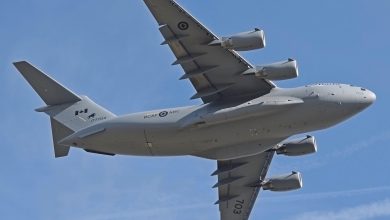
New systems must also support a crew of at least three, be interoperable with NATO and US munitions, and be transportable by Canada’s strategic airlift fleet.
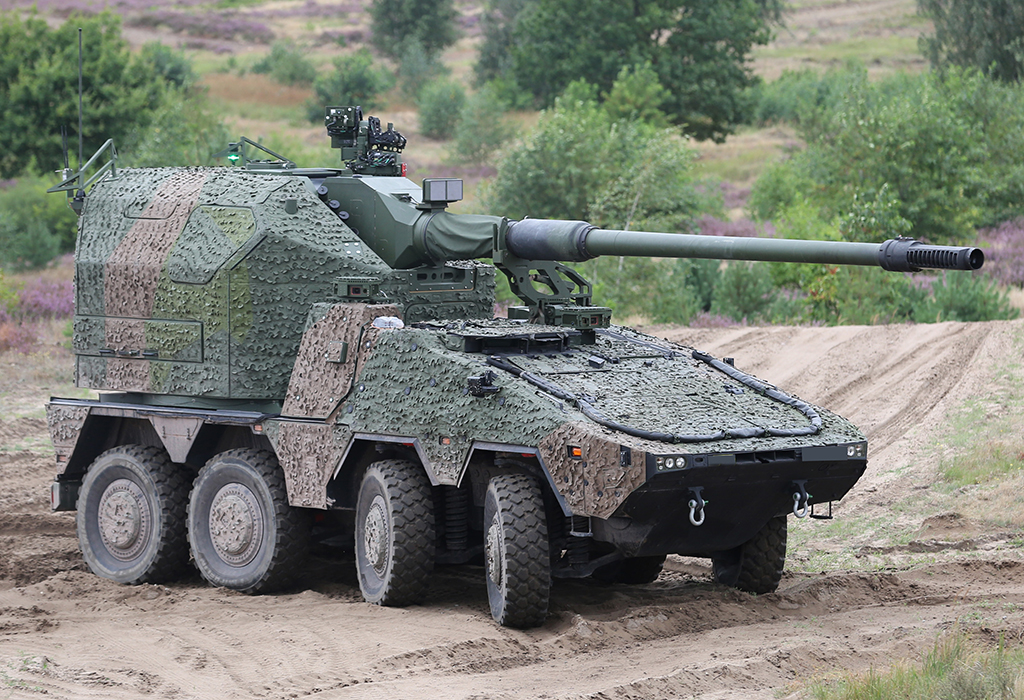
On paper, these requirements appear reasonable. Taken together, however, they suggest the CA may already have a preferred platform in mind. Most notably, the inclusion of a requirement to engage indirect targets while on the move points squarely toward Germany’s RCH 155, currently the only operational system capable of doing so.
More striking still is not what the RFI includes, but what it omits. There are no explicit requirements addressing firing rates, the integration of in-service ammunition resupply vehicles, indicative per-unit cost ranges, or the determinants needed to ensure reliable operation in cold weather and complex terrain.
For a country whose operational environments range from Arctic tundra to forested and mountainous terrain, these omissions are difficult to ignore.
The RCH 155: Impressive Capability, Unexamined Trade-Offs
None of this is to suggest that the RCH 155 is a weak contender.
With a road speed of 100 kilometers (60 miles) per hour, a cruising range of 700 kilometers (435 miles), a firing rate of eight rounds per minute, and a magazine capacity of 30 fuzed rounds supported by 144 modular charges, it offers high mobility and long-range lethality.
Its ability to fire on the move, interoperability with allied munitions, direct-fire capability, and two-person crew help explain why it would appeal to a force seeking rapid, highly mobile fires.
However, some of the RCH 155’s drawbacks cannot be ignored.
Its direct-fire capability raises questions about how the Canadian Army envisions employing the system. If it is expected to conduct stand-in or forward direct-fire missions, survivability becomes a serious concern. In a battlefield saturated with sensors, counter-battery radars, and first-person view drones, direct-fire exposure significantly increases risk.
Similarly, the ability to fire while moving requires a complex and costly fire-control system that continuously recalculates position and orientation, particularly in broken or uneven terrain.
Greater software dependence increases maintenance burdens, upgrade costs, and the likelihood of technical failures — all of which undermine the responsiveness and reliability artillery is meant to provide.
Speed, too, cuts both ways. Highly mobile SPAs can outrun their logistical tails. Ammunition resupply vehicles must be able to keep pace, or risk creating bottlenecks that disrupt sustained fire missions.
For a platform reportedly costing approximately 19.4 million Canadian dollars ($14.2 million) per unit, these logistical and technological risks may outweigh the tactical advantages gained from marginal increases in mobility.
Given the requirements laid out in the RFI, there are other contenders for Canada’s artillery modernization.
Sweden’s Archer: Automation and Sustainment
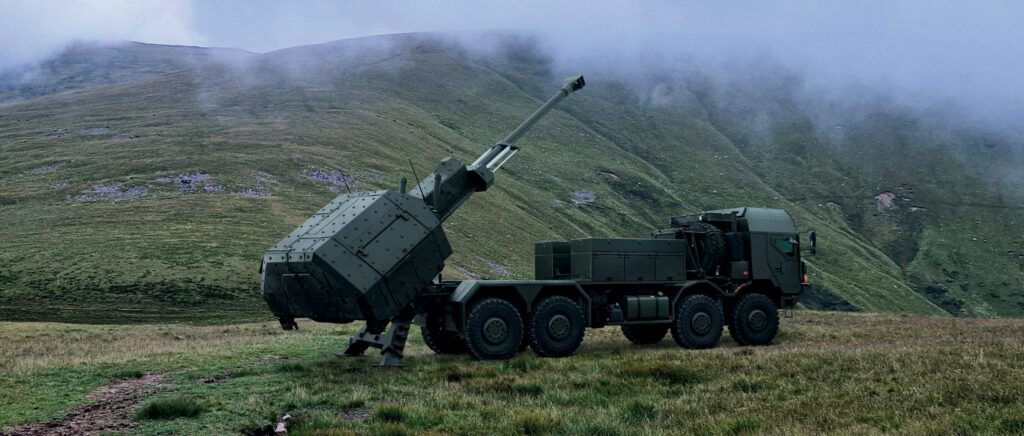
Sweden’s Archer system offers a fully automated, wheeled 155-mm solution designed for rapid deployment.
With a 52-caliber barrel, a 21-round magazine, and a dedicated ammunition resupply vehicle capable of reloading the system in five minutes, Archer emphasizes sustained fires and logistical integration.
It fires up to nine rounds per minute, can enter or exit action in roughly 20 seconds, reaches road speeds of 90 kilometers (56 miles) per hour, and has a range of 800 kilometers (497 miles) — all at an estimated cost of 10.4 million Canadian dollars ($7.6 million) per unit.
France’s Caesar: Simplicity and Speed
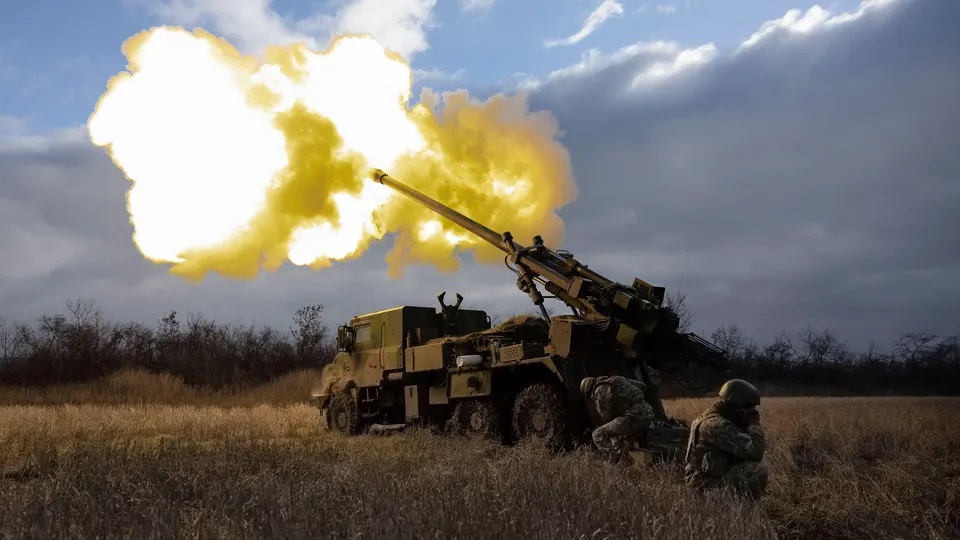
France’s Caesar provides another proven wheeled alternative.
Lighter and less complex, Caesar fires up to six rounds per minute, carries between 30 and 36 rounds depending on the variant, and can displace rapidly to avoid counter-battery fire.
At roughly 9.4 million Canadian dollars ($6.9 million) per unit, it prioritizes simplicity, deployability, and cost-effectiveness while remaining compatible with NATO logistics and strategic airlift.
South Korea’s K9A1: Mobility for Harsh Terrain
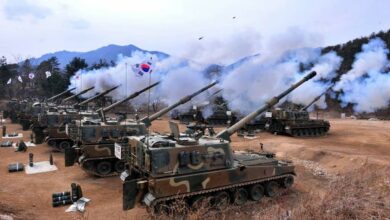
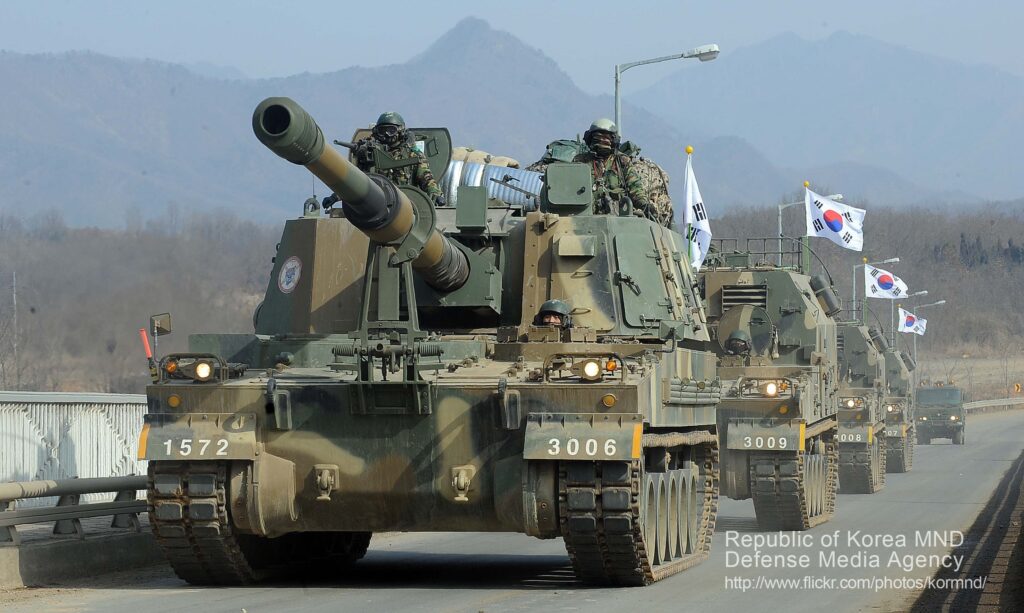
While the RFI emphasizes wheeled systems, South Korea’s tracked K9A1 also merits serious consideration.
With 48 rounds of onboard ammunition, a firing rate of six to eight rounds per minute, and a fully integrated K10 ammunition resupply vehicle capable of transferring 12 rounds per minute, the K9A1 offers a mature, combat-proven ecosystem rather than a standalone gun.
Though slower on roads, its tracked configuration provides superior traction and mobility in soft ground, snow, and broken terrain — conditions that closely align with Canada’s Arctic requirements and the complex terrains of Europe and the Indo-Pacific.
The K9A1’s widespread adoption by NATO and allied forces underscores its operational credibility. At approximately 4.8 million Canadian dollars ($3.5 million) per unit, it is also the most affordable of the mainstream SPA options, raising difficult questions about cost, capability, and value that cannot be ignored.
Choosing Artillery for Canada’s Reality
Canada’s next artillery system will shape its land combat power for decades. Getting that decision wrong by privileging narrowly optimized capabilities over survivability, logistics, and environmental realism would be an expensive and operationally consequential error.
Failing to evaluate lethality, mobility, precision, and survivability in equal measure would repeat a familiar — and costly — mistake.
Artillery is the foundation of land combat; Canada must treat it as such or pay the price.

Andrew Erskine is a research fellow at the Institute for Peace & Diplomacy and a non-resident Vasey Fellow with the Pacific Forum.
The views and opinions expressed here are those of the author and do not necessarily reflect the editorial position of The Defense Post.
The Defense Post aims to publish a wide range of high-quality opinion and analysis from a diverse array of people – do you want to send us yours? Click here to submit an op-ed.