Canadian Military Ramps Up Counter-UAS Defenses Amid Drone Threats

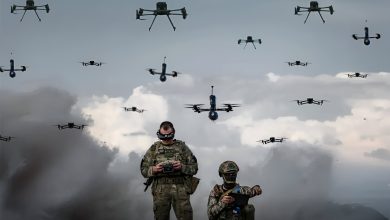
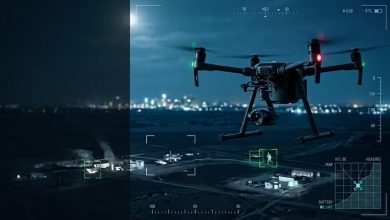
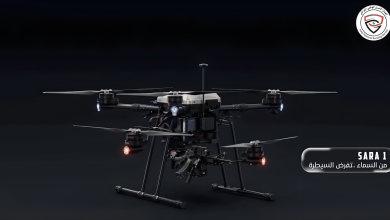
Canada has begun fielding counter-unmanned aerial system (C-UAS) capabilities at key military infrastructure as Ottawa responds to growing concerns over surveillance, sabotage, and potential attacks involving drones.
Vice Admiral Angus Topshee, commander of the Royal Canadian Navy, said some of the systems are already operational at naval sites.
“We have some capability already to take things out of the sky,” Topshee said in an interview with CBC News, adding that the Defence Department is coordinating with the Transport Ministry and the Royal Canadian Mounted Police.
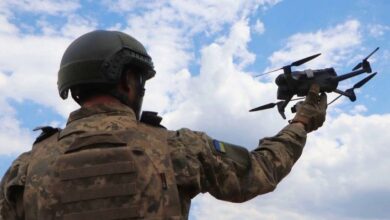
The effort follows lessons drawn from Ukraine’s conflict with Russia, particularly during Kyiv’s “Operation Spiderweb,” where drones targeted Russian defense infrastructure, warships, and strategic bombers.
Military officials said they want to prevent similar incidents on Canadian soil.
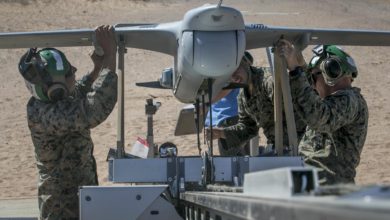
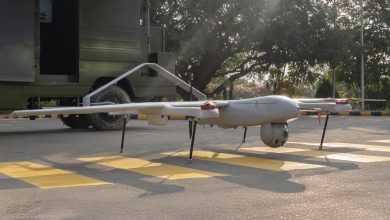
The Royal Canadian Air Force has also started distributing C-UAS protections at installations expected to house its future fleets, including those for F-35 fighter jets, P-8 Poseidon maritime patrol and reconnaissance aircraft, and tactical remotely-piloted systems.
Rules Limit Response
Topshee noted that authorities still face legal barriers in determining when a UAS can be classified as hostile and whether troops can lawfully intercept it in domestic airspace.
Analysts also warned that electronic jamming could disrupt civilian communications and aviation systems, while neutralizing drones over public areas raises safety concerns.
To address this, Ottawa has applied amendments to the Aeronautics Act, aimed at bolstering the government’s authority to prohibit unauthorized UAS that pose security threats.
Still, officials emphasized that the armed forces must balance responses with the possibility that a drone may legally belong to a civilian operator.