The Joint Air‑to‑Ground Missile (JAGM), also known as the AGM‑179, was born of a vision to unify and supersede older missile families, such as the Hellfire and Longbow, into a single, modern, flexible, precision-strike solution.
Rather than carry multiple missile types, warfighters would have a single system with more capability while reducing the number of munitions they need to stock, transport, maintain, and train for.
This explainer breaks down JAGM’s capabilities, guidance systems, operational advantages, and why it represents a next-generation leap in precision strike for modern militaries.

What JAGM Does: Accuracy, Lethality, Resilience
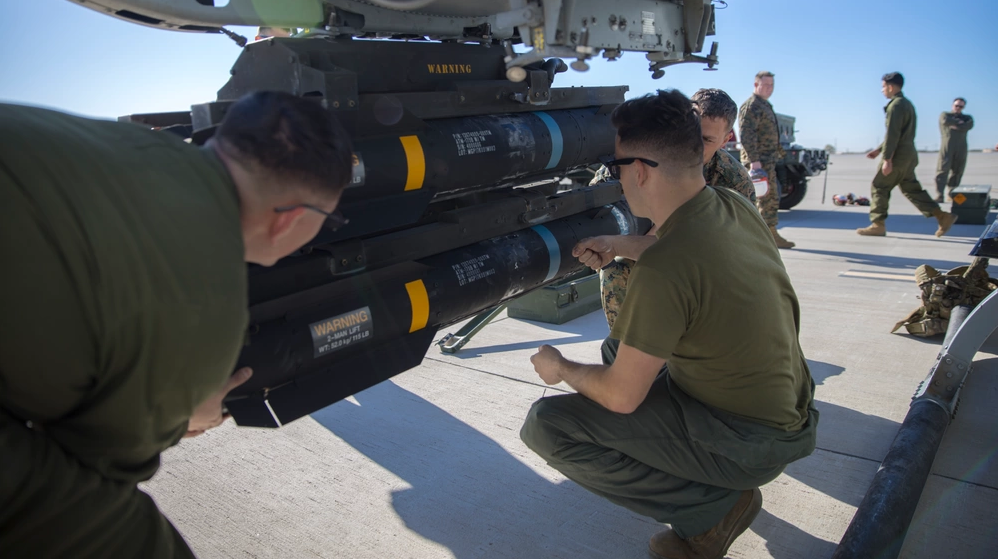
Lockheed Martin leveraged the combat-proven Hellfire architecture as the foundation for JAGM, combining a next-generation guidance system with the proven warhead, rocket motor, and control components of the AGM-114R Hellfire II.
JAGM is built for multi-domain combat, using a dual-mode seeker that pairs a semi-active laser for pinpoint precision with millimeter-wave radar for true fire-and-forget capability, allowing it to engage a wide spectrum of targets, from armored vehicles to agile maritime threats, even in poor weather, obscured environments, or heavily contested conditions.
Its key operational traits include:
- Fire-and-forget capability: Thanks to the millimeter-wave radar, once launched, the missile can autonomously home in, reducing exposure for the launching platform.
- Lock-on flexibility: It supports both “lock-on before launch” and “lock-on after launch,” giving users tactical options.
- Modular design: The seeker is separate from the rest of the missile bus, which enables upgrades without a full missile redesign.
- Performance specs: About an 8-kilometer (5 miles) range in its baseline version, 176 centimeters (69.3 inches) in length, 51.5 kilograms (113.5 pounds) in weight, and equipped with a multi-purpose warhead (such as shaped-charge or fragmentation).
The Evolution: More Than Just One Missile
What began as a Hellfire successor is evolving into a scalable, multi-domain strike ecosystem, with Lockheed Martin developing new JAGM variants to expand its reach across air, land, and maritime missions.
Here’s a closer look at the modular, multi-domain strike family with official designations in the US service:
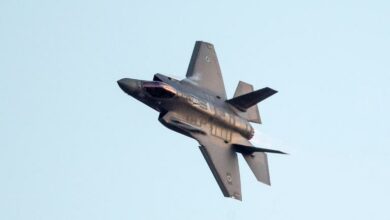
- AGM-179A (Air-Launched JAGM): The baseline variant for helicopters and fixed-wing aircraft, replacing many Hellfire missions while adding dual-mode semi-active laser/millimeter-wave radar guidance.
- AGM-179B (Surface-Launched JAGM): Adapted for ground and vehicle-based launchers, expanding JAGM’s role into mobile and land-based strike platforms.
- AGM-179C (Maritime or Extended Integration Variant): Designed or explored for naval and multi-launch environments, aimed at expanding ship- and container-based deployment.
| Variant | Primary Purpose | Role and Key Enhancements | Notable Features | Points of Commonality |
| AGM-179A (Air-Launched JAGM) | Baseline air-launched precision strike missile | Replaces many AGM-114 Hellfire roles from helicopters and some fixed-wing aircraft | Dual-mode semi-active laser + millimeter-wave radar seeker; fire-and-forget or laser-designated; designed for fast integration on existing air platforms | Shares core guidance, warhead, motor, and control systems across the JAGM family |
| AGM-179B (Surface-Launched JAGM) | Ground or vehicle-launched strike capability | Expands JAGM use to land-based and mobile launchers | Adapted for surface platforms such as armored vehicles or ground batteries; increased tactical flexibility | Same seeker, lethality, and engagement logic as AGM-179A |
| AGM-179C (Maritime or Expanded Integration) | Sea-based or multi-domain launch integration | Supports naval or containerized launch concepts | Potential for ship-based, coastal, or modular launcher integration | Built on the same JAGM missile body and guidance architecture |
Open‑source reporting suggests a unit price of around $320,000 to $325,000 for baseline JAGM (AGM-179A), while the cost for other variants will depend on production scale, modifications, and contract negotiations.
Strategic Role: Why JAGM Matters Globally
JAGM is emerging as a next-generation precision-strike standard with implications for allies, partners, and multi-domain operations worldwide.
In the United States, JAGM is already deployed on platforms including the AH-64E Apache, AH-1Z Viper, and select drones, enhancing precision engagement while reducing exposure for manned aircraft.
This could create interoperability across coalition forces, streamlining joint operations and simplifying logistics in multinational deployments.
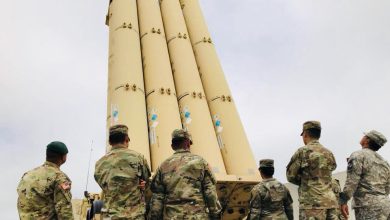
Beyond traditional air-launched missions, concepts like the JAGM Quad Launcher point to a broader strategic role: enabling even smaller surface ships to field a multi-domain precision-strike capability capable of engaging land, maritime, and potentially aerial threats.
If widely adopted, such versatility could shift the calculus for littoral defense and expeditionary operations, giving navies a low-footprint, high-lethality option that blurs the line between air- and sea-based strike assets.
Collectively, JAGM’s flexible architecture positions it not only as a US force multiplier but also as a potential global benchmark for modern precision-strike systems, influencing procurement, tactics, and interoperability strategies among allied militaries.