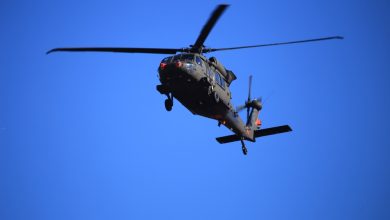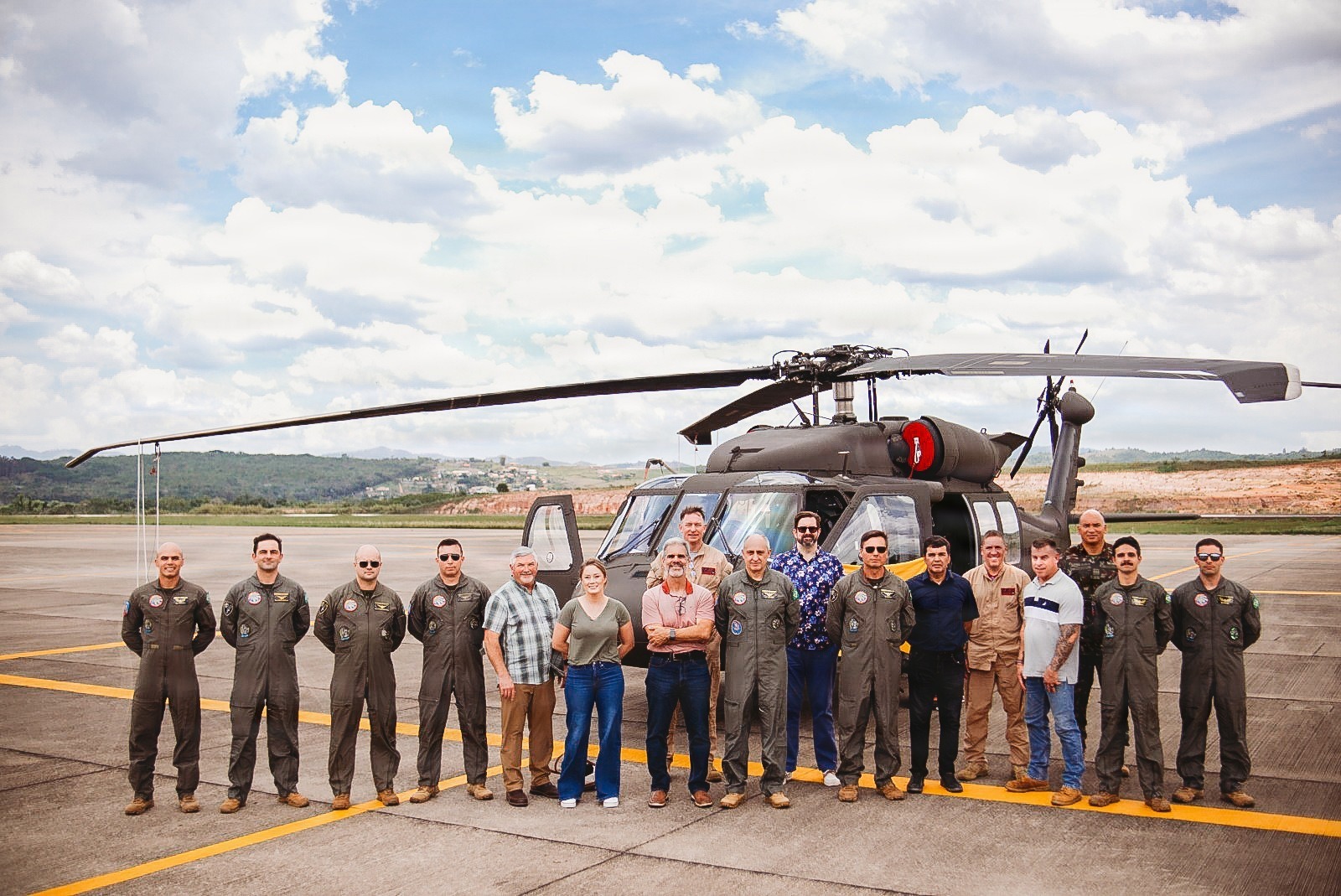
Lockheed Martin has shipped the Brazilian Army’s first UH-60M Black Hawk as part of a 12-helicopter order signed in 2024.
The handover advances the country’s effort to reinforce its airborne capabilities amid evolving requirements in tactical logistics, emergency, and relief missions.
Lockheed specified that the future fleet will be dispatched for troop movements, medical evacuation, disaster response, and search and rescue tasks.
‘Proud Moment’
According to the company, the delivery underscores over two decades of cooperation between Lockheed’s subsidiary and Black Hawk developer Sikorsky with the Latin American nation.
It also highlights Brasília’s ongoing trust in the proven rotary-wing aircraft, which it first acquired in 1997. Since then, Sikorsky has supported the fleet’s maintenance to ensure its operational readiness.
The latest delivery further enhances interoperability within the nation’s military, complementing the Black Hawks in the UH-60L variant already employed by the Brazilian Air Force.
“The arrival of the first UH-60M Black Hawk helicopter in Brazil is a proud moment in our ongoing partnership,” said Rich Benton, general manager and vice president at Sikorsky.
“These aircraft will play a critical role in supporting the Brazilian Army’s operations, and we are committed to delivering exceptional logistical support to ensure their continued success.”
The UH-60M Black Hawk
The UH-60M Black Hawk measures 64 feet (20 meters) long and can carry up to 11 troops.
It has an internal payload capacity of 3,190 pounds (1,447 kilograms) and can carry approximately 9,000 pounds (4,082 kilograms) of external cargo.
The helicopter can be armed with M240 7.62-millimeter machine guns, M134 7.62-millimeter miniguns, GAU-19 12.7-millimeter electric Gatling guns, Hydra 70-millimeter unguided rockets, Hellfire and Stinger missiles, explosives, and minefield launchers.
Black Hawk flies with twin General Electric T700-GE-701C/D turboshaft engines with approximately 1,900 horsepower each.
The aircraft has a maximum speed of 160 knots (185 miles/296 kilometers per hour), an altitude of up to 19,000 feet (5,791 meters), and a range of up to 1,200 nautical miles (1,381 miles/2,222 kilometers).