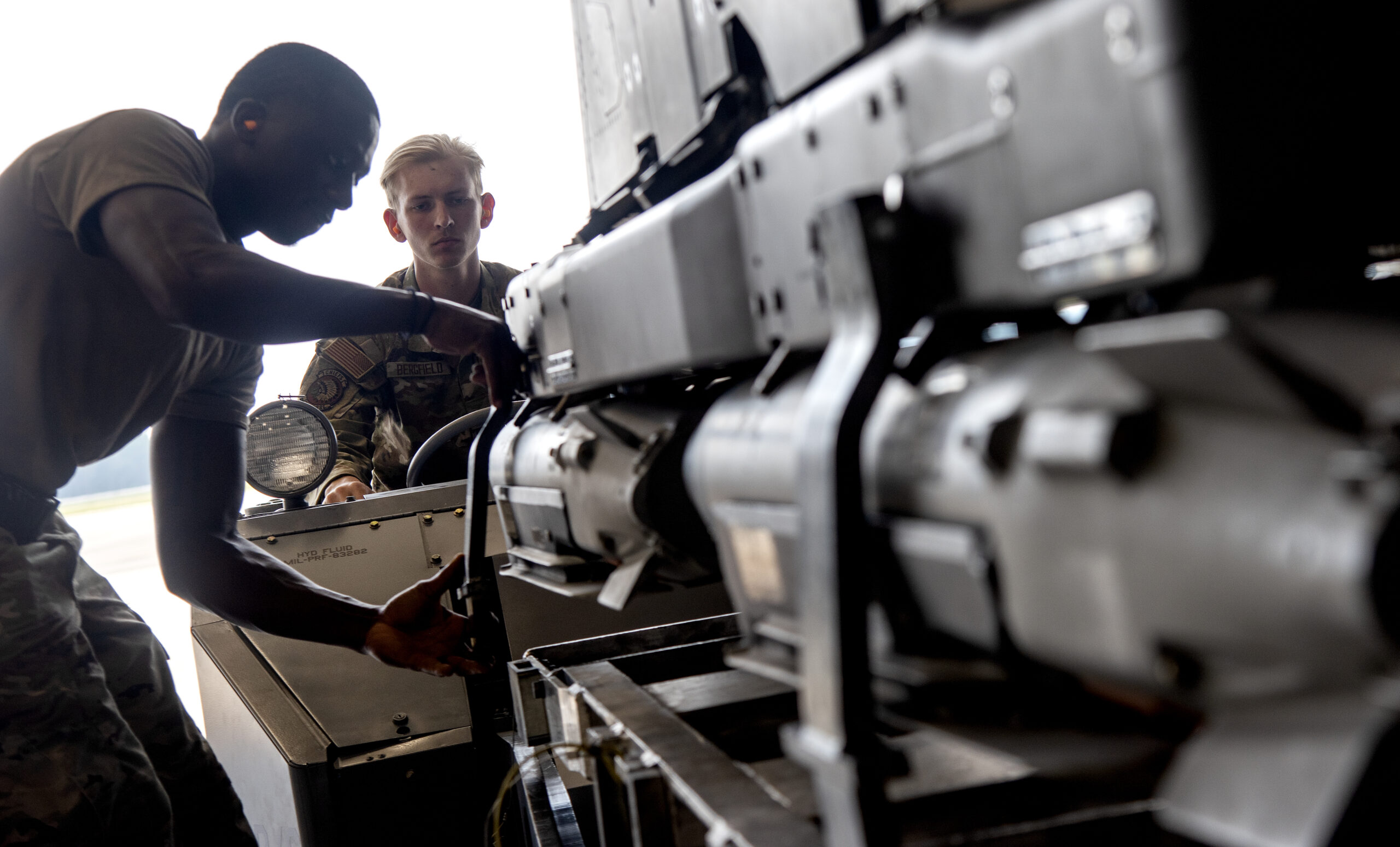
The GBU-39 Small Diameter Bomb (SDB) was born as air forces sought smaller, smarter bombs that enabled pilots to hit hardened targets without the massive blast radius of older munitions.
With wings that extend after release, it can hit targets more than 60 miles (96 kilometers) away, letting aircraft carry more bombs and strike more effectively.
Trading size for precision, it marked a turning point in the evolution of air-delivered weapons.
This guide outlines the key facts about the GBU-39, from its operation to its significance on today’s battlefields.
What Is the GBU-39 SDB?
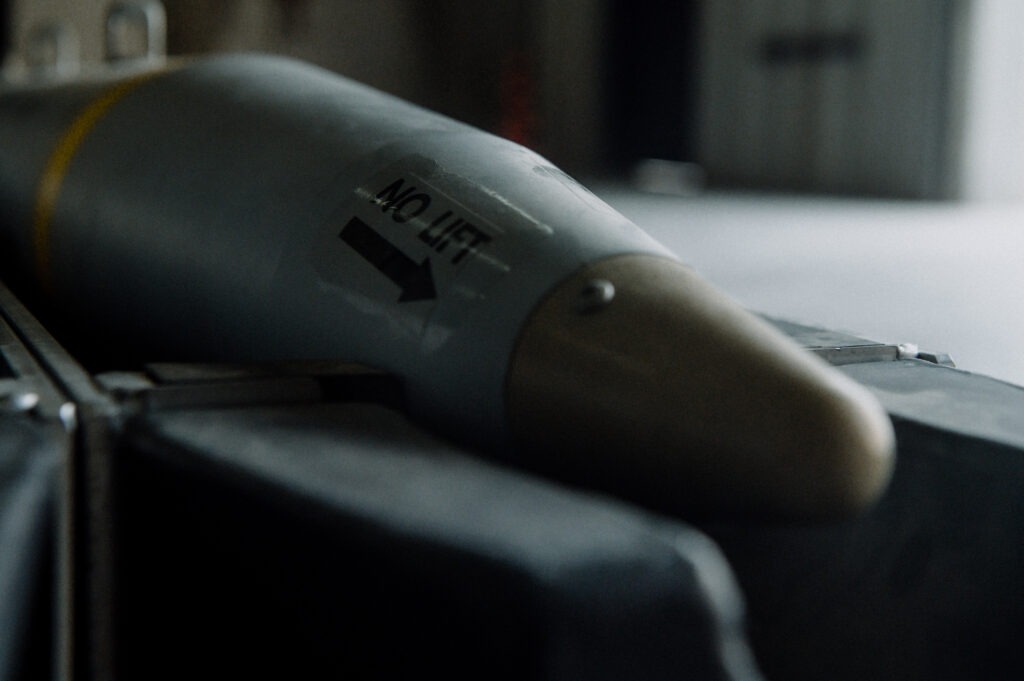
The GBU-39 is a 250-pound (113-kilogram), extended-range, all-weather precision munition that uses satellite guidance to reach its target.
Boeing specifically engineered this bomb to balance destructive power with the need to reduce unintended damage in urban or populated environments.
Since entering service in 2006, the GBU-39 has been produced in three main variants, offering at least two distinct warhead options.
- GBU-39/B: The baseline SDB I — GPS/INS‐guided, penetrating blast-fragmentation warhead.
- GBU-39A/B (Focused Lethality Munition): A low-collateral-damage version, with a composite case and a multi-phase blast explosive.
- GBU-39B/B (Laser SDB): Adds semi-active laser guidance on top of GPS/INS, allowing it to engage more dynamic targets.
The current iteration is equipped with a penetrating blast or fragmentation warhead capable of destroying hardened targets such as bunkers or aircraft shelters.
The SDB lets fighters and bombers destroy high-priority fixed targets from internal bays or external pylons. Because it’s smaller, aircraft can carry more bombs, reducing logistics costs and collateral damage and shortening the time needed to launch additional sorties.
The GBU-39 remains in widespread service with the US Air Force and allied militaries. It has been employed in Iraq, Syria, Afghanistan, and, more recently, supplied to partners in Europe and the Middle East. Its export customers include Israel, Saudi Arabia, Turkey, and Morocco.

How the GBU-39 SDB Works
Unlike many air-dropped munitions that receive bolt-on guidance kits after manufacture, the SDB’s guidance hardware is integrated into the bomb body during production.
Target coordinates are uploaded while the weapon is mounted on the aircraft; after release, the munition’s onboard guidance steers it to the designated point.
The navigation suite includes anti-jamming measures, enabling operation in environments where adversaries attempt to deny GPS or conduct electronic attacks.
Thanks to its fold-out glide wings and aerodynamic design, the GBU-39 can reach targets at stand-off ranges exceeding 68 miles (110 kilometers) when released from altitude.
That extended reach lets launching aircraft remain farther from defended airspace, reducing exposure to surface-to-air threats while still delivering precision.
Limitations
Despite its advantages, the GBU-39 has some constraints:
- Limited explosive power: Less effective against deeply buried or heavily reinforced targets compared to larger bombs.
- Reliance on GPS guidance: Susceptible to electronic warfare or GPS jamming.
- Designed for permissive airspace: It can glide from standoff range; however, it is not optimized for heavily contested environments with advanced air defenses.
These limitations led to the development of the GBU-53/B Small Diameter Bomb II, also known as the StormBreaker, which features a tri-mode seeker capable of engaging moving targets in adverse weather conditions.
Why It Matters Now
The GBU-39 remains significant because it offers a unique blend of precision, efficiency, and flexibility that few munitions can match.
Its small size means that pilots could carry significantly more munitions into battle, increasing the number of targets destroyed per sortie. This capability is particularly valuable in counterinsurgency operations, where precision and reduced collateral damage are key objectives.
The SDB is also cost-effective compared to newer smart weapons, as it allows militaries to stretch resources while maintaining strike efficiency, making it an attractive option for sustained operations or for export to allies.
Its ability to destroy hardened or high-value fixed targets with minimal collateral damage supports the US military’s emphasis on precision strikes in urban or politically sensitive environments.