Lockheed Martin Advances US Golden Dome Air and Missile Defense With C2 Prototyping

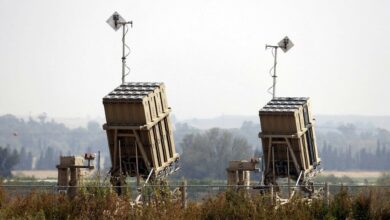
Lockheed Martin has developed a command and control (C2) prototyping solution to accelerate the maturation of the Trump administration’s planned Golden Dome capability, Washington’s version of Israel’s Iron Dome air and missile defense system.
Under the project, the company used its Center for Innovation in Suffolk, Virginia, to establish a secure prototyping and experimentation facility known as “The Lighthouse,” enabling collaboration across government, military, and industry.
The hub supports live, virtual, and simulated testing, classified exercises, modeling, wargaming, and mission-focused demonstrations.
It is now online to evaluate future Golden Dome C2 systems using existing, combat-proven technologies built for operations across all domains, from seabed to space, according to the company.
Tools that are being tested include battle management systems, sensor tasking, mission planning software, threat evaluation, and AI-enabled decision support capabilities for current and emerging threats.
“Golden Dome for America is a challenge unlike anything attempted at this scale or on this timeline, and we’re moving fast to bring together connected C2 capabilities that work now,” said Thad Beckert, Golden Dome C2 director at Lockheed Martin.
“This environment offers the government the ability to experiment and exercise with technologies that weren’t originally built to work together and make them operate cohesively.”
The Golden Dome
Golden Dome is the US government’s plan to build a layered, integrated air and missile defense system to counter ballistic, hypersonic, and autonomous airborne threats before they reach the homeland.
It will be supported by a network of advanced satellites and sensors for early warning and interception.
Earlier this month, the Missile Defense Agency issued a pre-solicitation for the SHIELD program, a long-term, $151-billion effort to advance the Golden Dome concept.
The initiative will support multiple contracts focused on AI-enabled threat detection, weapons development, systems integration, and cybersecurity to defend against ballistic, hypersonic, cruise, and cyber threats.
The Pentagon aims to deploy initial Golden Dome capabilities within three years.