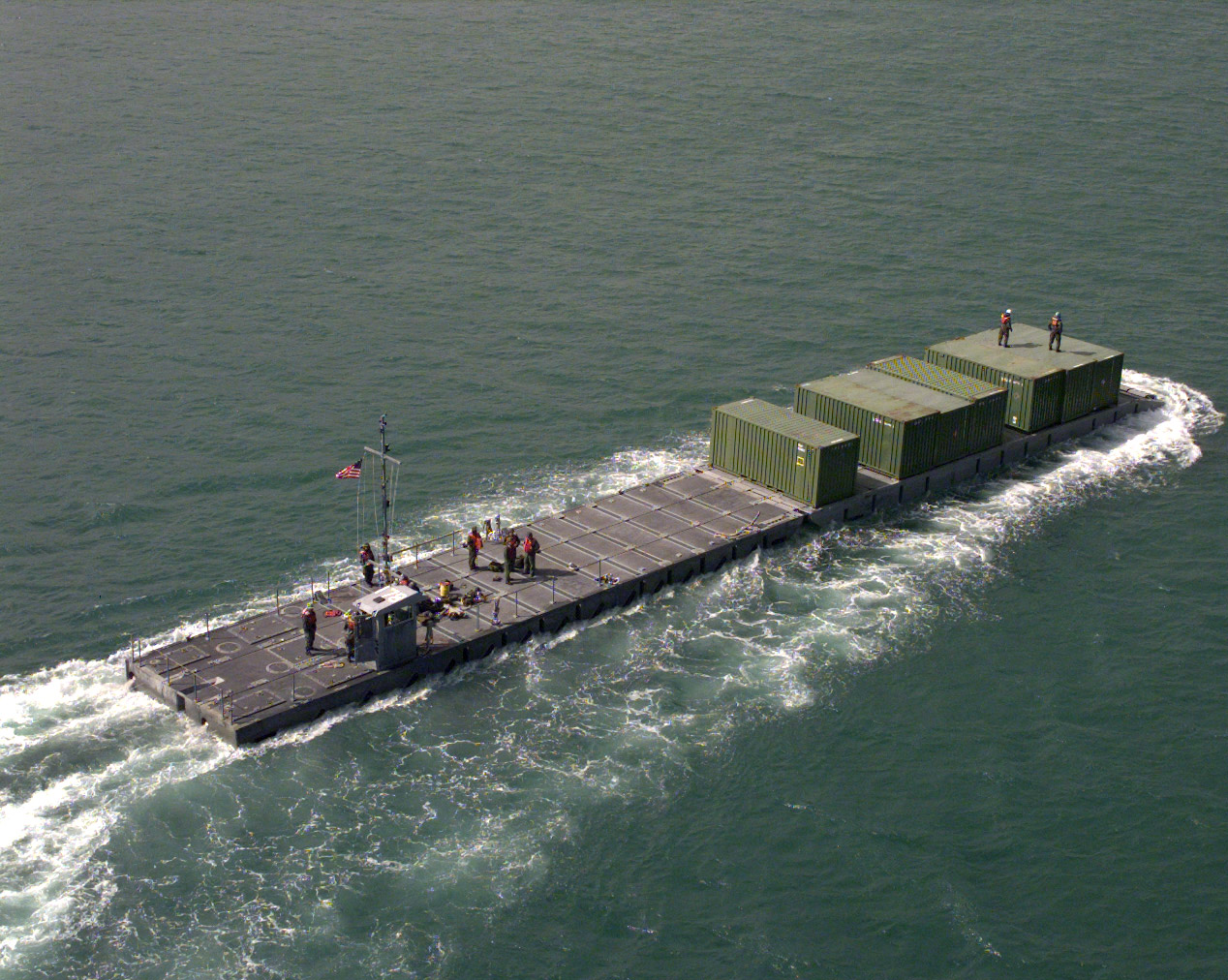
The US Navy is inviting defense contractors to submit proposals for a new class of unmanned surface vessels (USV) to transport containerized payloads.
Led by the Program Executive Office Unmanned and Small Combatants, the effort aims to boost the service’s operational flexibility by rapidly fielding scalable, modern autonomous platforms.
A request for white papers published by the US Department of Defense said the project requires a proven, low-cost design for the boats, with capability spanning various mission sets using standardized ISO logistics container modules, and allows for assembly and overhaul at multiple shipyards.
While there is no contract award date announced, the navy plans to use the Other Transaction Authority framework to speed up acquisition and deploy USV testbeds within 18 months of contract award.
The Pentagon is accepting proposals for the initiative until August 2025.
“The desired solution will provide a complete prototype of the vessel, including autonomy software, perception systems, command and control (C2), hull machinery and electrical systems, and external communications,” the document wrote.
“C2 of vessels will be located at an off-hull operating station either ashore or embarked on another vessel. Producibility, readiness, and the ability to scale up production are key aspects of the proposed vessel solution.”
Three Designs, One Goal
In the paper, the US Navy outlined three potential USV configurations, each with a specific mission profile but all built around the same core concept.
The first is a Modular Attack Surface Craft (MASC), which should carry two 40-foot (12-meter) containers, each up to 36.3 metric tons (80,028 pounds) with 75-kilowatt power support.
It should maintain 25 knots (29 miles/46 kilometers per hour) for 2,500 nautical miles (2,877 miles/4,630 kilometers) in NATO Sea State 4 – conditions with waves up to 2.5 meters (8 feet) – while carrying at least 25 metric tons (55,116 pounds) on deck.
Another is a High-Capacity MASC, a higher-endurance variant capable of carrying four 40-foot containers, with weight and power support similar to the primary MASC design but greater range and speed.
The service also plans a Single Payload MASC, a lighter platform built to move one 20-foot (6-meter) container weighing 24 metric tons (52,910 pounds) and consuming up to 75 kilowatts, with the payload having an unobstructed path to the USV’s rear.