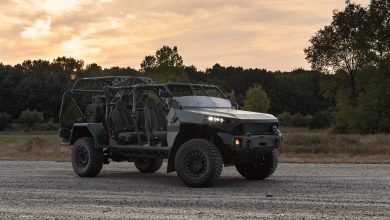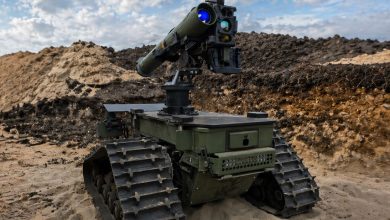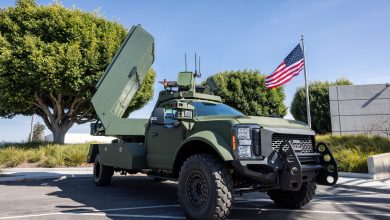
The US Army is pursuing an unmanned ground vehicle (UGV) capable of resupplying forward-deployed forces and evacuating wounded soldiers from front-line areas.
The system is intended to operate behind the forward line of troops, where constant enemy surveillance and bombardment make the use of manned platforms highly risky.
It is specifically designed for the “last tactical mile”— the critical stretch between the forward line of troops and supported units — where moving supplies, equipment, or personnel entails the greatest exposure to enemy observation and fire.
Requirements
The army requires a dual-use platform suitable for both platoon- and company-level units, featuring a modular payload adaptable to changing mission needs.
The UGV must support on-ground reconfiguration, allowing operators to modify payloads in the field with minimal time and effort.
It should be capable of autonomously evacuating at least two casualties from the point of injury to a designated collection point, ensuring transport stability without exacerbating injuries.
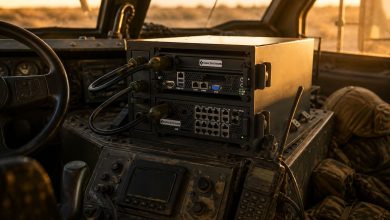
Additional features include remote control, autonomous navigation, beyond-line-of-sight communications, and mission execution with minimal reconfiguration.
“The UGV should be capable of supporting the sustainment needs of a dismounted rifle platoon or company headquarters for extended operations,” a US Army solicitation notice explains.
“It should be able to transport various classes of supply and operate autonomously across diverse terrains and environments, maintaining reliable communications with supported units.
The UGV should be able to navigate both on- and off-road routes, including areas without GPS, and support situational awareness. It should minimize detectable signatures and emissions during operations, including in the final approach to supported units.”
Other UGV Programs
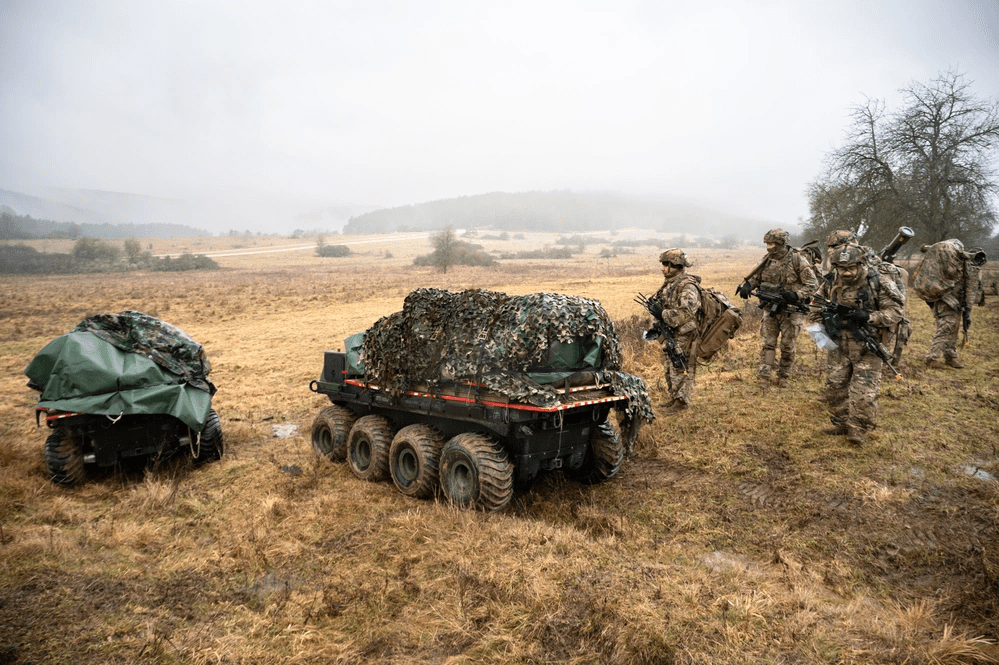
The US Army is already advancing several UGV initiatives to enhance battlefield efficiency, including the Small Multipurpose Equipment Transport (S-MET), also known as the robotic mule program.
S-MET is a radio-controlled, eight-wheeled platform designed to carry payloads and supply power to electronic systems. Its current version can transport up to 1,000 pounds (454 kilograms) of equipment, with efforts underway to double its capacity.
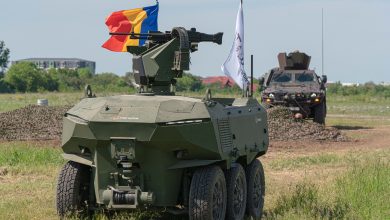
Meanwhile, Ukraine has emerged as a leader in UGV deployment, using low-cost unmanned platforms to sustain frontline operations and reduce casualties during prolonged combat.
By combining commercial technologies with battlefield innovation, Ukraine has deployed adaptable UGVs at scale, reducing logistical strain and limiting troop exposure in high-risk areas.