Honeywell has partnered with Odys Aviation to develop an airborne counter-drone system aimed at extending defensive coverage for critical infrastructure and strategic assets beyond fixed and mobile ground-based systems.
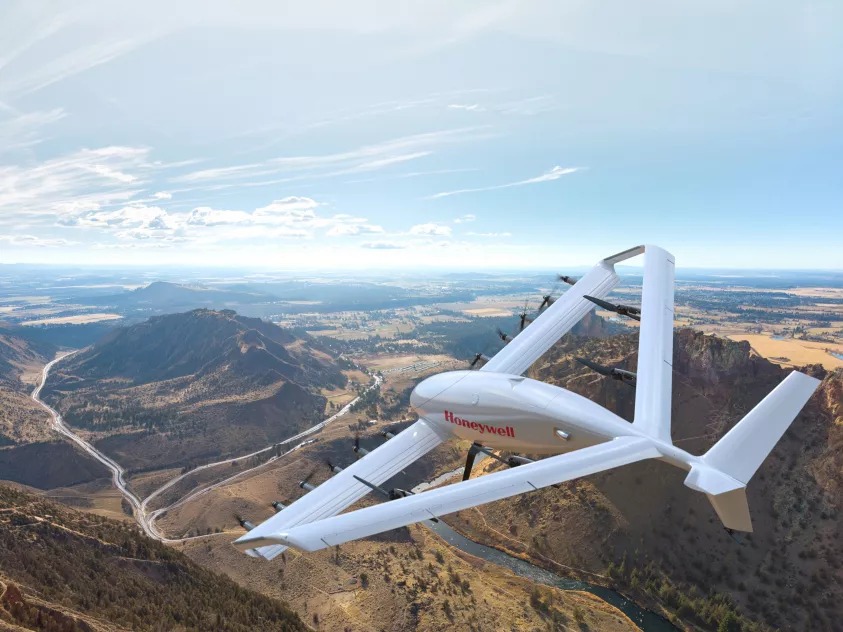
The solution combines Honeywell Aerospace’s Stationary and Mobile UAS Reveal and Intercept (SAMURAI) system with Odys Aviation’s Laila hybrid-electric vertical take-off and landing (VTOL) aircraft.
More than a year of integration work has gone into adapting SAMURAI for airborne deployment, adding a new defensive layer between ground sensors and missile defense systems.
SAMURAI C-UAS Architecture
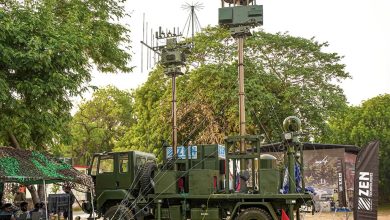
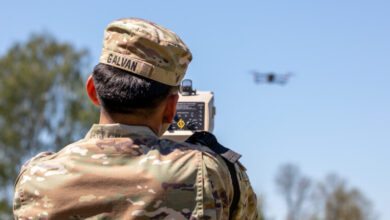
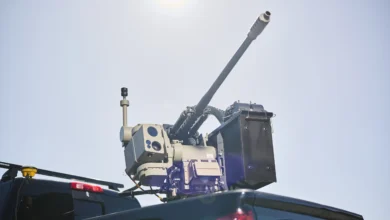
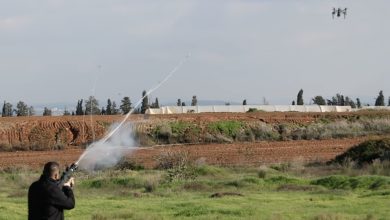
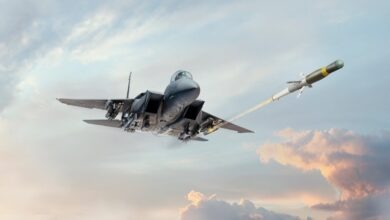
SAMURAI is a modular counter-unmanned aerial system (UAS) architecture designed to detect, identify, track, and neutralize drones using a layered mix of sensors, beyond-visual-line-of-sight communications, command-and-control capabilities, and electronic and kinetic effectors.
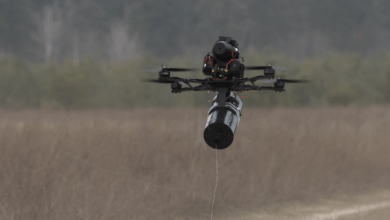
According to Honeywell, the system integrates radio-frequency detection with electro-optical sensing technologies and can incorporate interceptor drones to counter swarm threats.
“SAMURAI delivers critical counter-UAS capabilities with proven reliability, scalability, and seamless integration into existing defense architectures,” President of Defense and Space at Honeywell Aerospace, Matt Milas, said.
Leverages AI for Enhanced Target Identification
Originally designed to protect US Air Force convoys carrying critical assets, SAMURAI can detect threats at range and deploy countermeasures at speed without requiring the convoy to halt — an advantage over many traditional systems.
Citing Honeywell’s senior director of cybersecurity and electronic warfare, Norm Balchunas, National Defense reported that the system leverages artificial intelligence (AI) to enhance threat detection and decision-making, including distinguishing drones from background clutter.
“That’s where we’re really focused [on] with AI enablement, to be able to do that target discernment — whether it’s a bird, what kind of drone it is, what’s the flight profile that it’s flying? Does it represent a threat?” Balchunas was quoted as saying.
“That AI piece is really critical because it’s seven seconds from detection to having to make a [decision] on what effector I’m using with some of the high-speed drones that are coming in.”
Integration With Laila VTOL Aircraft
Initially developed for vehicle-mounted and fixed-site platforms, SAMURAI’s integration with the Laila VTOL significantly expands its operational reach, enabling airborne coverage over wider and more remote areas.
Laila’s hybrid propulsion system — compatible with Jet A, Jet A-1, and JP-8 fuels — allows it to remain airborne for up to eight hours across a range of approximately 450 miles (724 kilometers).
The platform eliminates the need for dedicated charging infrastructure, enabling rapid deployment in remote, expeditionary, and offshore environments.
“Drone threats have fundamentally changed the economics and operational requirements of air defense,” CEO of Odys Aviation James Dorris explained.
“Critical infrastructure and forward-operating locations require persistent protection across large areas and the ability to engage threats at the horizon long before they’re at the doorstep.
By combining Honeywell’s SAMURAI system with the endurance, runway independence, and onboard power capability of Laila, we’re introducing a new airborne defense layer designed for today and into the future.”