The UK Defence Innovation (UKDI) has invited industry to submit novel concepts for detecting and countering fiber-optic-controlled uncrewed aerial systems.
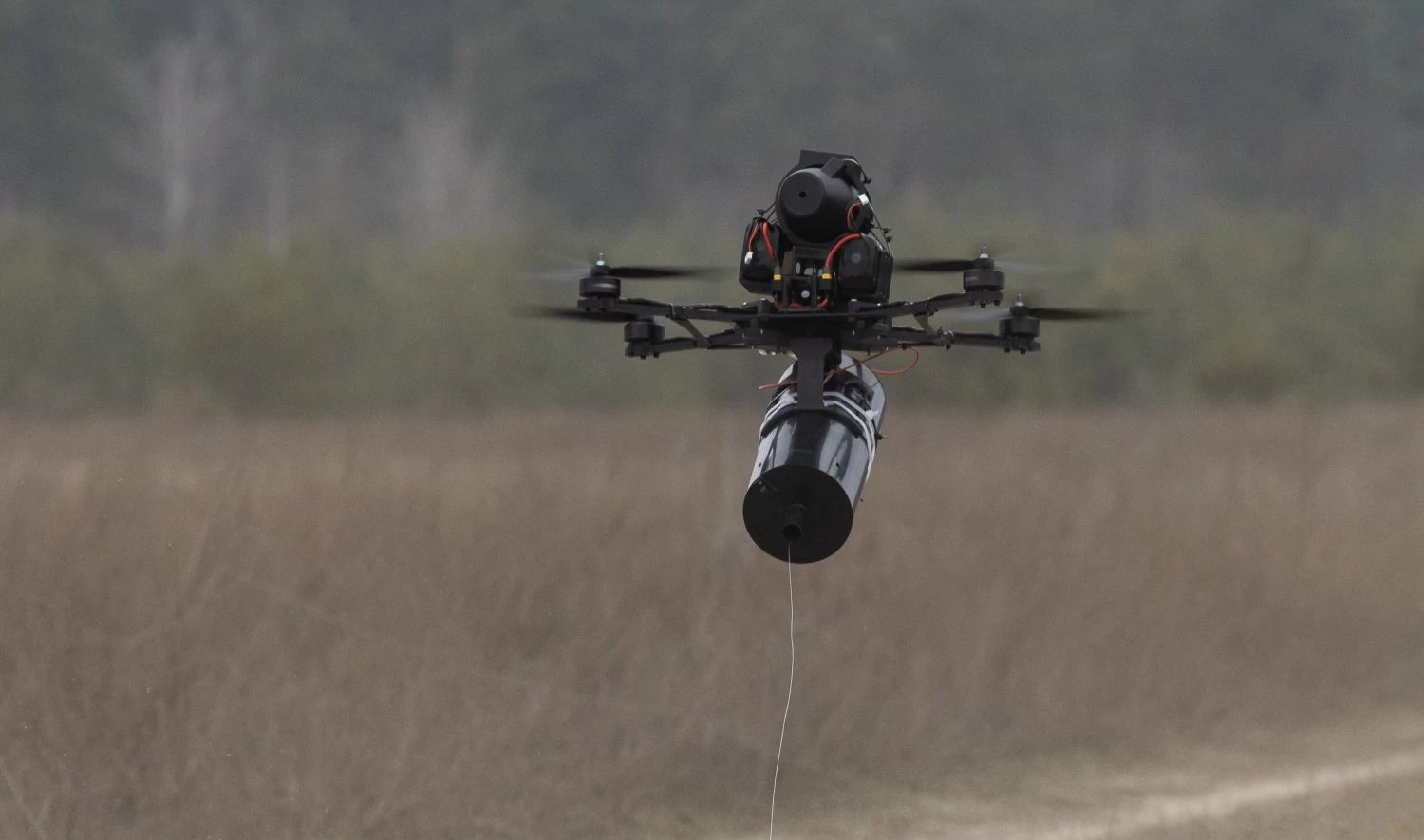
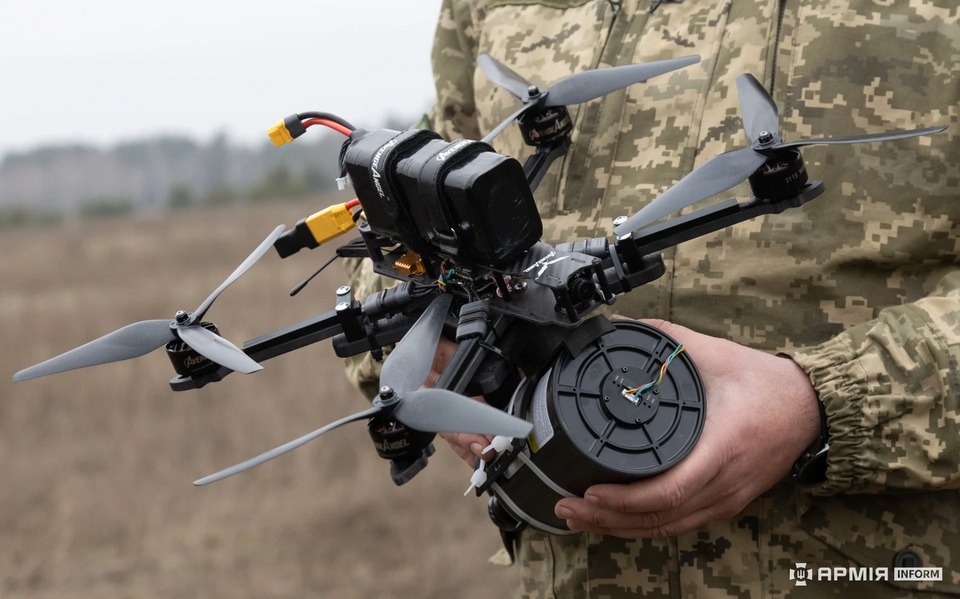
Connected via kilometers of ultra-thin fiber-optic cables, these remotely-controlled drones bypass wireless communication entirely, making them resistant to conventional electromagnetic countermeasures that rely on radio-frequency jamming or GPS disruption.
As they operate without emitting radio-frequency signals, they are also difficult to detect, further complicating efforts to neutralize them.
Emerging from the rapid evolution of drone technology during the war in Ukraine, fiber-optic-controlled systems have become a go-to capability for both Russian and Ukrainian forces in environments heavily affected by electromagnetic interference.
Conversely, they have become a significant challenge for opposing forces due to their resilient operating characteristics.
Possible Solutions
UKDI is interested in assessing the feasibility, viability, and desirability of solutions to address the emerging challenge.
The solicitation excludes broader counter-drone measures that do not directly address fiber-optic systems, as well as kinetic defeat or operator protection solutions.
Instead, it emphasizes the development of an integrated detection-and-tracking solution.
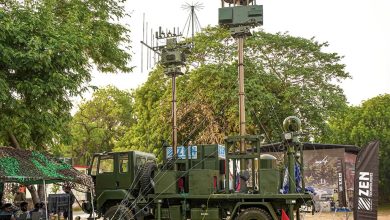
Potential approaches include acoustic detection that uses drone sound signatures, as well as high-resolution imaging combined with pattern-recognition technologies to identify and classify targets.
According to UKDI, proposed solutions should integrate into a layered, open-architecture framework, such as the Ministry of Defence’s SAPIENT data standard, while delivering operational advantages in areas such as engagement timelines, lethality, and cost-effectiveness.
The agency also noted that systems should account for future adversary adaptation and be suitable for both fixed installations and mobile frontline units operating in contested environments.