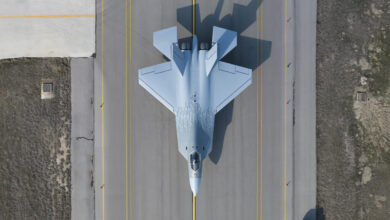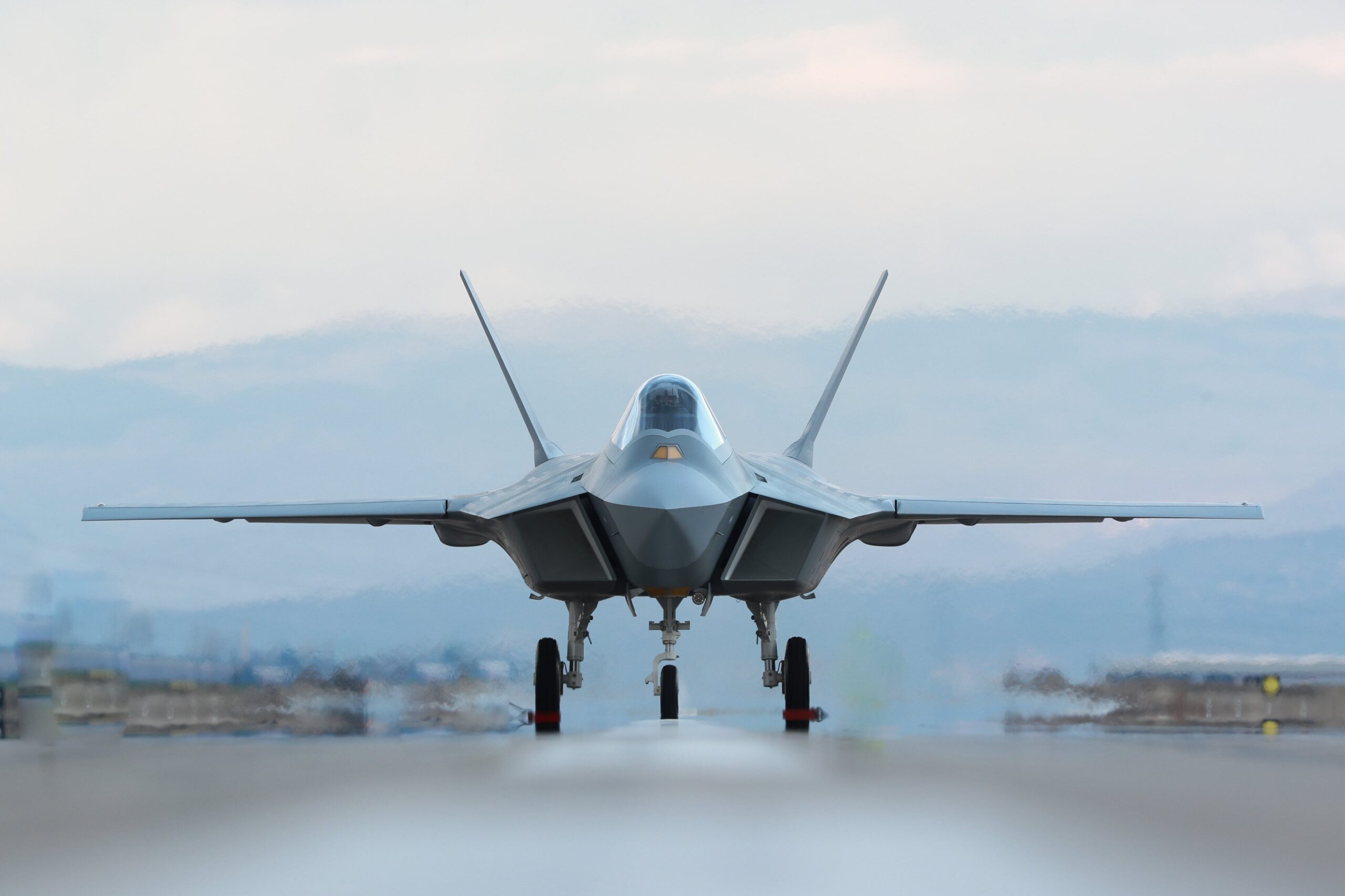
When Turkey unveiled its first next‑generation combat aircraft at a secure facility near Ankara, the air was thick with anticipation; not just for a new fighter, but for the promise of national aerospace autonomy.
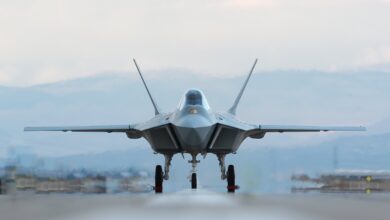
The TAI TF KAAN was born of strategic necessity, blending stealth shaping, advanced sensors, and digital avionics into a fifth‑generation multirole fighter.
Explore how this ambitious program works, its variants, capabilities, and future trajectory below.
What Is the TF KAAN?
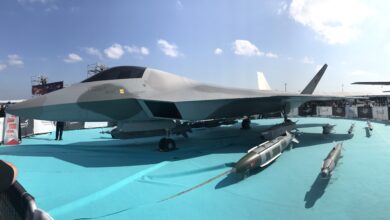
The TAI TF KAAN — previously also referred to as TF‑X and under the Turkish designation Milli Muharip Uçak — is a fifth‑generation, twin‑engine stealth multirole fighter currently under development by Turkish Aerospace Industries (TAI).
Designed for air superiority and precision strike missions, it combines low‑observable features, integrated sensors, and network‑centric systems to operate effectively in contested airspace.
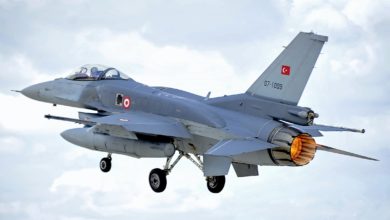
The aircraft aims to replace the Turkish Air Force’s fleet of F‑16 Fighting Falcons beginning in the late 2020s.
The Turkish government also views KAAN as an export opportunity, eyeing profitable contracts from countries such as Spain, Saudi Arabia, and Indonesia.
From TF‑X to KAAN: Development History
The KAAN project dates back to 2010 as Turkey’s strategic initiative to build an indigenous next‑gen fighter.
Early conceptual work included collaboration with Swedish partner Saab to explore airframe configurations, with the twin‑engine design ultimately chosen for performance, payload, and survivability advantages.
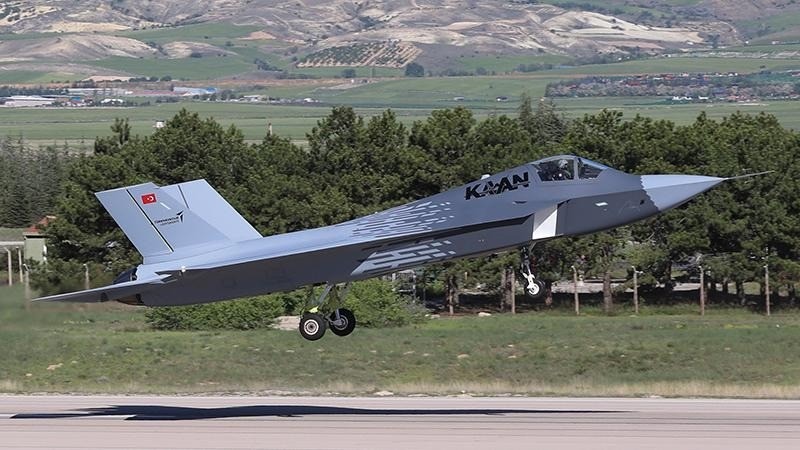
The aircraft was officially named KAAN on May 1, 2023, which is a Turkish name meaning “ruler,” during a ceremony emphasizing its symbolic and strategic importance.
The maiden flight of the first prototype took place in February of 2024, advancing the program’s testing agenda.
Variants and Production Blocks
The TF KAAN program includes multiple planned variants that reflect its development and operationalization timeline:
| Variant/Block: | Purpose: | Status/Notes: |
| Block 0 (Prototype) | Test and development airframes | Early prototypes for flight test and systems validation |
| Block 1 (Initial Operational) | First production‑standard aircraft | Targeted for delivery ~2028–2029 with core avionics and airframe integration |
| Block 2/3 (Upgraded Operational) | Enhanced avionics, engines, teaming | Future upgrades include indigenous engines, advanced data‑link, and manned‑unmanned teaming |
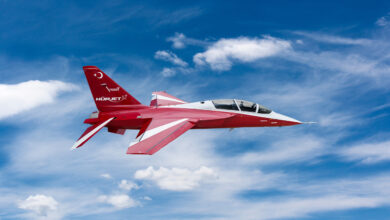
Future proposals discussed in defense analyses include two‑seat trainers and unmanned teaming roles, though formal programs for those versions are not yet confirmed in production plans.
Key Features and Capabilities
Stealth and Aerodynamics
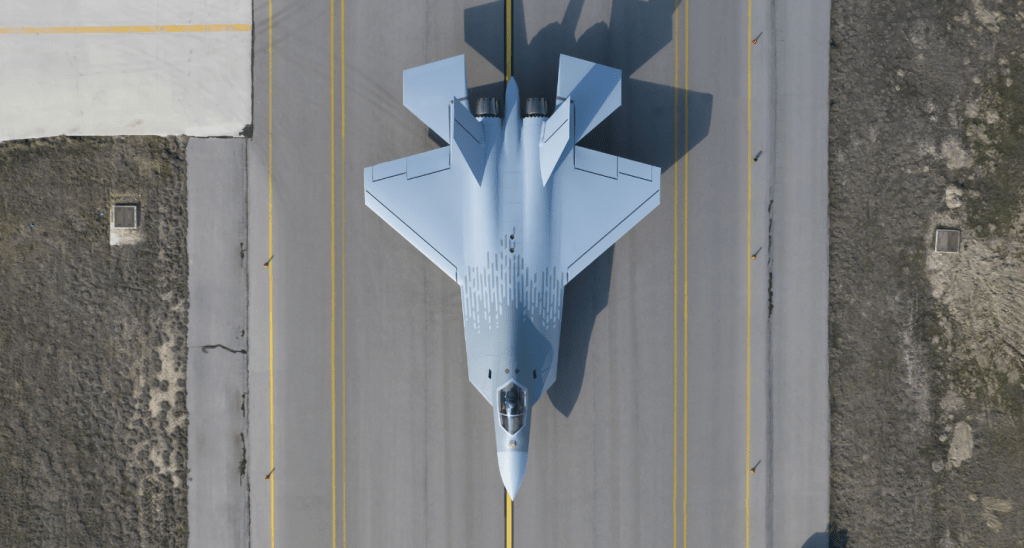
KAAN’s design emphasizes low radar cross‑section through shape optimization and internal weapons bays, characteristic of fifth‑generation fighters.
Its twin‑engine layout enables high thrust and supercruise capability (sustained supersonic flight without afterburner), enhancing tactical reach.
Sensors and Avionics
The jet integrates a MURAD AESA radar and an advanced electronic warfare suite developed by ASELSAN, with sensor fusion and AI‑assisted decision-aid capabilities to enhance situational awareness and target tracking.
Its avionics package includes infrared search-and-track and electronic countermeasure systems for contested environments.
Engine Strategy
Initial prototypes use General Electric F110‑GE‑129 engines, a proven powerplant familiar from other fighter platforms.
Turkey plans to transition to indigenous TEI‑developed engines (such as the TF‑35000) in later blocks to increase performance and national technological independence.
Strengths
- Balanced air‑to‑air and air‑to‑ground capability with internal weapon carriage for stealth missions.
- Modular architecture for future upgrades and sensor expansion.
- AI and digital fusion systems support networked operations.
Limitations and Challenges
- Full stealth effectiveness depends on radar‑absorbing materials and integrated design maturity yet to be validated through testing.
- Indigenous engine development timing may influence performance gains beyond current GE engines.
Where the TAI TF KAAN Fits Today
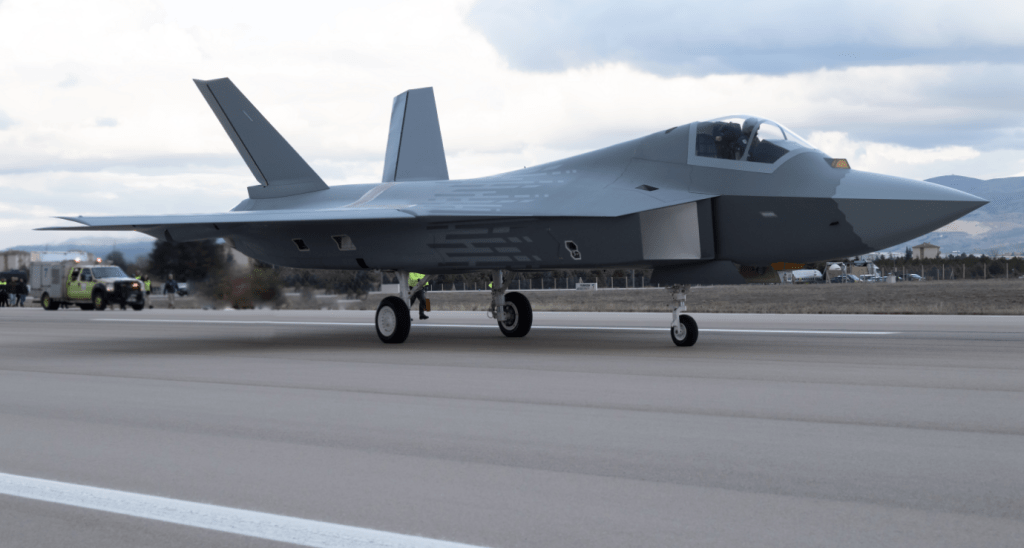
The KAAN’s emergence places Turkey among a small group pursuing home‑grown fifth‑generation fighters, a domain long dominated by the US, Russia, and China.
While new to foreign air forces, interest from Spain, Indonesia, and Gulf states reflects its potential appeal as an alternative to Western platforms.
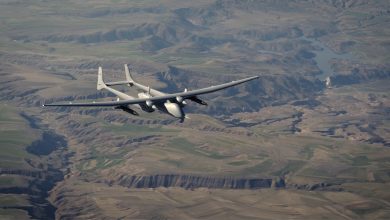
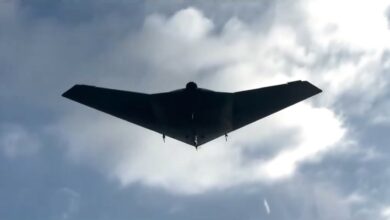
Its pairing with loyal wingman drones and networked architectures positions it for future coalition operations.
With multiple prototypes slated for testing through 2026 and production aircraft expected by 2028 to 2029, the T KAAN is progressing steadily toward operational status.
Continued development of indigenous engines, advanced sensors, and network capabilities will define its competitiveness against global peers well into the 2030s.