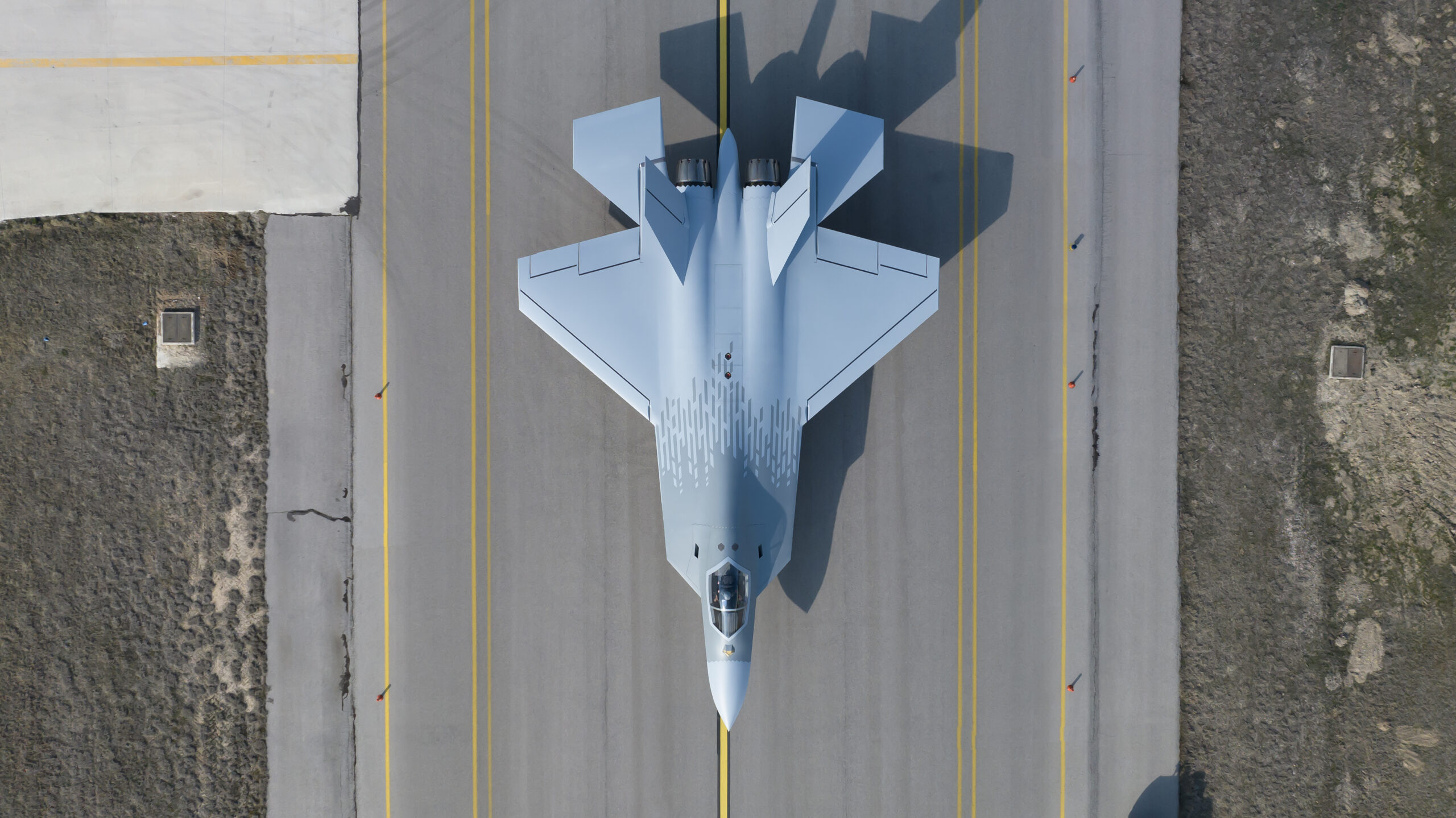
Turkey has procured the sixth prototype of the domestically-built TAI Kaan combat aircraft for critical evaluations.
The order will allow the government to further evaluate the platform’s intended performance through stress tests, avionics checks, high-speed taxi runs, and runway maneuvers.
Ankara views these sessions as a pivotal step toward achieving full operational capability, as well as the assembly and induction of the jet into the Turkish Air Force.
The service will receive the Kaan production airframes in phased increments following the prototype stage, according to local news agency Ulusavunma.
Each delivery phase will feature increasing capability.
In the later development stages, specifically Block 30 and Block 40, the aircraft will be equipped with an indigenous engine, undergo ground and flight tests, and move toward flight certification.
Fifth-Gen Turkish Combat Aircraft
The Kaan fifth-generation fighter jet program is another aspect of Turkey’s strategic push to rely on indigenous defense capabilities.
It began in 2016 and gained momentum in 2019 after the government’s removal from the American-led F-35 multinational initiative due to Ankara’s adoption of Russian-origin equipment, particularly the S-400 air defense system.
As a result, Turkey was denied more than 100 F-35s it had planned to purchase and lost access to related manufacturing technology transfers.
By 2028, the Turkish Air Force expects to receive the first batch of 20 Kaan jets, with production ramping up to two aircraft per month starting in 2029.
Over 100 Kaans are projected to enter Turkish service through the 2030s, with a total of 150 to 300 export units estimated.
Indonesia became the program’s first foreign military sale customer in June 2025 with an order for 48 jets. Saudi Arabia also signaled interest in January 2025, eyeing a purchase of around 100 planes.
The TAI Kaan
Turkey’s Kaan measures 20 meters (66 feet) long and has a wingspan of 13 meters (43 feet).
It will be armed with a 30-millimeter cannon, internal and external hardpoints, multi-domain missiles, guided munitions, and advanced avionics and sensing systems.
The plane will be powered by twin General Electric F110 turbofan engines, each with approximately 15,000 horsepower, for a top speed of Mach 1.8 (2,223 kilometers/1,381 miles per hour), a combat range of 1,100 kilometers (684 miles), and an altitude of 16,764 meters (55,000 feet).