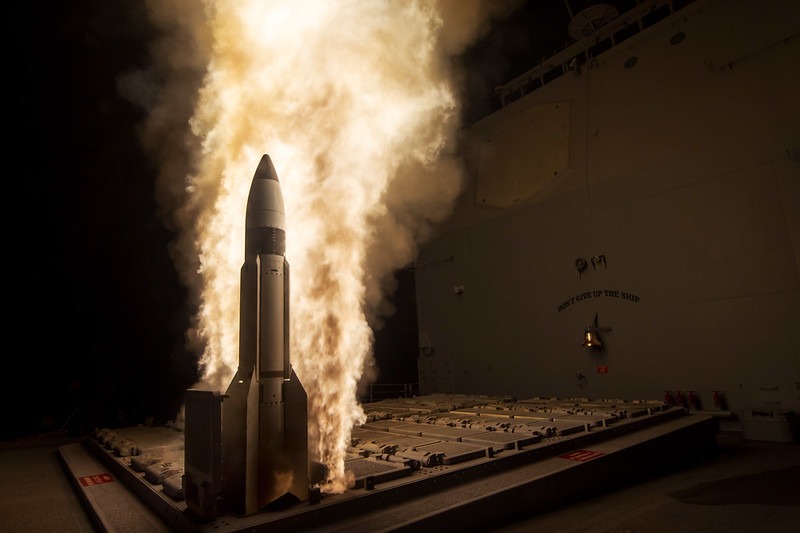
Karman Space & Defense is opening a new manufacturing facility in Utah to expand production of launch systems and rocket components used in US missile and counter-drone programs.
The company said the new site in the greater Salt Lake City area will significantly increase output for unmanned aerial system (UAS) launcher systems and solid rocket motor (SRM) composite nozzles, both critical components in modern missile and loitering munition systems.
According to the company, the new factory will quadruple production capacity for launcher systems used in loitering missile and counter-UAS programs while doubling SRM composite nozzle output. Production readiness at the facility is expected in the fourth quarter of 2026.
Rather than building a new structure, Karman is converting an existing building to accelerate the timeline for operations. Once complete, the site will integrate multiple manufacturing functions, including metal and composite fabrication, processing, assembly, and testing, into a single facility.
The company said the plant will rely on digitally enabled production tools under what it calls the Karman Operating System, a manufacturing platform that integrates automation and artificial intelligence to improve production workflows and reduce lead times.
“We are investing in more capacity and capabilities to support our customers’ aggressive production plans with proven content and performance,” Karman chief operating officer Jonathan Beaudoin said.
Karman has already invested more than $15 million over the past 12 months to expand capacity at its existing manufacturing plants. That effort also includes $5 million in funding from the US Defense Production Act Title III program, matched by another $5 million from the company, to increase production of rocket motor nozzles at its Systima facility.
Investing in US Military Drone Systems
Several defense companies have expanded production and development of unmanned and counter-drone systems in recent years as the Pentagon increases investment in autonomous capabilities.
In 2025, Anduril Industries secured a $642-million contract with the US Marine Corps to deliver counter-drone systems protecting military installations worldwide. The deal includes sensor networks and intercept capabilities designed to detect, track, and neutralize small unmanned aircraft.
Earlier, in 2024, the US military ordered $249.9 million worth of counter-UAS systems from Anduril, including the Roadrunner interceptor drone and the Pulsar electronic warfare suite, designed to detect and defeat hostile drones.
Industry investment has also expanded.
In 2024, Anduril announced plans to open an autonomous vehicle factory in Rhode Island to increase production of its Dive-LD autonomous underwater drones, with the facility expected to produce more than 200 systems annually and create over 100 jobs.
Meanwhile, the US Air Force selected Shield AI in 2026 to provide Hivemind autonomy software for the YFQ-44A Collaborative Combat Aircraft drone prototype, part of a broader effort to field AI-enabled unmanned combat aircraft capable of operating alongside piloted fighters.