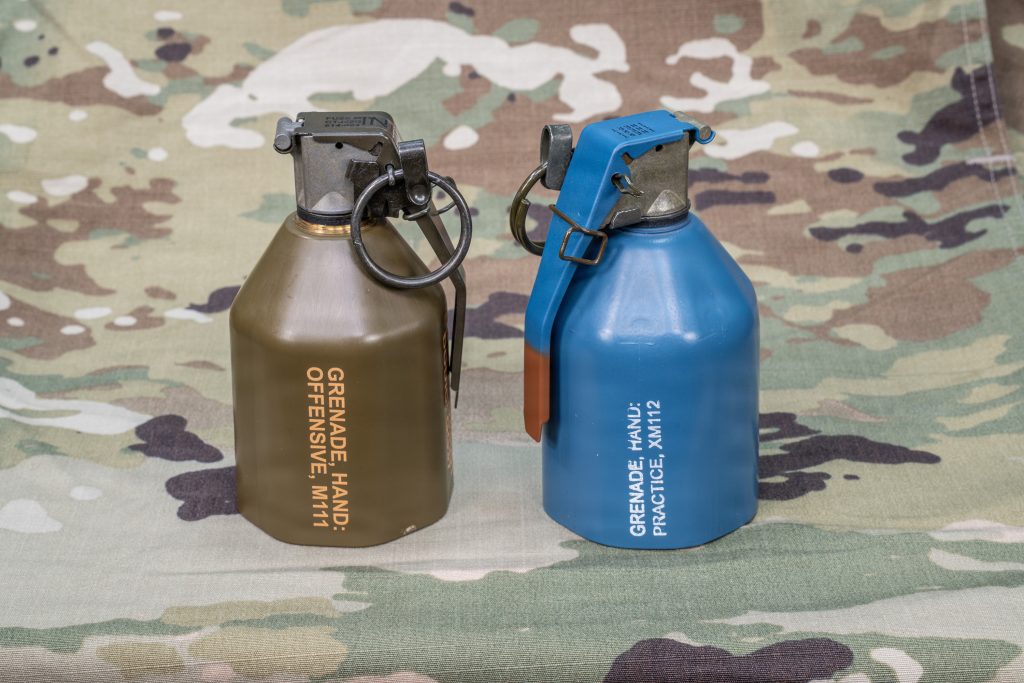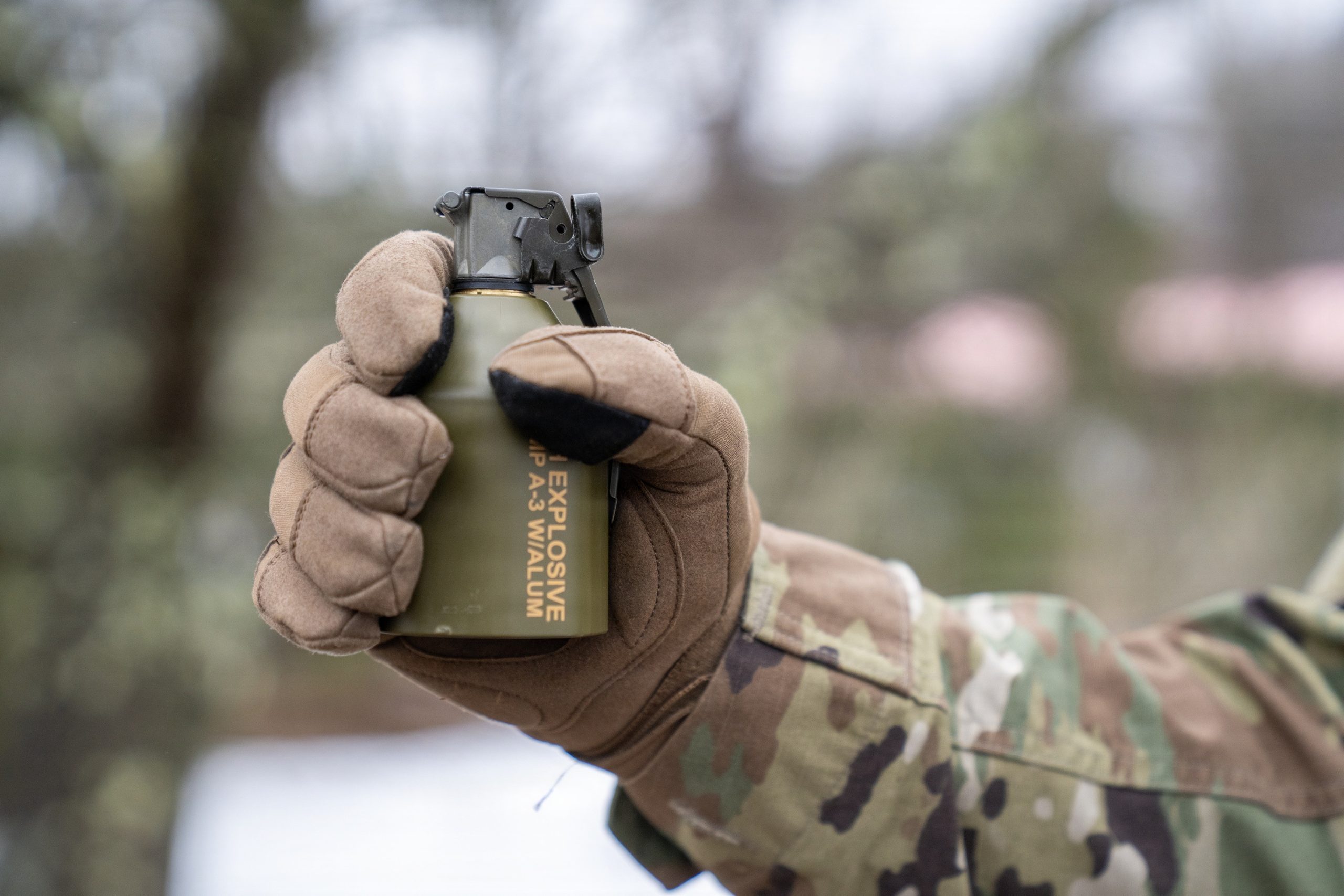
The US Army has cleared the M111 Offensive Hand Grenade for full material release, marking the first new lethal hand-launched explosive for service since the 1960s.
The M111 replaces the aging Mk3A2 series developed during the Vietnam War-era for concussion-type effects in urban warfare.
Revamping the Mk3A2’s cylindrical asbestos body with a plastic casing, the octagonal grenade is fully consumed during detonation.
It was developed by the Capabilities Program Executive Office Ammunition and Energetics, along with the Combat Capabilities Development Command Armaments Center at Picatinny Arsenal in New Jersey.
Blast Overpressure Capability
The M111 relies on blast overpressure compared to the military’s existing M67 “baseball” fragmentation grenade that uses metal shrapnel to neutralize targets.
Its design improves effectiveness in confined environments such as buildings or tunnels, where fragmentation weapons can pose risks to friendly forces.
“One of the key lessons learned from the door-to-door urban fighting in Iraq was that the M67 grenade wasn’t always the right tool for the job,” said Col. Vince Morris, project manager for close combat systems. “The risk of fratricide on the other side of the wall was too high.”
“But a grenade utilizing [blast overpressure] can clear a room of enemy combatants quickly leaving nowhere to hide while ensuring the safety of friendly forces,” Morris added.
Promoting Commonality
The M111 and its M112 training variant share the same five-step arming process and fuse components used by the M67 and its M69 training counterpart, enabling common production lines and reduced procurement costs.
Based on feedback from warfighters, the M111 will be dedicated to enclosed or restricted spaces, while employment of the M67 will continue across open terrain to maximize fragmented blast effects.
“By standardizing the arming process and the fusing, the Army saves taxpayer money without sacrificing lethality on the battlefield,” said Morris.
“This is the kind of acquisition reform that is currently underway throughout the Army acquisition enterprise. We are taking advantage of that initiative to drive down costs while increasing combat effectiveness.”