High above conflict zones, far from the sound of artillery or the movement of armored columns, a small turboprop aircraft circles patiently, collecting the invisible threads of modern warfare.
In an era where information moves faster than firepower, the ATHENA spy plane has become a critical airborne intelligence platform, providing commanders with the insight needed to make decisions before shots are fired.
This guide explains what ATHENA is, how it came to be, how it works, where it’s been used, and why it still matters today.

What ATHENA Is
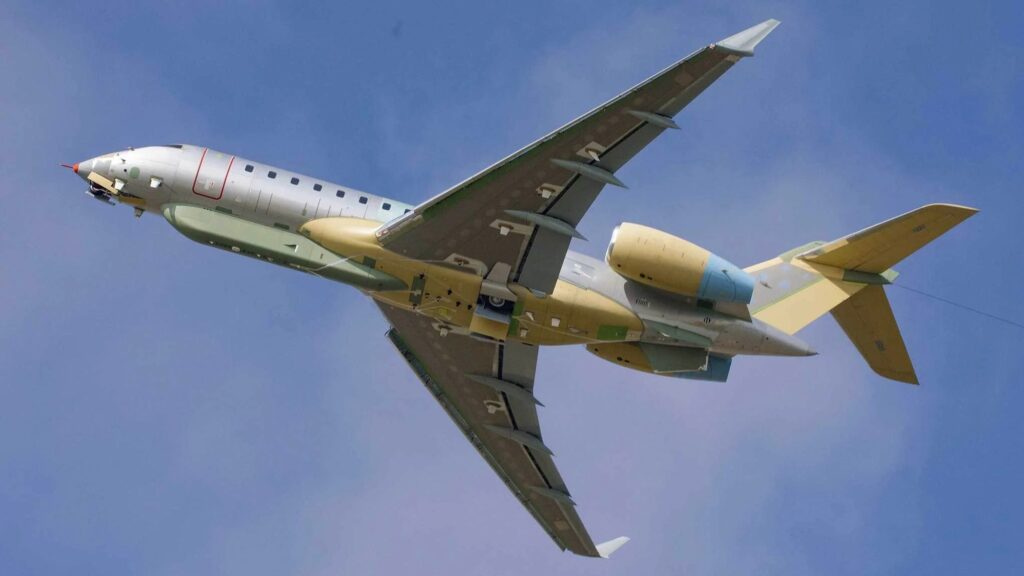
ATHENA — short for Army Theater-Level High-Altitude Expeditionary Next A-ISR — is the US Army’s designation for a highly modified Bombardier Global 6500 business jet.
It is a signals intelligence (SIGINT) and intelligence, surveillance, and reconnaissance (ISR) platform designed by Sierra Nevada Corporation to intercept, analyze, and geolocate enemy communications and electronic emissions.
Unlike large, high-profile surveillance aircraft, ATHENA is compact, discreet, and optimized for persistent regional operations.
Its primary mission is to support ground commanders by detecting hostile communications, tracking adversary activity, and feeding real-time intelligence into joint command networks.
Upgraded Variants
The ATHENA program evolved from experimental ISR aircraft into operationally capable platforms, with later variants focused on extended range, modular sensor integration, and enhanced signals intelligence.
These upgrades allowed the aircraft to operate longer, cover broader areas, and relay data more effectively across joint networks.
Two primary variants emerged: ATHENA-R, optimized for long-endurance missions, and ATHENA-S, designed for modular sensor payloads and advanced SIGINT capabilities.
Both share the core business jet airframe, but each emphasizes different operational strengths, reflecting the program’s shift from demonstration to active deployment.
| Variant | Primary Focus | Sensor Suite | Endurance/Range | Special Features |
| ATHENA (baseline) | Prototype/initial ISR | Basic EO/IR and radar | Standard endurance | Proof-of-concept aircraft, foundational platform |
| ATHENA-R | Long-range, persistent ISR | Standard EO/IR and radar | Extended endurance for long missions | Optimized for high-altitude patrols |
| ATHENA-S | Modular ISR and SIGINT | Advanced SIGINT, communications relay | Moderate endurance | Rapid reconfiguration for multi-mission tasks |
From Guardrail to ATHENA
The Guardrail Legacy
ATHENA’s roots lie in the long-running Guardrail program, which dates back to the Cold War.
The US Army needed an airborne platform that could rapidly deploy, operate from austere airfields, and deliver tactical SIGINT directly to ground forces.
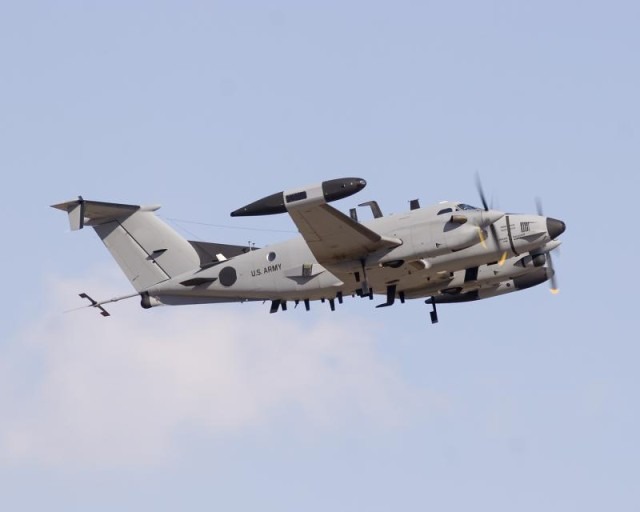
The Beechcraft King Air airframe proved ideal: reliable, efficient, and capable of carrying sophisticated sensors.
Over decades, Guardrail aircraft were continuously upgraded, evolving alongside advances in electronics, data processing, and networking.
Birth of ATHENA
The RC-12X ATHENA emerged as the most advanced iteration of the Guardrail family.
It incorporated modernized sensors, improved data links, and enhanced onboard processing, enabling faster exploitation of intelligence and wider sharing across the battlefield.
ATHENA entered service in the 2010s, reflecting the US Army’s growing emphasis on multi-domain awareness, where electronic intelligence is as decisive as physical maneuver.
Intelligence in the Air
Signals Over Steel
ATHENA’s defining capability is signals intelligence. Its sensor suite is designed to intercept radio communications, radar emissions, and other electronic signals across wide areas.
By analyzing these signals, ATHENA can identify enemy units, map command networks, and locate emitters with high precision.
This intelligence often enables target cueing, counter-insurgency operations, and early warning of hostile activity without requiring direct contact.
Persistence and Reach
Operating at medium altitudes with long endurance, ATHENA excels at persistent surveillance. It can loiter for hours, building an electronic picture of the battlespace over time rather than relying on brief snapshots.
Secure data links enable intelligence to be transmitted in near-real-time to ground stations, command posts, and joint intelligence cells, turning raw signals into actionable insights.
Crewed But Sensor-Driven
Unlike unmanned systems, ATHENA is crewed, typically by pilots and intelligence specialists.
This enables flexible mission management, rapid re-tasking, and human judgment in complex electronic environments — an advantage when operating near civilian infrastructure or friendly forces.
Strengths and Constraints
Key Strengths
- Highly capable tactical SIGINT platform: Optimized for intercepting, analyzing, and geolocating adversary communications to support ground and joint commanders.
- Persistent, real-time intelligence collection: Capable of loitering for extended periods while feeding near-real-time electronic intelligence directly into command networks.
- Operates from relatively small airfields: Its turboprop design allows deployment from austere or regional bases without the infrastructure required by larger ISR aircraft.
- Discreet profile compared to large ISR aircraft: Smaller size and lower visibility make it less conspicuous and politically sensitive than strategic surveillance platforms.
Key Limitations
- Limited self-protection in contested airspace: Lacks the defensive systems needed to survive against advanced air defenses or hostile fighters.
- Dependent on air superiority or permissive environments: Most effective when operating where friendly forces control the air or threats are minimal.
- Smaller payload capacity than strategic ISR platforms: Its compact airframe limits the number and size of sensors compared to those of larger, theater-level intelligence aircraft.
Where It’s Been Used
ATHENA aircraft have been deployed extensively in Iraq, Afghanistan, and other operational theaters, supporting counter-insurgency, counter-terrorism, and stability operations.
By monitoring communications and electronic activity, they played a critical role in identifying insurgent networks and protecting friendly forces.
Beyond combat zones, ATHENA has also supported training, exercises, and intelligence missions tied to broader regional security objectives.
Still Relevant in Electronic War
As warfare becomes increasingly defined by electronic signatures, networks, and data, ATHENA’s mission remains highly relevant.
While newer, more upgraded versions, both crewed and uncrewed, have emerged and are being used, it continues to offer a proven, adaptable solution for tactical SIGINT.
Future developments are likely to focus on sensor upgrades, improved data fusion, and deeper integration with joint and allied intelligence networks, ensuring ATHENA remains effective even as adversaries adopt more sophisticated communications.